


June 6 1944 is one of this nation’s most important historical dates.
It’s the day that the country notes the anniversary of D-Day, and it marks one of history’s great acts of mobilization and sacrifice. But, Realtor.com also notes that what we sometimes forget is that when World War II ended, America faced another test of mobilization.
At that time, though, that test was at home.
Realtor.com reminded that millions of veterans returned from war expecting to begin the lives they had fought to protect. Instead, they were greeted by a country that was unable to house them.
The website said that by one federal estimate at that time, the country needed more than 2.5 million new housing units in 1946 for veterans and their families alone. But at that time, the nation’s population of 151 million was less than half today’s 331 million, and the U.S. housing shortage was so steep that many were forced to make do in ramshackle trailers, even tents.
The post-war crisis eventually set off a national building boom that reshaped American life, Realtor.com noted. It helped popularize the starter home, modernize mortgage finance, fuel the rise of the middle class, and turn homeownership into the central symbol of living the American dream.
In 2026, however, many of those symbols are under strain, Realtor.com noted.
It said that the starter home has crossed the $1 million mark in more than half of the country, the typical first-time homebuyer is now 40 years old, and the nation is still short 4.03 million homes.
Realtor.com proffered that the postwar story reminds us all that the dream itself was born from crisis, and from a national response that was ambitious enough to meet it.
Here are four lessons we learned, Realtor.com noted:
Lesson 1: Housing is An Economic Imperative
Before the war ended, President Franklin D. Roosevelt had begun to define victory in part by what it promised at home. In his 1944 State of the Union, Roosevelt called for a “Second Bill of Rights” that included “the right of every family to a decent home.”
Housing also was key to the health of the postwar economy. As the country moved from wartime production to civilian life, policymakers feared what would happen if too few houses led to too few jobs and too little consumer demand, Realtor.com noted.
The, in 1947, President Harry Truman’s midyear economic report cautioned that housing construction “lags far behind the real needs of our people for homes” and that “a much higher volume of housing output” was necessary to help sustain maximum employment.
Realtor.com noted that the building boom that followed reflects that sense of urgency. It reported that housing starts rose from just 326,000 units in 1945 to more than 1 million annually after the war, peaking at roughly 2 million in 1950, citing Housing Historian Alexander von Hoffman.
The website said that the post-war response is a strong lesson for today.
Housing is a flashpoint again for voters and politicians, but it is still often framed as an individual or cost-of-living problem, Realtor.com noted.
The building response has not yet met the moment with urgency, with Realtor.com noting that in 2025, new-construction permits fell 3.6% compared to the prior year.
Over a 50-year period ending in 2009, housing restrictions in high-productivity metros such as New York City and San Francisco lowered aggregate U.S. economic growth by a staggering 36%, Realtor.com said.
Lesson 2: Financing Has to Come With Supply
Credit helped boost the postwar housing boom, Realtor.com noted.
It noted that the GI Bill and federal mortgage guarantees helped turn millions of returning veterans into buyers by lowering financing barriers to ownership. Realtor.com noted that veterans’ benefits alone explain over 7% of the overall increase in homeownership from 1940 to 1960.
Realtor.com also noted that today’s crisis is also one of financing. The ultralow mortgage rates of the early COVID-19 pandemic era helped millions of households buy or refinance into historically cheap debt, it said. But they also created handcuffs so-to-speak, locking a wide swath of owners into homes they might otherwise sell.
Ideas such as 50-year mortgages and portable mortgages, both aimed at lowering monthly payments or helping owners move without giving up favorable loan terms, have been pitched.
But this is also where the post-WWII lesson gets complicated, Realtor.com said.
What happens, however, when new purchasing power runs into a market short of supply?
It can make buyers compete for the same scarce inventory, Realtor.com noted.
During the pandemic, cheap debt unleashed demand into a market with too few homes, helping push prices higher, and as a result, roughly 2 million young would-be households remain missing, as affordability headwinds and other structural hurdles delay the move into independent adulthood, Realtor.com said.
Lesson 3: Innovation in Building Leads to Booms
But here again is a useful lesson from the past. Behind one of the most famous symbols of the postwar housing boom—the starter home—is a method of mass production.
Levittown on Long Island set the stage.
Realtor.com noted that for the first time, homes were standardized, which allowed for construction to be broken into specialized tasks. Crews moved from house to house with the efficiency of an assembly line.
Most homes were built with speed and scale, Realtor.com noted. It said that at peak production, a new home could be completed every 16 minutes.
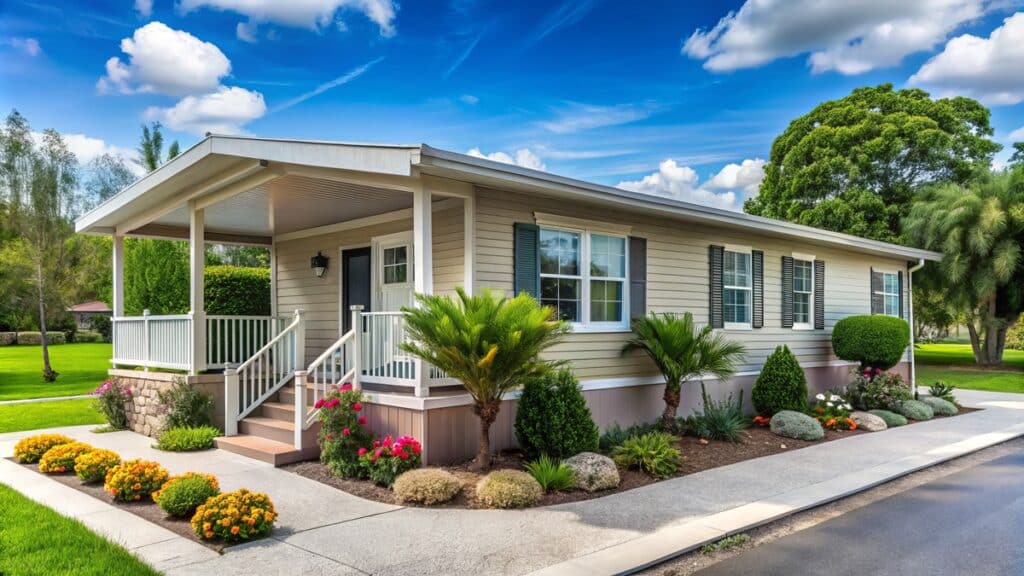
Today, 3D-printed homes are blazing a trail. Accessory dwelling units, denser zoning, modular construction, and factory-built housing are also in play. But one of the clearest modern parallels may be manufactured housing, Realtor.com said.
Manufactured houses are built around standardization and the efficiency that comes with it. They can be built from start to finish in a factory setting in as little as six to 12 weeks, compared with the six months to a year it takes to complete many site-built homes.
Manufactured homes carry a stigma that has kept them outside the mainstream housing conversation, even as they offer a more affordable path to ownership.
“The usual narrative seems to be ‘Don’t buy a mobile home, it will lose value,’ to which we are saying, ‘Not necessarily,'” Joel Berner, Senior Economist at Realtor.com, noted.
Berner’s research has shown that between 2019 and 2026, manufactured homes sold with land appreciated 70.1%, which outpaced the 58.6% gain for single-family homes, according to the report. Manufactured homes sold without land appreciated, too, though less sharply, at 51.6%, Realtor.com said.
Lesson 4: Build for Everyone
Tthe postwar housing boom built a bridge to homeownership and generational wealth for many, but it wasn’t enough for everyone.
The same system that helped many white families buy into appreciating suburbs also shut many Black families, renters, and lower-income households out of the wealth-building machine, Realtor.com noted.
It said that discriminatory lending practices and local implementation of federal programs systematically excluded nonwhite households from the postwar expansion, and that the nation is living with the consequences today.
The homeownership gap between Black and white households remains 20 percentage points wide, Realtor.com said.
Homeownership remains the primary way many Americans build wealth, and Realtor.com noted that gap compounds over generations. Across all demographics, it said, homeowners have roughly 38 times the net worth of renters.
The housing crisis is frequently framed around restoring the path to ownership, but millions of households need any affordable, stable place to live.