



At the end of 2025, New York City was dethroned as the capital of million-dollar listings, with Miami becoming the leading U.S. metro area for seven-figure properties on the market. This is according to a recent Realtor.com report.
According to the latest Realtor.com luxury housing report, by December 2025, Miami had 10,591 listings priced at $1 million or more, while NYC had 10,176.
However, that gap had been steadily closing, and by early last year, Miami briefly overtook New York in active million-dollar listings before decisively pulling ahead by the end of the year.
According to Anthony Smith, a senior economist at Realtor.com, both markets experienced a reduction in luxury housing inventory following the pandemic. However, Miami has profited from a more robust recovery with fewer seasonal fluctuations.
“New York’s luxury inventory follows a more traditional cycle, with spring and early summer buildups followed by sharper late-year drawdowns,” Smith said.

Popular Miami Metro Tops Luxury Homebuying List
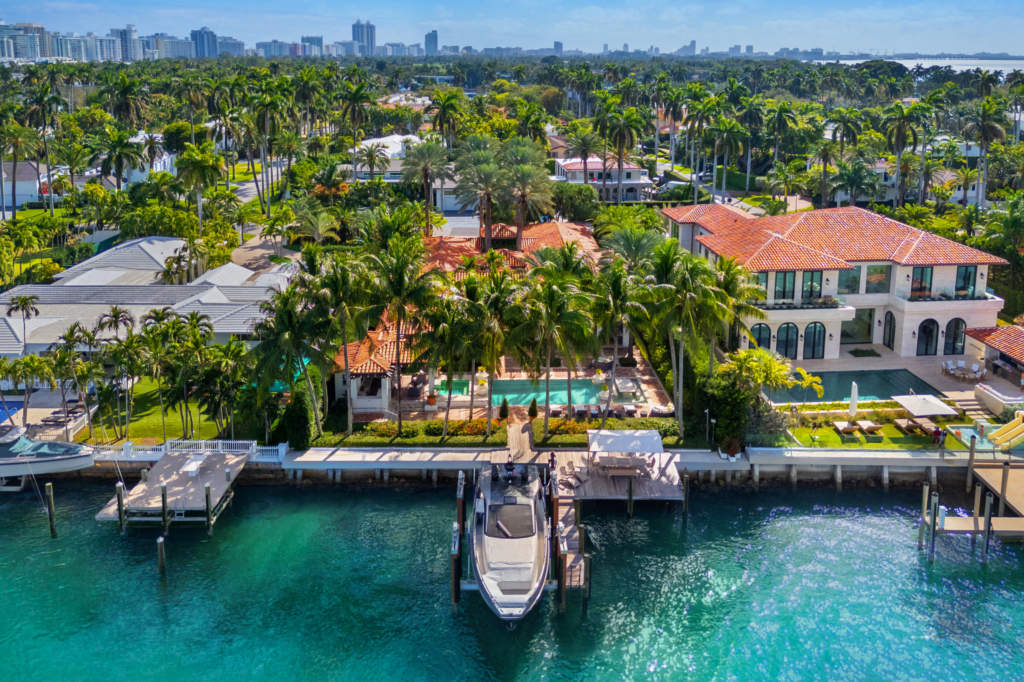
In the tropical city of Miami, luxury listings maintain a consistent activity throughout the year due to a steady influx of affluent cash buyers—such as foreign investors, retirees, and second-home buyers—who are drawn to the “Magic City” in every season.
“Out-of-town luxury buyers are also more likely to be present in Miami during the winter months rather than the summer, reinforcing listing activity at a time when many other markets, including New York, typically see inventory drawdowns,” Smith said.
Ana Bozovic, a real estate agent in Miami and founder of Analytics Miami, a real estate research firm, states that it is not surprising that her hometown has risen to become the leading destination for million-dollar listings.
“This is all part of the ongoing shift in economic focus,” Bozovic said. “Miami edging out NYC in the $1 million-plus segment is a confirmation moment. It is a quantification of the ongoing structural shift.”
Accoridng to Bozovic, the latest data demonstrates Miami’s evolution from a nascent luxury market to a dominant one, and she asserts that this is just the beginning.
“Taxpayers are on the move, and wealth, both domestic and international, is increasingly mobile,” she said.
From the “Big Apple” to the “Magic City”
Smith concurs that buyer migration significantly contributes to the change noted in December, as an increasing number of New Yorkers moves south.
Indeed, over 25% of the demand in the Miami metropolitan area comes from the New York City metropolitan area, a proportion that exceeds that of the next eight metros combined.
“This shift is not simply about people leaving New York,” Bozovic said. “It reflects what Miami has become. Miami is now casting a global net, attracting high-income earners and families who are buying at $1 milion, $3 million, $5 million-plus as a baseline.”
However, Smith contends that New York’s loss of its edge to Miami in terms of million-dollar listings does not indicate a weakness in the city’s luxury market, but rather signifies a structural change in the accumulation of luxury inventory.
Or, as Donna Olshan, President and real estate agent at Olshan Realty, states, this primarily revolves around supply and demand.
“Manhattan is currently experiencing a drought with inventory about 7% to 10% below last year at this time,” Olshan said “In terms of inventory, it’s no surprise that Miami has more $1 million-plus properties for sale than Manhattan.”
Additionally, Miami seems to have a more substantial and enduring stock of luxury properties, whereas New York’s inventory of high-end listings is considerable but grows at a slower pace due to elevated construction costs, zoning regulations, and sluggish permitting processes.
In the future, Bozovic anticipates that Miami will keep drawing in domestic and international buyers whose budgets are $1 million or more.
“Wealth is increasingly mobile, and Miami has the attention of the world,” she said.
At the same time, Olshan stresses that the buyer demand in the New York City metropolitan area is robust and that this region provides benefits that other markets, such as Miami, cannot easily duplicate, thus rendering direct comparisons meaningless.
“New York is the financial, creative, and cultural capital of the world. It is also has a huge tech sector,” Olshan said.