



Many Americans have received sales calls, and the latest LendingTree survey investigates the unwanted communications—which nearly three-quarters of those who’ve applied for a new financial product or service say they’ve received. LendingTree examined the prevalence of these calls and texts and consumers’ responses to them. Unsurprisingly, the results left many consumers feeling annoyed and confused.
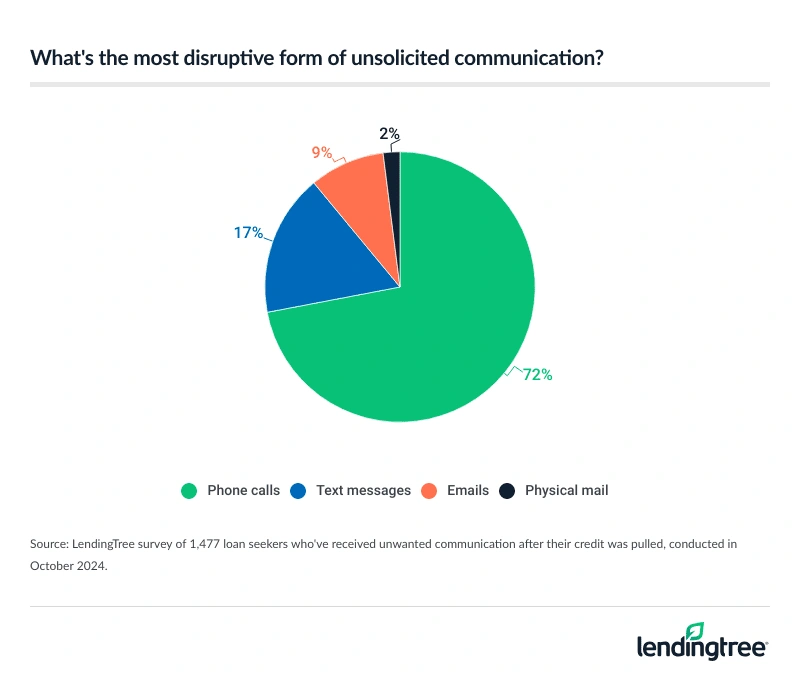
This unwanted contact, sometimes referred to as a trigger lead, can be a disruption for many. In fact, an estimated 54% of those who received such calls say it confused them when they were attempting to make financial decisions, and 83% say it was annoying. Phone calls were cited by 72% of respondents as the most disruptive type of communication, followed by texts (17%) and emails (9%).
“I think most people understand that when you apply for a loan or an insurance quote, you’re going to have lenders and insurers reach out to you,” said Matt Schulz, Chief Consumer Finance Analyst at LendingTree. After all, “that’s kind of the point”—to field multiple offers in hopes of getting the best deal, he added.
Note: Trigger leads are permitted in all 50 states as long as they adhere to the Fair Credit Reporting Act’s standards.
Defining Trigger Leads & Their Impact
Credit reports are pulled by the lender when applying for a new financial product or service; the reporting agency may then sell it to other service providers. Because the application shows interest in a particular kind of loan or insurance policy, it “triggers” this action. This information serves as a “lead” for the businesses who utilize it to contact you.
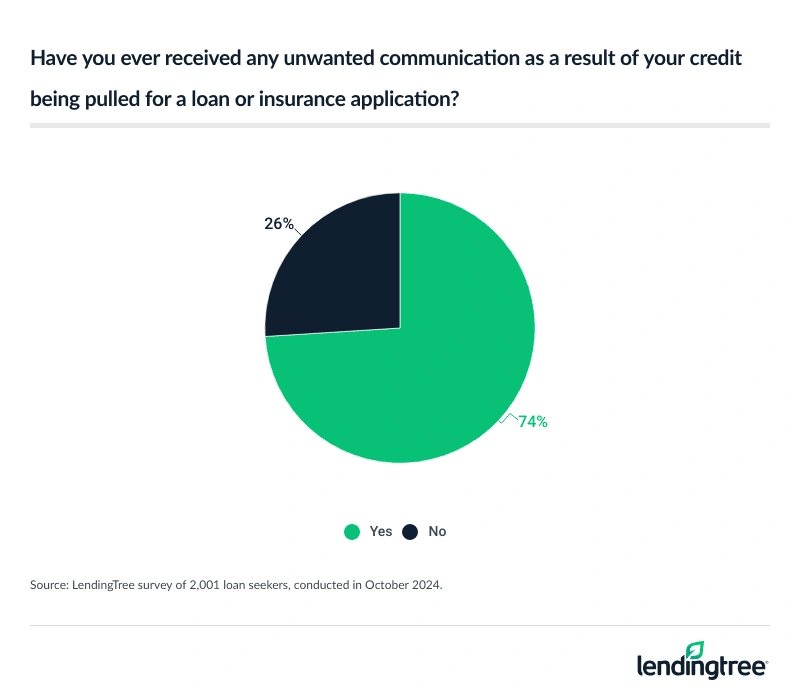
Unwanted contact is nothing new to most loan or insurance policy applicants. Approximately 74% of Americans who have applied for an insurance policy or a financial loan report receiving unsolicited correspondence (phone calls, texts, emails, etc.) after their credit was checked. Additionally, some 56% of respondents claim to have received between 10 and 50 instances of unsolicited communication.
Despite how serious or inconvenient these disruptions are, the majority of customers are unsure of who is to blame. Roughly 84% of respondents identified markets, financial institutions, and/or the federal government as the source of the unwelcome message. However, only 16% of people are aware that credit bureaus are using your information for marketing purposes.
But, a tiny portion of customers close following these unexpected calls due to convenience. Of those who have applied for financial products, about 14% claim to have closed a loan or policy through a trigger lead. When asked why, some 46% said they liked the salesman, an estimated 53% stated reduced rates, and 57% mentioned convenience.
Per the survey, 74% of the 2,001 poll participants who have ever registered for insurance policies or financial loans (such as mortgages, personal loans, vehicle loans, and others) say they have gotten unsolicited calls, texts, emails, or snail mail as a result—falling just short of three-quarters. Some 10% received more than fifty of these unsolicited solicitations, while the majority (66%) received at least ten. In other words, the communications are not only frequent but also widespread. These calls and messages might not be shocking given how commonplace targeted advertising is these days—most of us have seen how our phones and web browsers seem to be able to predict our next purchase.
“There’s little that drives people crazier than a tidal wave of spam calls, regardless of whether you apply through an online marketplace, loan officer at your local bank branch or most anywhere else,” Schulz said.
Unwanted Communication Persists, Peeving Many Consumers
It makes obvious that these trigger leads could irritate customers given their ambiguity and sheer abundance; in fact, 83% of respondents who have encountered them concur that they are at least somewhat annoying. (In fact, 52% of respondents indicate they considered the communications to be extremely annoying.) Furthermore, 54% of these respondents say that the unsolicited communications confused them when they were making financial decisions.
Additionally, some sorts of communications are more bothersome than others, even if they are generally frustrating. While 17% believe text messages are the most disruptive kind of unwanted contact, the majority of recipients—or an estimated 72%—agree that phone calls are the most disturbing.
Roughly 56% of loan seekers feel unsolicited financial messages are more annoying than unsolicited political ones, according to all poll participants (not simply those who have received unsolicited contact after applying for a new financial product).
Unwanted contact is “just an awful user experience,” according to Schulz, especially when it comes from businesses promoting a different kind of financial service than the one you first applied for. “It results in irate clients,” he added.
Unwanted solicitations irritate recipients to the point that they take action: 74% of respondents claim to have taken some sort of action to try to stop the communications. More than a dozen claim they changed their phone number to halt the calls, but several claim they requested to be taken off call lists or blacklisted callers. A handful went so far as to contact the police.
The majority of loan seekers, or 76%, said they would prefer a cooling-off period (a mandatory interval between the application and the first unsolicited message) over more explicit opt-in (and opt-out) alternatives included in financial applications. Only 6% of respondents, however, believe that things are good as they are.
“The consumer confusion is understandable,” Schulz said. “There are a lot of different entities involved, and the average consumer has no idea what role each is playing.”
Can Unwarranted Communication be Stopped?
Customers appear to be in agreement that the federal government should intervene and provide assistance, even if affected parties may not know who is to blame. According to a staggering 89% of loan applicants, the federal government should take more action to prevent these undesirable forms of contact. However, as previously said, trigger leads are permitted by existing law; however, the Senate recently passed and filed a bill to reduce them, particularly as a result of mortgage loan inquiries.
Even though unsolicited communications can be annoying, they are occasionally effective; otherwise, businesses would probably stop sending them.
In fact, 30% of survey participants who claim to have received unsolicited contact from financial firms also acknowledge that they had at least once pursued an offer. And once the pursuit is started, it frequently succeeds: an estimated 64% of that group went on to consummate a sale. Some 55% of those who closed deals as a result of unwanted solicitations did so for financial products, but 36% did so for a new insurance policy. In both groups, one in ten people claim to have accepted unsolicited offers.
The majority of loan seekers surveyed (52%) said they’re prepared to hear from lenders and service providers they may not be aware of in the hopes of obtaining the most competitive deal accessible to them, despite the fact that a barrage of communications can be bothersome. While 27% would rather only get messages from brands they are already familiar with, another 21% say they would want to hear from such companies as long as there is a cap on how many will get in touch with them.
Note: LendingTree commissioned QuestionPro to conduct an online survey of 2,001 U.S. consumers ages 18 to 78 from Oct. 21 to 23, 2024, who’ve applied for a financial loan (mortgage, auto loan, personal loan, etc.) or insurance policy.