
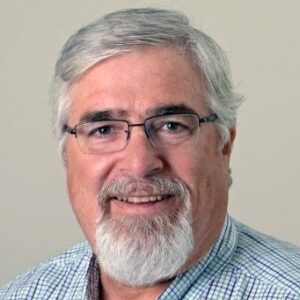
St. Louis Federal Reserve President Alberto Musalem said Wednesday that he doesn’t see a near-term need for the Fed to alter its position on interest rates, but warned of rising inflation risks tied to the war with Iran.
“Policy is well positioned to address risks to both dual mandate objectives, and I expect the current setting of the policy rate will remain appropriate for some time,” Musalem said in the text of a speech delivered before a gathering at the American Enterprise Institute in Washington.
Musalem emphasized the uncertainty ahead.
“The economic outlook is highly uncertain,” Musalem said. And while the baseline outlook holds for decent levels of growth, stability in the unemployment rate, and further moderation in inflation, Reuters reported that he added that “uncertainty from the Middle East conflict and unsettled tariff policy could weigh on consumer and business spending in the first half of the year.”
Musalem also said “higher fuel, aluminum, and fertilizer prices” could also weigh on the economy.
He said that in the current environment, “the risks to the labor market and inflation both tilt in unfavorable directions, that is, toward a weaker labor market and greater persistence of above-target inflation.”
Temporary Drivers of Higher Inflation
Musalem also said that it has been an extended practice for the central bank to view supply shocks as likely temporary drivers of higher inflation, but the current times may be different.
“History suggests caution is warranted, however, especially when underlying inflation is persistently above target,” Musalem said in the address. “Supply shocks may be more likely to have a persistent impact on inflation and inflation expectations, especially given the difficulty of identifying how much underlying inflation is due to temporary supply shocks as opposed to persistent demand pressures.”
Last month, the central bank held steady its benchmark overnight interest rate in the 3.50%-3.75% range, awaiting data on the impact of the U.S.-Israeli war with Iran, which has caused a surge in energy prices and begun to disrupt key global supply chains, Reuters reported.
At its recent policy meeting and in comments since then, Fed officials have given no signals they see an imminent need to change interest rate policy.
Musalem said there could be cases for both lowering and raising rates at some point.
He said he might favor easing policy if “a greater risk of a weakening labor market becomes apparent,” so long as risks of higher inflation are low. As for a hike, he said that could be in the cards “to avoid an inadvertent, real easing that would result from holding the policy rate constant if core inflation or medium- to long-term inflation expectations moved persistently higher and away from (the) 2%” target.
No ‘Sign of Broader Woes’
Musalem also said financial conditions are still “broadly accommodative” and stress in private credit markets largely is contained to that sector and is not a sign of broader woes.
Chicago Federal Reserve President Austan Goolsbee said in a recent interview that he’s more worried about inflation now than he is about unemployment.
In the CNBC interview, Goolsbee noted that Fed policymaking is difficult in the current environment.
He spoke shortly after President Donald Trump announced that progress had been made in talks with Iran and that further attacks on energy infrastructure would be halted for five days as talks continue.
“The most important thing is to figure out the through line of what is happening,” Goolsbee said in a “Squawk Box” interview. “What makes this a fraught but intense moment is nobody can tell us what is going to happen on the ground in the conflict in the Middle East, and how long that lasts.”
Goolsbee dissented on a rate cut in December and said that he agreed with the majority to hold short-term rates steady at the January and March meetings of the Federal Open Market Committee.
He is not an FOMC voter this year but will vote again next year. Last week, FOMC officials last week indicated a majority still expect a cut this year and another the next.
Goolsbee said that his inclination will depend on the progress of inflation, and he cautioned against “a repeat of the team-transitory mistake” where the Fed underestimated the severity of inflation in 2021.
“I remain fairly optimistic that by the end of ’26 rates could go down, but I wanted to see proof that we’re back on an inflation headed to 2%. This [war] definitely throws a wrench into the plans. We do need to see progress,” Goolsbee said.
Expressing Their Opinions
Goolsbee added his thoughts to those of two Federal Reserve governors who took to the airwaves recently to talk about what the rest of the year might hold for interest rates.
Saying there was still opportunity for interest rate cuts later this year, Federal Reserve Governor Christopher Waller still expressed caution about current economic conditions. And, Fed Governor Michelle Bowman said that she believes the Fed can cut three times this year, which would take the benchmark federal funds rate below the neutral level that FOMC officials see as neither supporting nor restricting growth.
Waller, who previously advocated for rate cuts, said that recent developments in the labor market, as well as the uncertainty of the war with Iran, require a more conservative approach.
“It doesn’t mean that I’m going to stay put for the rest of the year,” Waller said on “Squawk Box.” “I just want to wait and see where this goes, and if things go reasonably well and the labor market continues to be weak, I would start advocating again for cutting the policy rate later this year.”
In a Fox interview, Bowman took her position even though she said she expects “strong growth” this year, supported by the supply-side policies that this administration is putting into place.”
Bowman is one of just three Fed officials who see aggressive rate cuts this year, according to a recent update of the Fed’s “dot plot” grid.