


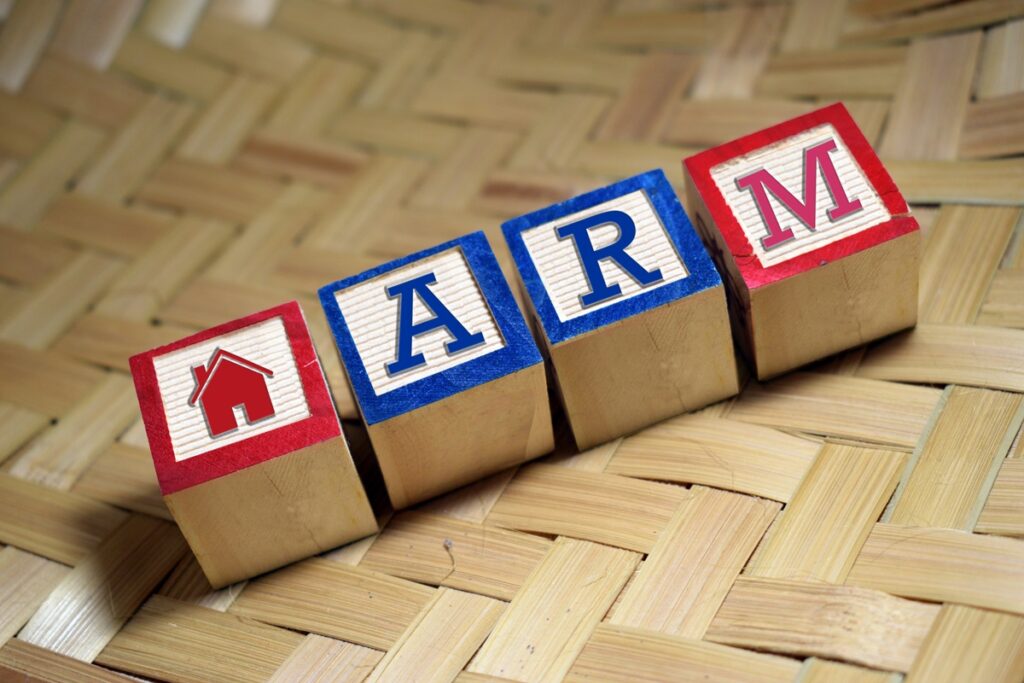
Do you remember the 2008 housing crisis and the factors that contributed to it? Adjustable-rate mortgages (ARMs) were a major factor.
According to a report by Investopedia some homebuyers are turning to ARMs as an option because of high mortgage rates that have overwhelmed them for the past three years.
ARMs offer homebuyers fixed introductory rates that later adjust, typically to a higher rate that reflects current market conditions. ARMs are becoming increasingly as mortgage rates remain persistently above 6%.
Those homeowners risk having a larger monthly mortgage payment down the road, but housing industry officials said better lending standards are minimizing the dangers of these loans.
“In the current timeline, these buyers still are at minimal to low risk,” said Phil Crescenzo Jr., vice president of the Southeast Division at Nation One Mortgage Corporation, told Investopedia.
ARMs Reflect Strain of Higher Interest Rates
The publication said that the rising usage of ARMs reflects the strain that higher interest rates, tight housing supply, and slow growth are putting on family budgets.
Data from the Mortgage Bankers Association show that use of ARMs has increased in the past three years, Investopedia said. Roughly 10% of borrowers in September opted for the loan, compared to 6% of buyers who used ARMs after the 2008 housing crash.
ARMs also are being used more in new home purchases. In October, for example, ARMs accounted for a quarter of home purchases, up from 16% in the same month of the prior year.
“In this environment where borrowers are struggling with lack of affordability, moving to an ARM can result in real savings,” MBA Deputy Chief Economist Joel Kan said.
MBA data showed that when mortgage rates were at their lows in 2021 — falling under 3% at times — the usage of ARMs dropped off, too. After mortgage rates rose by more than three percentage points in 2022, at times surging over 7%, borrower demand for adjustable-rate loans responded in kind, Investopedia said.
Some Borrowers Can Reap Significant Savings
Home buyers can see significant savings using ARMS, Investopedia said.
According to MBA data, a five-year ARM loan in October offered borrowers an initial rate of 5.58%, compared to the 6.37% rate for traditional mortgage loans over the same period. For a $400,000 loan, Investopedia said the savings in monthly payments could be about $200 a month.
Investopedia said that one reason more borrowers are using ARMs is that the adjustable-rate loan has become a better value in 2025 as short-term interest rates have declined, providing a more favorable introductory rate, Kan wrote. “It is not surprising that the ARM share has increased, and we expect it will increase further in 2026.”
For ARM borrowers, Investopedia said it’s often a matter of timing, as the borrowers might be saddled with higher rates once the introductory period ends.
“If you are a homeowner with this loan, you would watch the market to refinance into a fixed rate and avoid the adjustable period altogether,” Crescenzo Jr. said.
If rates are higher when the introductory period expires, he said, the borrower might be hit with higher payments that they can’t afford.
That was what set off the housing market meltdown that came to a head in 2008, when borrowers with poor credit ratings saw their adjustable-rate mortgage payments skyrocket. Many couldn’t make the payments. That caused a wave of defaults that sent the housing market reeling, Investopedia said.
Kan said lenders now are applying stricter credit standards, including evaluating the borrower’s credit rating against the current mortgage rate, not just the introductory rate.
“Most ARM loans now have fixed terms of 5, 7, and 10 years and borrowers are underwritten to the fully indexed rate and are significantly less risky than ARM loans originated before 2008,” Kan said. “Additionally, borrowers who qualify for ARMs tend to have better credit profiles.”