

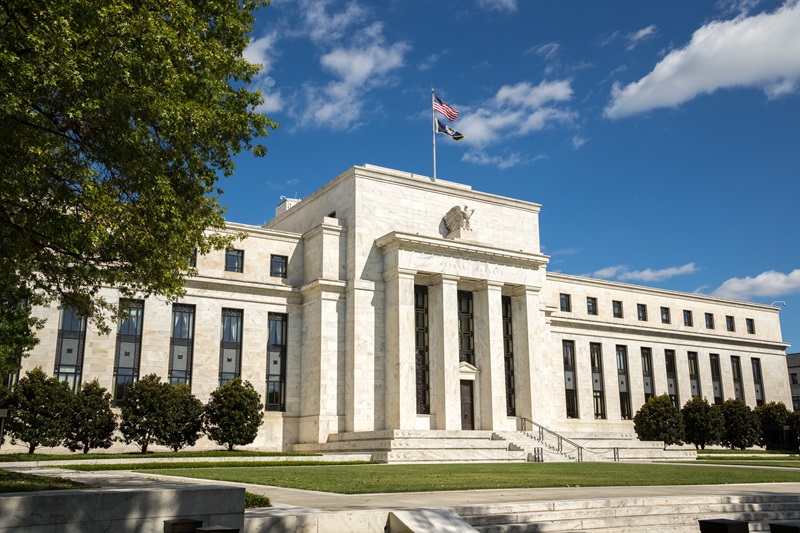
New Fed Chair Kevin Warsh is leading his first meeting this week and will announce the latest interest rate decision on Wednesday.
With the central bank tackling the highest inflation in three years, the announcement will mark the first possible adjustment of the benchmark interest rate since Warsh began his four-year term as Fed chair last month.
ABC News reported that the policy move will arrive at a moment of flux for the nation’s economy, just days after an agreement between the United States and Iran offered hope for some price relief.
The U.S.-Iran accord, to be formally signed on Friday, came as gasoline prices fell below $4 a gallon for the first time since March, ABC reported. Still, fuel costs stand well above pre-war levels, and an array of grocery prices remain elevated.
Futures markets overwhelmingly expect the Fed will hold interest rates steady when policymakers meet on Wednesday, according to the CME FedWatch Tool, a measure of investor sentiment.
Bankrate Financial Analyst Stephen Kates, CFP, said he foresees the rate holding steady.
“The Federal Open Market Committee will keep the benchmark interest rate unchanged at its June meeting. A persistent inflation problem prevents any immediate cuts,” he said. “At the same time, inconsistent growth and hiring data take a rate hike off the table, giving Chair Kevin Warsh a clear window to recalibrate market expectations for his tenure.”
Stubborn Price Pressures
Kates said consumer prices are a major factor.
“Stubborn price pressures remain the primary headwind for the US economy. Consumer prices refuse to cool to the 2% target, leaving average American households with sticker shock on everyday essentials and core services,” Kates said. “In an immediate test of credibility, Warsh must explicitly address this persistent inflation without triggering a panic about structurally higher baseline rates.”
Kates said Warsh is a known factor.
“Warsh has historically criticized large central bank footprints in financial markets, signaling a desire to shrink the balance sheet. Analysts will parse his words carefully for any hint of adjusting the monthly runoff caps later this year,” Kates said. “Warsh needs to leave the podium on Wednesday, having established a firm, no-nonsense baseline for his leadership and boundaries around future policy moves. He will likely refuse to offer a clear timeline or direction for the next rate change, instead shifting the burden of proof onto incoming economic data.”
Things will be different with Warsh versus his predecessor, Jerome Powell.
“Markets will watch this first press conference closely to decode how Warsh plans to steer the central bank. It will be a departure from the Powell era, with Warsh likely favoring fewer speeches and minimal forward guidance. The era of predictable guidance may be sunsetting, transitioning back toward a less transparent Federal Reserve. If Warsh can calmly project confidence, it will go a long way toward easing investor and economic concerns about this leadership handoff.”
Odds Rise for Rate Hike by Year’s End
In recent weeks, odds have risen for a potential interest rate hike by the end of 2026, the CME FedWatch Tool showed, granting a roughly four in 10 chance of a quarter-point increase in December.
That shift in expectations came after a stronger-than-expected jobs report earlier this month showed robust hiring in May, ABC reported. In theory, a resilient labor market could afford central bankers leeway to raise interest rates in an effort to dial back inflation, since elevated borrowing costs risk a hiring slowdown.