

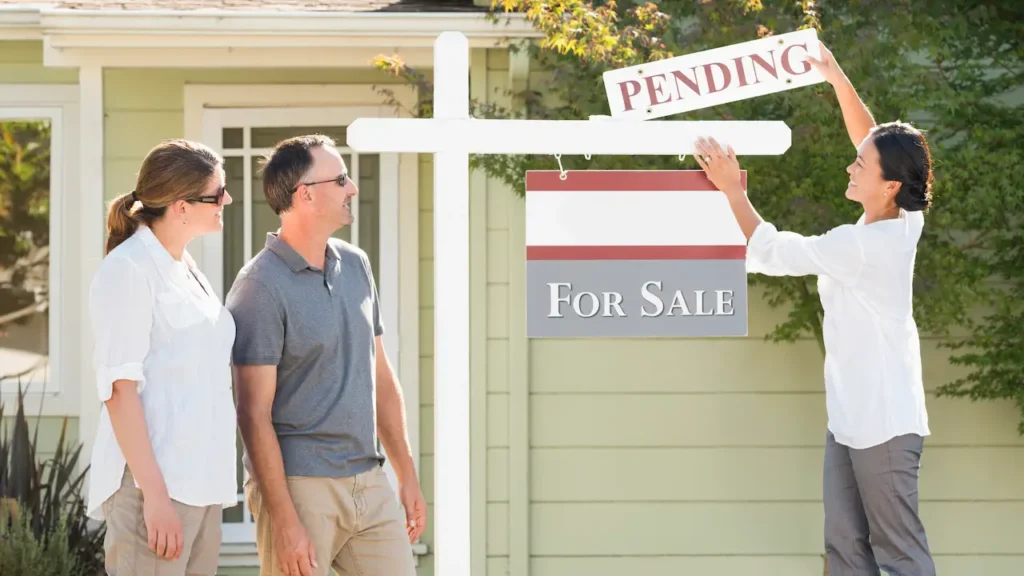
Pending home sales in May were by 3.8% month-over-month and 4.8% year-over-year, according to the National Association of Realtors Pending Home Sales report.
Month-over-month and year-over-year pending home sales rose in the Northeast, Midwest, South and West.
The report provides the real estate ecosystem—including agents, homebuyers and sellers—with data on the level of home sales under contract.
“A late spring buyer rush—even with mortgage rates not budging—is an indication of pent-up housing demand and consumers’ acceptance of above-6% mortgage rates as the new normal,” said NAR Chief Economist Dr. Lawrence Yun. “The inventory-constrained Northeast region, which has seen faster home price growth but slower home sales for several months, is now showing more buyer contract signings. More supply is needed to help moderate home price growth.”
“Going forward, falling oil prices will help lower mortgage rates,” Yun said. “But declines will be modest given sizable borrowing by the federal government and strong AI investment spending by tech companies.”
Brushed Aside Headwinds
First American Deputy Chief Economist Odeta Kushi said that home buyers have brushed aside headwinds.
“Home buyers are proving more resilient than expected. Even with mortgage rates drifting higher this spring, contract signings increased as improving inventory and pent-up demand continue to bring buyers back into the market,” Kushi said.
She said that May showed a very strong result.
“Pending home sales jumped 3.8% in May, more than triple the median consensus expectation of a 1% increase and marking another positive sign for housing demand. Contract signings were also nearly 5% higher than a year ago, extending the gradual improvement in buyer activity. Because pending sales are based on signed contracts rather than closings, they provide an early indication of existing-home sales activity over the next one to two months,” Kushi said.
May’s numbers show that that housing demand has improved.
“The latest increase adds to a growing list of indicators suggesting that housing demand has firmed this spring. Mortgage purchase applications, another leading indicator of home sales, have been trending higher for several months. Together, rising purchase applications and stronger contract signings suggest that buyers and sellers are becoming more willing to move off the sidelines,” Kushi said. “What makes the recent improvement particularly noteworthy is that it has occurred despite mortgage rates moving higher through much of the spring. Mortgage rates increased between March and May, reversing some of the affordability gains that emerged earlier in the year. Under normal circumstances, higher financing costs would be expected to dampen buyer demand. Instead, many households appear willing to move forward with purchases as inventory improves and the reality of higher-for-longer mortgage rates becomes more widely accepted.”
Factors Effecting Demand
Several factors have bolstered demand.
“The resilience in demand reflects several factors. Pent-up demand remains significant after years of constrained affordability and limited inventory. At the same time, the supply of homes for sale is modestly higher than it was a year ago, giving buyers more options and greater negotiating power. Affordability conditions, while still challenging by historical standards, are also better than a year ago,” Kushi said. “Mortgage rates remain below year-ago levels, income growth continues to outpace house-price growth, and slower price appreciation has helped improve purchasing power at the margin.”
The data reflects a gradual move, Kushi said.
“The latest data suggest the housing market continues to move gradually in the right direction rather than staging a rapid rebound. Activity remains low relative to historical norms, and elevated mortgage rates and the persistent lock-in effect will continue to constrain market activity. Nevertheless, improving inventory, modestly better affordability, and persistent pent-up demand are providing enough support to keep buyer demand moving in a positive direction, even in the face of higher borrowing costs,” she said.
May 2026 National Pending Home Sales
- 3.8% increase month-over-month
- 4.8% increase year-over-year
May 2026 Regional Pending Home Sales
Northeast
- 8.7% increase month-over-month
- 6.1% increase year-over-year
Midwest
- 8.1% increase month-over-month
- 9.3% increase year-over-year
South
- 1.0% increase month-over-month
- 3.3% increase year-over-year
West
- 0.7% increase month-over-month
- 1.2% increase year-over-year
The NAR said that at the local level, several markets posted notable year-over-year gains in pending home sales. Among the 50 largest metro areas, these 10 markets posted the biggest annual increases in pending home sales, according to data from Realtor.com Economics:
- Kansas City, MO-KS (+20.1%)
- San Antonio-New Braunfels, Texas (+15.7%)
- Minneapolis-St. Paul-Bloomington, MN-WI (+13.9%)
- Miami-Fort Lauderdale-West Palm Beach, Florida (+11.4%)
- Louisville/Jefferson County, KY-IN (+11.2%)
- Cincinnati, OH-KY-IN (+10.1%)
- Nashville-Davidson–Murfreesboro–Franklin, TN (+9.4%)
- Milwaukee-Waukesha, WI (+8.7%)
- Virginia Beach-Chesapeake-Norfolk, VA-NC (+8.2%)
- Richmond, VA (+8.2%)