
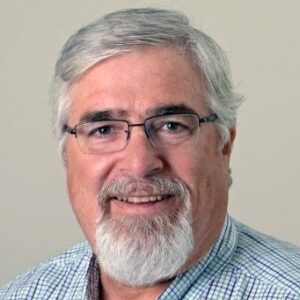
Alberto Musalem, President and CEO of the Federal Reserve Bank of St. Louis, has joined other Fed officials in voicing his opinions about the economy and interest rates.
In a lunchtime question-and-answer session at the Missouri Athletic Club on Wednesday, Musalem said the overall economy is prepared for a good year in 2026 and that he sees the economy growing “at or above potential,” which is around 2%, St. Louis magazine reported.
“There are a lot of tailwinds that are going to propel the economy forward,” Musalem said, assisted by three quarter-point cuts to interest rates made in the second half of 2025, and some deregulation in the financial system.
Even with inflation above the Fed’s goal of 2%, Musalem said he sees it finally drifting down this year. He said the most recent reading on the personal consumption expenditures index, which is the Fed’s preferred read on inflation, pegged year-over-year increases at 3%.
“Half of that excess inflation comes from tariffs, as best we can measure it,” Musalem told the audience. “I expect the part that is attributable to tariffs to fade as the year progresses and inflation to then resume a trajectory towards our 2 percent target.”
Musalem said that inflation is still a significant challenge for people in the Federal Reserve District, which encompasses Arkansas and parts of Illinois, Indiana, Kentucky, Mississippi, Tennessee, and Missouri.
Risk of Inflation
“When I travel around the district, I hear from folks, consumers, households, that they are challenged in consuming because the real incomes are stretched. If inflation continues to run above our target, that’s going to add to those challenges, and it’s really important that we finish the job and bring inflation back towards a 2% target.”
Musalem said there’s a risk that inflation will be more stubborn than he expects, especially given last year’s government shutdown and the way it forced statistical agencies to estimate Consumer Price Index data for October and some of November.
“That may have biased the inflation data downward for a few months,” Musalem said. “And those biases could be with us all the way through April, just how things are calculated.”
Then, there’s the labor market, which Musalem said is another risk. He sees it stabilizing and explained that job creation is essentially limited to the sectors of healthcare and education.
“Because it’s a narrow job creation environment, the job market is vulnerable to an increase in layoffs. If there were increasing layoffs, with low job creation, you could risk labor market deterioration further,” Musalem said.
Musalem pointed to stagnant population growth as an enduring challenge, but he said that businesses and households are cautiously optimistic about the labor market in the near term.
“We hear that it’s easier for people to fill vacancies, [that they have] more applicants for [each] vacancy,” he said. “When we survey firms, the majority are thinking they’re going to keep their labor force constant—they’re not going to hire, they’re not going to fire.”
Companies Look to Increase Payrolls
He said a growing number of firms are looking at increasing payroll expenditures. He said many companies are reporting higher non-labor costs for items such as insurance and are looking to drive efficiencies in their operations to counter these increases and still hold onto profit margins.
On Tuesday, Federal Reserve Bank of Boston President Susan Collins said that the central bank is “quite likely” to keep current interest rates steady for “some time,” and said that the that the Fed’s monetary policy is well positioned for risks.
“It does seem to me that a patient and deliberate approach is appropriate at this stage, because, you know, I think that after 175 basis points of easing over the past year and a half, that we’re at a mildly restrictive, perhaps quite close to neutral [policy] already,” Collins said at the 2026 Technology-Enabled Disruption Conference.
Collins also said that the latest tariff news hasn’t changed the outlook much and that the nation’s economy shows a “benign” outlook when it comes to inflation and wage growth. She also stated that the effects from the tariffs likely will become more pronounced as costs pass to consumers.
Federal Reserve Governor Christopher Waller said on Monday that solid job gains in January could mean the Fed can skip a rate cut at its next meeting in March. Waller made his remarks to a conference held by the National Association for Business Economists.
An Increase in Hiring
Holding steady would likely spur more attacks by President Donald Trump, the Associated Press reported.
Waller said last month’s pickup in hiring, when employers added a more-than-expected 130,000 jobs, could have been a one-time gain, and he said he would need to see a similarly positive report next month to conclude the job market is improving. He previously said the job market was very weak in 2025.
The AP noted that Waller’s hedging is a notable shift from January, when he was one of the two Fed governors to dissent against the central bank’s decision to hold its key rate steady after three rate cuts at the end of last year.
On Tuesday, Chicago Federal Reserve President Austan Goolsbee said that more evidence is needed that inflation is on the way down before interest rate cuts would be appropriate.
Recent indicators show that inflation is off its highs but still above the Fed’s 2% target, Goolsbee said. He noted that policymakers “have been burned by assuming transitory inflation” in the past and shouldn’t make the same mistake again.
“I feel that front-loading too many rate cuts is not prudent in that circumstance,” Goolsbee said in remarks before the National Association for Business Economics at its annual gathering in Washington, D.C. “People express that prices are one of their most pressing concerns. Let’s pay attention. Before we cut rates more to stimulate the economy, let’s be sure inflation is heading back to 2%.”