

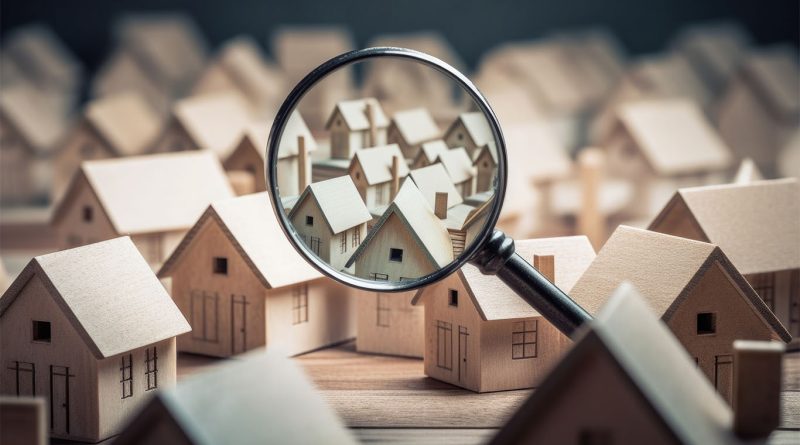
President Donald Trump signed a pair of executive orders Friday aimed at improving home affordability, a key issue for many voters going into November’s election to determine control of the House and Senate.
The first order addresses how the federal government would reduce its own housing regulatory burdens and create incentives for best practices by state and local governments. The goal is making it easier for builders to construct more homes. The second order seeks to reduce the regulatory burdens tied to mortgages and to make it easier for small community banks to provide home loans.
“Layers of unnecessary regulatory barriers, slow permitting processes, and onerous mandates at all levels of government have delayed construction, restricted development, and driven up the costs of new housing,” a draft of the order stated. “These constraints have made housing less affordable for many Americans.”
The executive orders were obtained exclusively by The Associated Press and they show how the administration wants to put more of a policy emphasis on the importance of home ownership. Housing affordability has emerged as a fundamental political challenge for Republicans and Democrats alike, the Associated Press reporte, and lawmakers are working on measures to show they’re responding to concerns that buying a first home has become hard for middle-class families.
The Senate passed a broad bipartisan bill on housing on Thursday that seeks to adjust policies to increase construction and limit institutional ownership of home development. The bill’s path in the House is uncertain. On March 2, The White House said in statement that it supported passage of the measure.
It’s not clear how quickly federal efforts can produce new construction or meaningfully reduce mortgage costs, as the key regulatory issues on home development involve state and local government policy choices and mortgage rates will reflect changes in financial markets, the AP noted.
The multiyear shortage of construction has kept prices high, while mortgage rates spiking in the aftermath of the pandemic have left many renters unable to buy and existing owners unwilling to part with their current properties.
Creating Incentives to Quicken Permitting
Under the first order signed Friday, federal agencies would create incentives to hasten permitting times by state and local government, including the curtailing of “green” building codes, reductions to design and building mandates, and making it easier to deploy innovative construction methods.
The order looks heavily at federal environmental regulations and directs the Environmental Protection Agency and secretary of the Army to review and update stormwater, wetlands and other water-related permitting requirements to lower costs and improve the ability to insure homes.
The departments of Commerce, Housing and Urban Development and Transportation, along with the Federal Housing Finance Agency, were instructed to eliminate regulations and update programs that are reducing residential development, the order said. Multiple federal agencies also will seek to eliminate environmental and energy efficiency regulations that could increase costs and restrict home construction, the AP noted.
White House officials said in a release that the Biden-era energy efficiency mandates in HUD and Agriculture departments’ guidelines could add up to $9,000 to housing construction costs.
Under the order, The Advisory Council on Historic Preservation would simplify its guidance for historic reviews, while the federal government would look to have its New Markets Tax Credit program align with the Opportunity Zone tax breaks created during Trump’s first term, the AP reported.
The order does not seek to change state and local zoning codes.
The White House officials said federal agencies can incorporate best practices on housing regulations as a criteria for rewarding discretionary grants to state and local governments. An example of a best practice would be local governments having a 60-day deadline for approving building permits, the AP said.
Longer-Term Effect
The Trump administration said it sees this order as having a longer term effect for homebuilders and buyers.
The second order would attempt to streamline the mortgage process, directing the Consumer Financial Protection Bureau to change its mortgage guidelines so that smaller banks could engage in more lending. Under the order, the CFPB would update requirements under the Home Mortgage Disclosure Act to lessen the regulatory burdens for obtaining a mortgage, among other directives.
The AP noted that the administration’s theory is that the changes to mortgage regulations would increase the number of financial institutions competing to provide home loans, thus lowering the cost of borrowing for buyers.
The White House has said that its changes would preserve the financial safety and stability of the mortgage market.
The White House officials said they expect that potential homebuyers could see the impact of the changes to mortgage regulations in a matter of months.
/the AP noted that high home prices have become a key issue for voters under the age of 40 going into this fall’s midterm elections.
The median price of an existing home sold in February was $398,000, according to the National Association of Realtors. That total is nearly five times the median household income. The AP noted that a historic rule of thumb was that homes generally cost three times the household income.
The reduction in borrowing costs has made monthly payments more manageable, but rates are still much higher than the sub-3% averages that occurred in 2020 and 2021 as the weakened economy dealt with the Covid-19 pandemic and its aftermath.
Trump has sought to address the home affordability challenge by directing the two mortgage companies under government control, Fannie Mae and Freddie Mac, to purchase $200 billion in mortgage bonds.
He has also called for limiting the ability of financial institutions to buy homes and caps on the interest rates paid on credit cards, arguing that both moves would make it easier to buy homes.
Seeks to Keep Prices Up
But Trump has previously pushed back against the idea of dramatically increasing construction, saying that could bring down home prices and the net worth of existing owners. T
“People that own their homes, we’re going to keep them wealthy,” Trump said at his January Cabinet meeting. “We’re going to keep those prices up. We’re not going to destroy the value of their homes so that somebody that didn’t work very hard can buy a home.”