


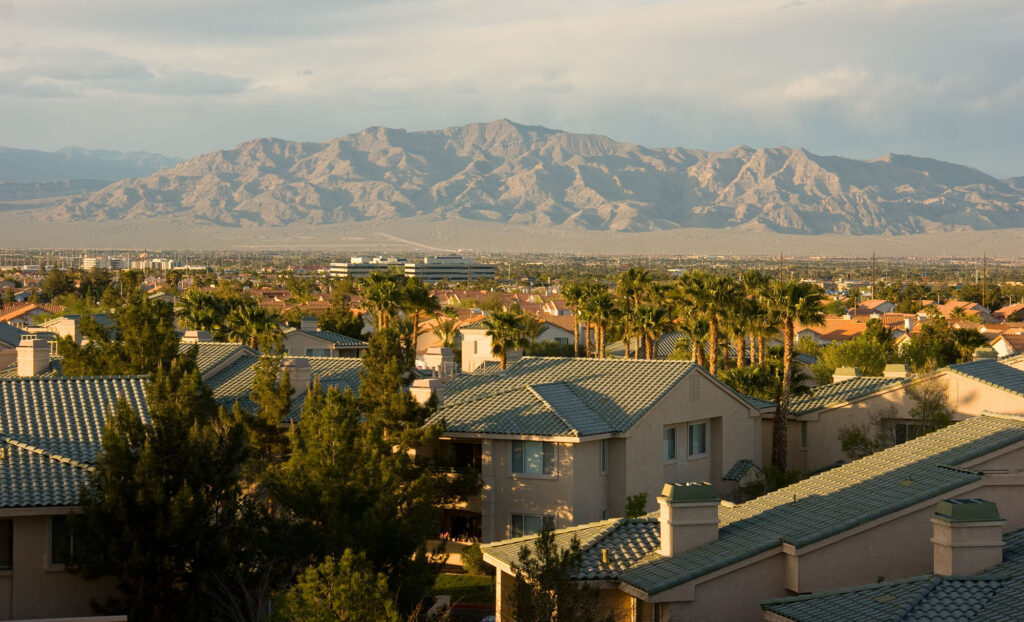
It’s likely a safe bet that Las Vegas is better known than fellow Nevada hot spot Reno, but the state’s second-largest metro increasingly is outshining Vegas in its appeal to California homebuyers, according to Realtor.com.
Reno is more 400 miles northwest of Las Vegas—but just across the border from California. It has seen its popularity among California buyers reach new heights, putting upward pressure on local home prices in the process.
“Reno has really evolved over the last several years. What used to be considered a smaller regional market is now attracting national attention because of its economic growth, proximity to California, and lifestyle appeal,” Sandy Ravens, a Licensed Broker at Soli Ravens Team at Engel & Völkers, told Realtor.com.
Mike Wood, Real Estate Agent and owner of The Mike Wood Team at Re/Max Professionals, suggested that Reno and Las Vegas are actually “two separate ecosystems.”
“While Las Vegas remains a world-class tourism destination built largely around hospitality and entertainment, Reno has diversified considerably over the past decade,” Wood told Realtor.com. “The local economy has transitioned from being primarily gaming and mining based to one that now includes significant investment in technology, advanced manufacturing, logistics, and distribution.”
Realtor.com noted that according to its latest housing data analysis in 2025, nearly 43% of online listing views to Reno came from users in California metros. That is the highest share in the data’s history dating back to 2019, Realtor.com said.
Reno Has Been Popular for a Long Time
On the other hand, Realtor.com said that about 25% of viewership to Vegas listings originated from California metros, down from its 2023 peak of 27%.
“The data suggests that Reno has long been popular with California home shoppers, and its popularity is continuing to grow perhaps due to its relative affordability and lower cost of living,” Realtor.com Senior Economist Research Analyst Hannah Jones said.
She said that last year, Reno attracted more home shoppers from locations across California than shoppers from within the local market, who accounted for just over 30% of listing views.
By comparison, Realtor.com noted that for-sale homes in Las Vegas pulled in 38% of viewership from within Nevada’s largest metro, surpassing viewership from California by a margin of more than 12%.
Tania Jhayem, a Real Estate Agent at Keller Williams The Marketplace’s luxury division in Las Vegas, said that Reno benefits from a different set of dynamics than her hometown.
“It sits right on the California border and is much closer to Northern California job centers like the Bay Area and Sacramento,” she told Realtor.com. “For many buyers leaving California, Reno feels like a natural extension of that region.”
Ravens told Realtor.com that many of her California clients set their sights on Reno in search of more space, less congestion, and a better overall lifestyle for their families.
“Reno offers that while still feeling vibrant and connected. People appreciate that they can buy a larger home, often with views or access to nature, and still be near restaurants, schools, and a growing business community,” Ravens said. “For remote workers and entrepreneurs, Reno also offers the ability to maintain their California connections while enjoying Nevada’s business-friendly environment.”
Reno is nicknamed “the Biggest Little City in the World,” and it has a lot more going for it than its proximity to Northern California, including its status as a bustling employment hub anchored by technology, manufacturing, healthcare, and gambling sectors, Realtor.com noted.
Reno Has a Vibrant Downtown
Reno’s largest employers include Panasonic, Tesla, and Caesars Entertainment.
Realtor.com noted that Reno has a vibrant downtown area dotted with casinos, nightclubs, and restaurants, while retaining its small-town feel. Also, the city is a convenient drive from the Sierra Nevada mountains and Lake Tahoe, offering access to top-notch outdoor recreation, including skiing, hiking, mountain biking, and water sports.
Reno’s other major advantage is its milder climate compared with the scorching summer temperature of Southern Nevada, Realtor.com said.
“For many buyers, it strikes a really attractive balance between opportunity, affordability, and quality of life,” Ravens said.
Reno’s appeal has not gone unnoticed, Realtor.com noted. In February, the median listing price in the metro was $636,800, up more than 11% compared with a year ago.
“Unlike Las Vegas, which has a much larger housing inventory and is more tied to tourism and hospitality cycles, Reno has seen a steady influx of technology companies, logistics hubs, and remote workers,” Ravens told Realtor.com. “That combination has created sustained housing demand. When you add in limited land supply in the region and the desirability of the Northern Nevada lifestyle, it’s not surprising that prices have remained resilient and even climbed while other markets are softening.”
By the end of 2025, Reno’s housing market on average had 4.7 months of supply, putting it in balanced territory but more seller-leaning than both the national and Las Vegas markets, Realtor.com noted.
In Las Vegas, Realtor.com noted that the median listing price in February was $464,950, down 1.1% year over year as the metro’s inventory surged 23% from 2024 and the typical home spent six days longer waiting for a buyer, according to the latest monthly housing market trends report.
Market Size Sets Prices
Both Ravens and Jhayem agree that the disparity in pricing between Las Vegas and Reno comes down to market size: Reno is far smaller and has a more limited supply of homes, so even a small uptick in demand can push up prices more rapidly, Realtor.com noted.
“While Las Vegas will always be an internationally recognized city, Reno’s growth has been quieter but very steady, and that’s really showing up in the housing numbers,” Ravens said.
Even though Reno’s median home price is more than $170,000 higher than Las Vegas’, it’s a relative steal compared with asking prices in the costly Bay Area hubs of San Francisco ($907,000) and San Jose ($1.35 million), according to Realtor.com.
Unlike California, Nevada has no state income tax, allowing out-of-state movers to keep more of their earnings.
More recently, Nevada has emerged as a refuge for high-net-worth Californians looking to shield their wealth from a proposed wealth tax on billionaires that, if adopted, would levy a one-time 5% tax on their assets.
“For California buyers specifically, the appeal is fairly straightforward,” Wood said. “They can often sell a home in high-dollar markets and purchase a larger property in Reno while still maintaining access to Northern California. Many are retirees drawn by Nevada’s lack of state income tax structure and the region’s overall lifestyle—ski in the morning, golf or paddleboard in the afternoon, and still be home in time for dinner. That’s a hard combination to beat.”
Realtor.com noted that on the other side of the increased demand from buyers coming from more expensive markets is the impact it has had on local home shoppers now having to compete with deep-pocketed Californians.
“Many of those buyers arrive with more purchasing power, which can make competition challenging for first-time or local buyers,” Ravens told Realtor.com. “That said, Reno still offers more attainable price points compared with much of California, and we continue to see strong participation from local buyers as well.”