

A push to include manufactured homes as a viable option to help curb the housing affordability crisis is gaining ground as more of the premade homes are showing up established neighborhoods.
Take for instance the neighborhood in Petersburgh, Virginia where a construction team pushed together two halves of a brand-new factory-built house in the middle of a neighborhood of small single-family homes.
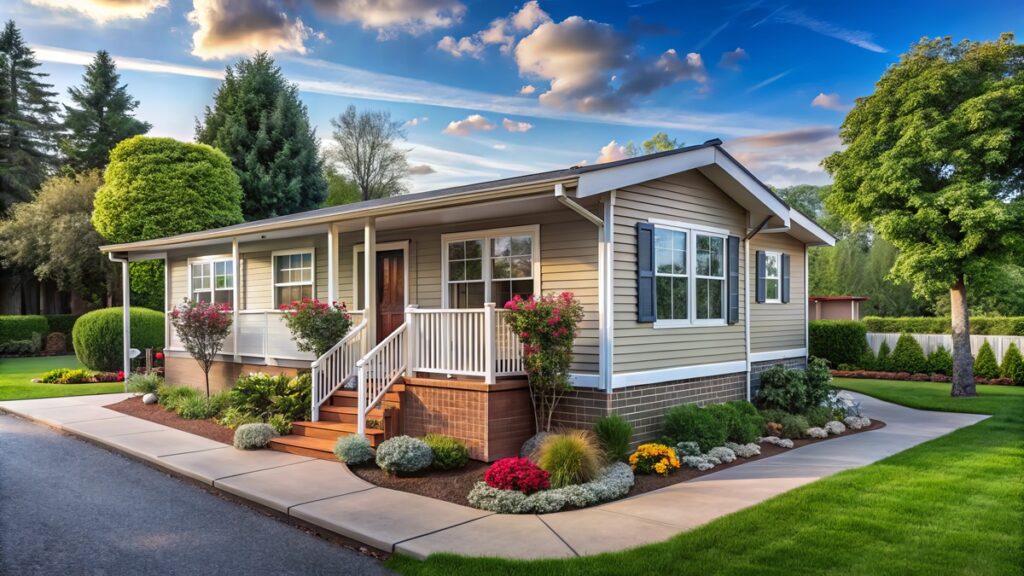
Once set, the home with its pitched roof and front porch, won’t look like a stereotype of a mobile home, NPR reported. Across the street, two big trucks rolled in from Pennsylvania and deposited another house, this one with blue siding and beige window shutters.
NPR noted that for decades, manufactured homes have faced stigma and were confined to trailer parks. That’s changing with updated designs and higher-quality construction — and as cities and states struggle with a housing shortage that has pushed prices out of reach for many, NPR said.
The new homes here are part of a larger push to allow factory-built homes in more places to rent and also to buy, along with the land underneath, NPR stated.
Developer Tom Heinemann with MH Advisors is putting up dozens of these manufactured homes on vacant lots in Petersburg and targeting low- and moderate-income families.
“Room to raise their kids, walk to school and all of those amenities that people generally like about single-family homes,” Heinemann said. “But bring it to people who ordinarily would be in a three-story walk-up or a town house or apartment.”
NPR said that before Kennisha Missouri moved into one in December, she had not seen other manufactured homes nearby, and Missouri admits she was skeptical, NPR said.
Despite the online photos seeming okay, she expected it to look like older models in trailer parks.
Signed Up Sight Unseen
Still, NPR noted, the rent for a four-bedroom home included utilities and was lower than what she was paying for a smaller two-bedroom apartment. She works in recovery care and has two children, one not yet a year old, and NPR said she signed up sight unseen.
When Missouri saw the spacious rooms, walk-in closet and kitchen island with amber-colored hanging lights, it was “like I designed it myself,” she said. “I love it.”
NPR reported that Missouri’s new home is one of nearly four dozen manufactured rental houses built with a federal tax credit and restricted to people with lower incomes.
After 15 years, she will have the option to buy it.
With the cheaper rent, Missouri said she doesn’t have to work as many hours at her side job doing hair and is still able to save up.
“The money that I was using to pay the utilities, I actually pocketed it,” she said. “It makes my life a little easier.”
Manufactured housing is faster than building on-site and is nearly half the cost per square foot, NPR said. Federal construction standards have improved quality and also mean developers don’t need local approval for every project.
Filling the Gap
“Starter homes that were built in the ’50s and ’60s just aren’t made today,” said Rachel Siegel of the Pew Charitable Trusts, a research and policy organization. “Manufactured housing really can fill that gap very well, without subsidy, which is unique for this type of housing.”
Nine states have relaxed zoning restrictions on manufactured homes so far, and lawmakers in Virginia have passed similar legislation.
It can be harder and more expensive for buyers to finance these types of homes, because they’re considered personal property, not real estate, NPR said.
“Modernizing these state policies to make it easier and faster to get a mortgage just like any other mortgage is really crucial to affordability,” Siegel said.
Another big change may be coming, NPR said.
Sweeping housing legislation making its way through Congress would end the requirement that factory-built homes have a permanent chassis, NPR noted. The steel frame allows the housing to be transported, but many manufactured homes — such as those in Petersburg — are placed on permanent foundations and never moved again.
In Petersburg, the factory-built homes are popping up in the Delectable Heights neighborhood, known for the many affluent freed slaves who lived there before the Civil War, NPR reported.
The area has struggled in recent years, since tobacco and other manufacturers moved out of the city decades ago.
“This was all dilapidated, this block right here,” said Howard Myers, a former mayor and current city councilman for the area. As he walked down a street, he pointed out lots where he had pushed for old homes to be torn down. “They were run-down. They were vacant. Some were drug ridden.”
Now, he said, “This neighborhood has transformed.”