



The rental market in America is frequently talked about as though it were a single, consistent experience, according to a new Realtor.com study. However, some experts say it isn’t. The U.S. rental market is dividing into three separate but overlapping segments, and for the majority of tenants, choosing where and how to live is less of a lifestyle decision and more of a calculation of financial stability.
While family renters, who are disproportionately minority households, find homeownership fundamentally unattainable, young renters are being priced out of the markets they previously defined. Long-term tenants, on the other hand, are still mostly stuck or “locked in place” because many of them cannot afford the market in which they currently reside. When taken as a whole, these patterns show that pricing, location, and unequal access have a greater influence on the rental market than personal preferences.
Updated Demographic of Young Renters:
- Markets with high young renter shares show significantly lower affordability stress, higher shares of single-person households, and lower rates of doubling-up
- Represent 31.9% of all renter households nationally
- A typical young renter household in the U.S. is headed by a 28-year-old adult, with a household size of 2 people living in a 2-bedroom unit, earning $65,000 annually
- Concentrated in mid-size, affordable inland metros that offer job opportunity— not expensive coastal cities
“We often hear that today’s renters are choosing to rent because they don’t want to be homeowners or are choosing to be ‘forever renters’, but in order to understand what’s holding renters back, we need to know who they are, where they are, and why they’re renting,” said Danielle Hale, Chief Economist at Realtor.com. “America’s rental landscape is being shaped by cost and geography in ways that limit flexibility for almost every type of tenant.”
Note: The study includes data and an analysis of 2024 American Community Survey data across the 100 largest U.S. metropolitan areas by Realtor.com.
Renter Trends Vary by Household, Location & More
Approximately 31.9% of all renter households in the country are headed by an adult under the age of 34. Although prominent coastal cities have historically been thought of as draws for this demographic, they are becoming less prevalent in the top markets for concentrations of young renters. Rather, mid-sized, reasonably priced inland metropolitan areas with tight job markets are attracting a large number of young renters.
An estimated 10% of these young households live in doubled-up arrangements, where at least two unmarried or unpartnered working-age persons share a unit, and 34% of these households are single, frequently as a way to control and adapt to growing housing prices across the country.
The Top 10 Metros for Young Renters:
- Colorado Springs, CO (45.7%)
- Austin, Texas (44.6%)
- Denver (43.5%)
- Salt Lake City (41.7%)
- Grand Rapids, MI (41.7%)
- Indianapolis (40.1%)
- Des Moines, IA (39.8%)
- Columbia, SC (39.5%)
- San Antonio (38.7%)
- Charleston, NC (38.6%)

The majority of the markets on this list are inland, midsize, reasonably priced, and offer excellent employment opportunities. The report also revealed that the shift is driven by a massive affordability gap. In the top 10 markets for younger renters, an average of 52.6% of renters can afford a fair market rent, compared to just 32% in Miami and 33.6% in popular, bustling Los Angeles metro. Yet, affordability alone does not explain why young renters choose these specific markets over other affordable alternatives.
Additionally, the top markets provide jobs, which are just as essential. The average unemployment rate in the top ten young renter markets was 3.6% in December 2025, while the national rate was 4.1%. This indicates that they are not merely low-cost markets, but rather really competitive labor markets with plenty of early-career options. Austin, Texas, has become one of the nation’s most dynamic labor markets, attracting technology companies, financial services firms, and corporate relocations that have produced a deep pool of early-career potential. The growing Austin metro has been selected twice as a top destination for recent college graduates.
These households, which have higher percentages of single-person households, have the financial capacity to live independently in areas where renting is reasonably priced. They are compelled to double up where it isn’t. For instance, some 16.3% of young rental households in Los Angeles reside in “doubled-up” arrangements, which is over twice as high as the average of 8.6% in the top 10 markets for young renters.
Homeownership Barriers Fluctuate Across Household Size
At 44.3% nationwide, family renters hold the biggest market share in the U.S. The geography of minority America is, in large part, the geography of family renting. Majority-minority markets in California, Texas, Florida, and Hawaii have the largest concentrations, with Stockton, CA (63.3%), Riverside, CA (61.7%), and McAllen, Texas (61.0%), leading the way.
Family formation rates are typically greater among minority groups. For instance, compared to 60.1% of white-alone households, 67.9% of all Hispanic households are family households. Second, there are two obstacles to homeownership for minority families in these regions. According to Realtor.com data, all of these markets score below the national affordability threshold, indicating that home prices have risen much beyond the means of median-income households. This affordability wall is exacerbated by structural obstacles that endure regardless of market conditions; for example, unequal credit availability and low intergenerational wealth have resulted in a persistent and well-documented homeownership divide.
U.S. Family Renter Demographics:
- Represent 44.3% of all renter households nationally
- A typical family renter household in the U.S. is headed by a 42-year-old adult, with a family size of 3 people living in a 2-bedroom unit, earning $68,000 annually
- Concentrated in majority-minority markets across California, Texas, Florida, and Hawaii
- Face a double barrier: high home prices that put buying out of reach, compounded by a long-documented homeownership gap that disproportionately affects minority households
- Markets where family renters concentrate most heavily are among the most burdened and most crowded in the country
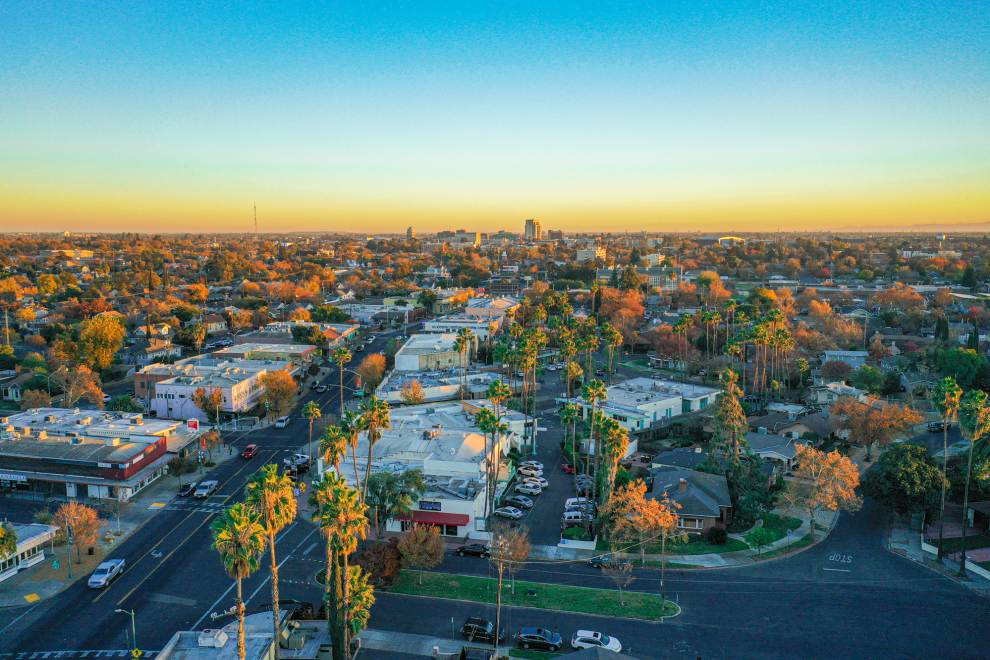
“Whether it’s young professionals moving inland for breathing room or families in high-cost markets stuck behind an affordability wall,” Hale said. “Despite the fact that 75% of Americans believe homeownership is part of the American dream, we found that in nearly every category of renter, achieving homeownership is a challenge.”
The nation’s most costly cities are seeing an increase in the number of long-term renters—those who have lived in the same apartment for five or more years. Decades of rent stabilization have trapped millions of residents in below-market apartments they cannot afford to vacate in New York (53.3%) and Los Angeles (49.6%).
Further, overflow markets are also subject to this “lock-in” effect. Renters priced out of Boston have relocated to Worcester (44.0%) and Providence (44.4%), although many are once again stuck due to rising rents in these secondary locations. If they were compelled to relocate inside their present metro at fair market rent, an average of 39.2% of renter households in the top 10 long-term renter metro areas would have significant financial difficulties. The load is particularly severe in Bridgeport (43.9%) and Providence (45.8%), where tenants have simply ran out of reasonably priced places to go.
“When you look beneath the national averages, you see a market that is failing to provide mobility,” said Jiayi Xu, Economist at Realtor.com. “The lack of new, affordable inventory means that for many, the ‘American Dream’ of choosing where you live has been replaced by the necessity of staying exactly where you are.”
Most long-term renters are unable to pay the widespread market rental rates and costs. Assuming the same household incomes and bedroom sizes, some 39.2% of renting households in the top 10 metro areas would experience severe affordability stress if they were forced to relocate within the same metro at fair market rent.
A 55-year-old adult with two bedrooms and a median household income of $48,500 leads a typical long-term renter household.
However, long-term tenants are not all the same. Some choose to stay put because they are drawn by area familiarity, ties to the community, or just a desire for stability, particularly among senior tenants. However, many others do not wish to stay where they currently reside.