

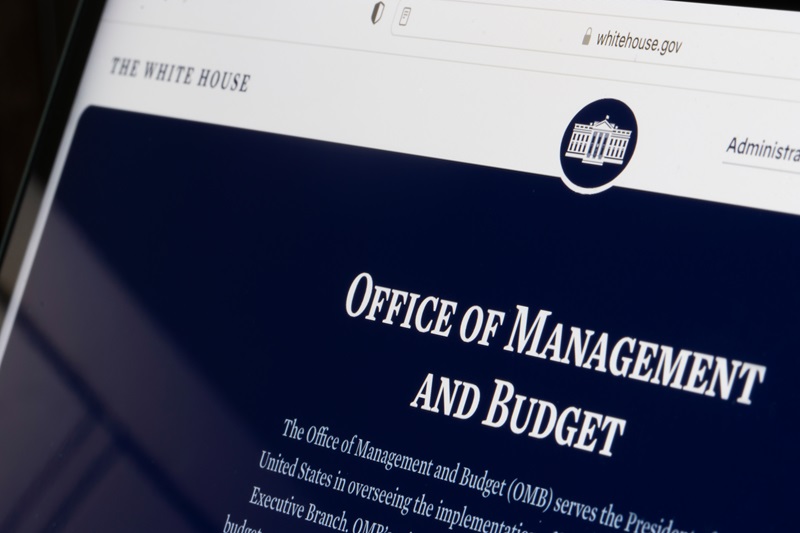
The White House released its Fiscal Year 2027 budget last week which makes deep cuts in funding for housing-related programs while proposing $1.5 trillion for defense.
The National Association of Affordable Housing Lenders said that the budget proposal asks for a 10% cut to non-defense discretionary spending compared to FY26 enacted levels. The Appropriations Committees in both the House and Senate will use the budget proposal as a starting point as they formulate their own funding bills, and cabinet officials will begin meeting with congressional appropriators in the weeks ahead.
At a closed-door Easter lunch last week that was accidentally live-streamed and then removed from the White House YouTube page — Trump reportedly detailed the trade-off between defense and other spending, Axios reported..
“We’re fighting wars,” Trump told guests. “We can’t take care of daycare. Medicaid, Medicare, all these individual things. We have to take care of one thing: military protection. We have to guard the country.”
The president said the burden should be on the states, which may have to raise their taxes, and that it’s “not possible” for the federal government to fund all of these non-defense programs.
Some congressional appropriators are wary of the proposed budget, but it was supported by some influential GOP leaders.
Defense Spending ‘Truly Historic’
House Speaker Mike Johnson (R-LA), for example, said in a statement that it “fulfills Republicans’ commitment to restore fiscal sanity, reduce waste, fraud, and abuse in Washington, make our streets and neighborhoods safe again, and further ignite the American dream. These are the things we ran on and that the American people voted for.”
Sen. Lindsey Graham (R-SC) called the proposed budget “truly historic when it comes to defense spending,” in a post on X.
Senate Appropriations Chair Susan Collins (R-Maine), said she may not be eager to sign off on President Trump’s request.
“While the administration proposes a budget, Congress holds the power of the purse,” Collins wrote in a post on the X social media platform.
Collins, who is in a tough re-election fight for her Senate seat, described in a post on the social platform X what she viewed as “several shortcomings” in the request.
“The Senate Appropriations Committee will now hold hearings with cabinet members and agency heads to review these recommendations and to explore other fiscally responsible proposals,” Collins said.
Democrats Unsupportive
Congressional Democrats were unsupportive, however.
Sen. Patty Murray (D-WA), Vice Chair of the Senate Appropriations Committee, said in a statement, “The vision President Trump has outlined for America in his budget is bleak and unacceptable… Last year, I said I’d rip up President Trump’s budget and make sure Congress wrote a new one instead—that’s exactly what we did and will do again.”
Sen. Jack Reed (D-RI) said the budget request was “not a serious budget” that was flawed and irresponsible.
Bobby Kogan, Senior Director of Federal Budget Policy at the Center for American Progress and former budget adviser under President Joe Biden, said the proposal will not pass, The Hill reported.
“This is not going to become law. It is so extreme and it’s too extreme even for Republicans in Congress,” said Kogan. “You don’t see very often, people saying, we’re going to get rid of your heating assistance, and we’re going to get rid of your housing so we can sink money into the military.”
Not Going to Block Grant Section 8
Unlike last year, the NAAHL said that the administration is not proposing to block grant Section 8 and other assisted housing programs or dismantle public housing. Beyond rental assistance, it said the budget proposes to eliminate or sharply reduce many other housing and community development programs.
CDBG, HOME, PRO Housing, the Low Income Home Energy Assistance Program (LIHEAP), Housing Counseling, NeighborWorks America, and the U.S. Interagency Council on Homelessness are all proposed for elimination or phase-out, the association noted. The CDFI Fund is not eliminated outright, NAAHL said, but its core grant programs would be replaced by a narrower rural-focused program funded at a 63% reduction from FY26 enacted levels.
Congress has maintained funding for each of these programs in prior years, and the FY26 enacted levels remain the relevant baseline for appropriators this cycle.
“The President’s FY27 budget features similar cuts and eliminations proposed in the President’s FY26 budget that Congress restored on a bipartisan basis just months ago,” said Sarah Brundage, NAAHL President and CEO. “These programs have broad support, and our members see their impact every day in communities across the country. NAAHL will be making that case directly to House and Senate Appropriators in the weeks ahead.”
A recent report from NAAHL and the Center for Affordable Housing Lending detailed the critical role that federal funds play in building and maintaining affordable housing.
NAAHL detailed the proposal this way:
CDL Fund
FY26 Enacted: $324 million
The budget proposes $119.5 million — a 63% cut from the FY26 enacted level of $324 million. The traditional CDFI Program, Bank Enterprise Award Program, Small Dollar Loan Program, Healthy Foods Financing Initiative, and AmeriCorps CDFI Economic Mobility Corps program all are eliminated, NAAHL said. What remains is a $100 million Rural Financial Assistance Program requiring that at least 60% of each recipient’s lending go to rural areas, plus $19.5 million to administer CDFI Fund programs. No new Bond Guarantee Program authority is requested, a departure from last year’s request.
HUD
FY26 Enacted: $84.2 billion
$73.5 billion requested — $10.7 billion (13%) below FY26 enacted, but $30 billion above the president’s own FY26 request. The most consequential difference from the president’s request last year: Section 8, public housing, and other assisted housing are not proposed for block granting or consolidation. Each is maintained as a unique federal program, with modest changes, NAAHL reported.
Maintained or modestly increased
Tenant-Based Rental Assistance (Housing Choice Vouchers): $38.8 billion — up from the FY26 enacted level of $38.4 billion. This would fund renewals for roughly 2.4 million families and includes $30 million for the Melania Trump Foster Youth to Independence Initiative.
Public Housing Fund: $8.622 billion ($5.377 billion operating + $3.2 billion capital) — up from an FY26 enacted level of $8.2 billion.
Cut
Project-Based Rental Assistance (PBRA): $17.6 billion (including $400 million advance appropriation) — down roughly $900 million, or 5%, from the FY26 enacted level. This would fund renewals for about 1.2 million households under about 17,500 contracts. Unlike the FY26 proposal, PBRA remains a federal program and is not proposed to be block granted.
Section 202 Housing for the Elderly: $959 million — down $72 million (7%) from FY26 enacted $1.031 billion. Section 202 remains a unique federal program and is not proposed to be block granted.
Section 811 Housing for Persons with Disabilities: $266 million — down $21 million (7%) from FY26 enacted $287 million. Section 811 remains a unique federal program and is not proposed to be block granted.
Native American Programs: $887 million — down from approximately the $1.35 billion FY26 enacted level. Competitive grants are proposed to be eliminated; Indian CDBG is reduced to $5 million for emergency/imminent threat uses only.
Fair Housing: $26 million — down from FY26 enacted $86 million, a 70% cut. Funds FHAP only (state and local enforcement agencies).
SHOP: $16 million — provided in a single grant for both the Self-help Homeownership Opportunity Program and Section 4 activities available only to Habitat for Humanity, down from FY26 enacted level of $65 million. Of the $16 million, $5 million must be for rural capacity building.
Zeroed out
CDBG: $0 vs. FY26 enacted level of $3.3 billion.
HOME: $0 vs. FY26 enacted level of $1.25 billion.
PRO Housing: $0 vs. FY26 enacted level of $50 million. The budget proposal also rescinds $100 million in unobligated PRO Housing balances.
Continuum of Care: replaced by a formula-based $4.024 billion Emergency Solutions Grant program. This would be a net reduction of $393 million from FY26 enacted homeless assistance levels.
HOPWA: $0 vs. FY26 enacted level of $529 million.
Choice Neighborhoods: $0 vs. FY26 enacted level of $25 million.
Self-Sufficiency Programs (FSS, Jobs-Plus, ROSS): $0 vs. FY26 enacted level of about $206 million.
Native Hawaiian Housing Block Grant: $0 vs. FY26 enacted level of $22 million.
Housing Counseling: $0 vs. FY26 enacted level of $58 million.
Federal Financing Bank Risk Sharing: projecting zero activity in FY27, which could signal no new commitments and a winding down of the program
New
Program Integrity Initiative: $30 million for fraud, waste, and abuse enforcement across federal housing programs.
USDA
FY26 Enacted: Roughly $25.7 million.
$20.8 billion requested — $4.9 billion (19%) below FY26 enacted funding levels. Within the Rural Housing Service, the president’s budget proposes to eliminate the Rural Housing Voucher program while increasing funding for Section 521 Rental Assistance. It would also reduce funding for Section 502 Single-Family Direct Loans.
Maintained or modestly increased
Section 504 Home Repair Loans: $25 million in loan guarantee authority — level with the funding provided in FY26.
Section 515 Rental Housing Loans: $50 million — level with the funding provided in FY26.
Section 521 Rental Assistance: $1.795 billion — slightly above the $1.715 billion provided in FY26.
Section 538 Multifamily Guaranteed Loans: $500 million in loan guarantee authority — an increase over the $400 million in loan guarantees provided in FY26.
Multifamily Preservation and Revitalization Demonstration: $30 million — level with FY26 enacted funding.
Cut
Section 502 Direct Loans: $983,168,000 vs. $1 billion in loan authority provided in FY26.
Section 502 Guaranteed Loans: $20 million vs. $25 million in loan guarantee authority provided in FY26.
Rural Housing Assistance Grants: $26 million vs. $27 million in FY26 enacted funding for these home repair grants.
Zeroed Out
Section 542 Rural Housing Vouchers: $0 vs. $48 million FY26 enacted level.
HHS
FY26 Enacted: roughly $126.9 billion
$111.1 billion requested — $15.8 billion (12.5%) below FY26 enacted levels. Both the LIHEAP and CSBG are again proposed for elimination:
LIHEAP: $0 vs. FY26 enacted funding of approximately $4 billion.
CSBG: $0 vs. FY26 enacted funding of approximately $775 million.
Other Agencies
NeighborWorks America: $15 million vs. the FY26 enacted level of $158 million. The proposed budget once again proposed to eliminate the agency, with all funding provided intended to wind down the agency.
U.S. Interagency Council on Homelessness (USICH): $200,000 vs. the FY26 enacted level of $3 million. The budget proposes to eliminate USICH, with all funding provided to wind down the agency.