

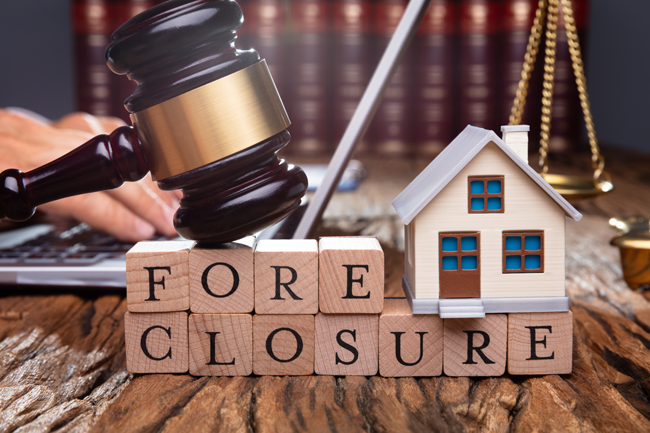
Compared to a year ago, there was a 20% increase in foreclosure starts and a 45% increase in completed foreclosures. However, overall foreclosure activity is still substantially below the crisis levels saw during the 2007 subprime mortgage meltdown and about in line with pre-pandemic levels.
According to the company’s most recent data, 1 in 1,211 dwelling units nationwide had a foreclosure filing in the first quarter of 2026.
“Foreclosure activity increased in the first quarter, with both starts and completed foreclosures posting solid year-over-year gains,” said Rob Barber, CEO of ATTOM.
“While volumes remain below historical peaks, the continued rise, especially in starts and bank repossessions, suggests financial pressure may be building for some homeowners and could signal shifting housing market dynamics,” Barber said.
Regional Differences & Trends
One in every 739 housing units in Indiana had a foreclosure filing in the first quarter of 2026, making it the state with the worst foreclosure rate. According to statistics from Realtor.com, properties in Indiana are listed for an average of 53 days and have a median listing price of $292,500.
“There are a few reasons why Indiana might have the highest rate of foreclosures,” said Joel Berner, Senior Economist at Realtor.com. “The first is that it’s a smaller state with fewer housing units, so the data can tend to be a little noisy from quarter to quarter.”
According to Berner, the second reason is that home values are generally lower in Indiana, which means that homeowners, particularly those who are highly indebted with a sizable mortgage, build equity more slowly and have less of a safety net when economic hardship occurs.
“The third is that the ancillary costs of homeownership—like property taxes, homeowners insurance, HOA fees—are growing everywhere, and in lower-priced states like Indiana, those costs make up a larger percentage of the monthly payment and have an outsized impact,” Berner said.
The CEO of ATTOM, Barber, tells Realtor.com that localized affordability concerns, where growing ownership prices might have a stronger impact in lower-cost locations, may be more responsible for Indiana’s foreclosure rate ranking than a sudden surge.
“It may also reflect how foreclosure rates are measured, as states with more widespread, moderate distress can rank higher even without leading in total volume,” Barber said.
Indiana real estate agent Fred Krawczyk of Fred Krawczyk & Associates—who has done hundreds of short sales—told Realtor.com: “The main reason I hear for foreclosures in Indiana are death, divorce, job loss, job transfer, medical bills, and business failure. With the cost of groceries and gas going up, cost of living is high. When things start spiraling down, everything keeps piling up on these people, and everybody comes after them. With interest rates and late fees, it’s a snowball effect. Unless someone dumps a big pile of money on you, it’s hard to get out.”
Barber notes that although Indiana has the highest foreclosure rate, the state’s current activity is still much below its historical highs.
“Indiana saw more than 14,000 filings in some quarters during the Great Recession compared to just over 4,000 in Q1 2026, reflecting a similar pattern nationally, where today’s levels are a fraction of peak volumes,” he said. “Overall, this suggests a market that is continuing to normalize, where certain regions may be experiencing more concentrated pressure.”
To read more, click here.