



According to the Realtor.com quarterly New Construction Insights Report, only 10% of newly constructed homes are for sale in metro regions, compared to 30% of existing homes, indicating that suburban buildings now dominate the new home market. Further, the study showed that there are usually fewer possibilities in the city than in the suburbs if homebuyers looking for a newly constructed home.
In comparison to neighboring existing homes, the few newly constructed residences in urban regions typically fetch a significant premium, and according to the research, this premium can reach an estimated 300% in places like the popular Miami metro.
Properties for Sale by Urbanicity of ZIP Code — Nationwide
| Metric | Rural | Suburban | Town | Urban |
| New Construction | 1.2% | 79.8% | 8.0% | 10.9% |
| Existing Homes | 3.9% | 55.7% | 10.7% | 29.7% |
Additional data indicated that all other types of existing residences are readily outpriced by urban new construction on a national scale. The cost of new urban construction is 78.4% more than that of existing urban dwellings. In contrast to the median price of existing urban residences, which is $414,000, the median listing price of urban new construction exceeds $738,000. The trend is similar in rural areas. There, the median cost of new building is roughly $459,000, while the median cost of existing homes is $299,000. Prices for new and existing homes are closer to parity in suburban and smaller towns.
According to Realtor.com, those costs are a reflection of both the demand for housing in cities and the challenges associated with building new homes there.
Popular U.S. Metros Seeing Higher Premiums
At approximately 69.6%, New York City has the highest percentage of new urban construction listings, surpassing Miami-Fort Lauderdale, FL, at 69.5%. However, Miami’s new urban construction premium (305.2%) is significantly higher than New York’s (106.8%). This is due to the fact that the typical listing price for an existing urban home in the Miami metro was $459,000, while the median listing price for a new urban home exceeded $2.57 million.
“The housing market remains caught in the tension between the underlying demand and constrained affordability,” said Stuart Miller, CEO of Homebuilder Lennar Corp. “Supply is still critically short, and years of underproduction have created a structural deficit that will take years to close, but we believe the conditions are building for an eventual recovery.”
| Metro Area | Urban Share of New-Construction Listings | New-Construction Premium | Urban Share of Resale Listings |
| New York-Newark-Jersey City, NY-NJ | 69.6% | 106.8% | 71.3% |
| Miami-Fort Lauderdale-West Palm Beach, FL | 69.5% | 305.2% | 79.6% |
| San Francisco-Oakland-Fremont, CA | 68.9% | 30.1% | 67.0% |
| Los Angeles-Long Beach-Anaheim, CA | 68.8% | 42.4% | 77.5% |
| New Orleans-Metairie, LA | 62.4% | 24.9% | 73.1% |
| Urban Honolulu, HI | 53.8% | 29.2% | 66.4% |
| San Diego-Chula Vista-Carlsbad, CA | 53.4% | 23.5% | 61.2% |
The median listing for a new urban development is multiples of an existing one, and Miami is at the head of a group of metro areas that include both inexpensive interior metro areas and pricey coastal ones. New urban residences are 200% more expensive than existing ones in the Florida metro areas of North Port-Bradenton, Tampa-St. Petersburg, and St. Louis.
San Francisco-Oakland, where some 68.9% of new-construction listings are urban and at a premium of 30.1%, completes the top five. Los Angeles has a new-construction premium of 42.4% and an urban proportion of 68.8%. New Orleans has a new-construction premium of 24.9% and an urban proportion of 62.4%.
These neighborhoods defy the tendency of home development being concentrated in sizable new towns on the periphery of the metro. Rather, Realtor.com discovered that they have a lot of metropolitan ZIP codes with little vacant land surrounding them.
Urban Housing Experiencing Stricter Regulations
Cities are under pressure to construct additional urban housing as a result of the price increase. More than a dozen states have enacted or are proposing legislation to reduce rules and permit smaller “starter” homes. Many of these laws restrict setbacks, lot size limitations, and other rules that increase costs and hinder new construction.
Additionally, Congress is drafting a comprehensive housing measure that includes numerous deregulation-focused features. However, a number of significant disagreements have caused it to stall between the two chambers, most notably a potential restriction on institutional investors in the housing sector, which builders believe could limit supply.
“Light-touch density” is coming to the fore because it helps constrain the rising costs of homes, according to Arthur Gailes, a research fellow with the American Enterprise Institute’s Housing Policy Center. Denser infill, townhomes, and other types of structures ultimately come at a lower cost than new McMansions.
Additionally, infill construction increases tax income. Gailes stated that property taxes on newly constructed homes are 25% higher than those on existing stock. According to him, the benefits of encouraging infill densification are greatest in large, older, and built-out communities.
“On the other end of the spectrum, areas in the Sun Belt, Florida and Texas, have more opportunity via new residential subdivisions,” Gailes said. “Because they’re building on more on greenfield land, out from the city cores, and allowing more density in these areas.”
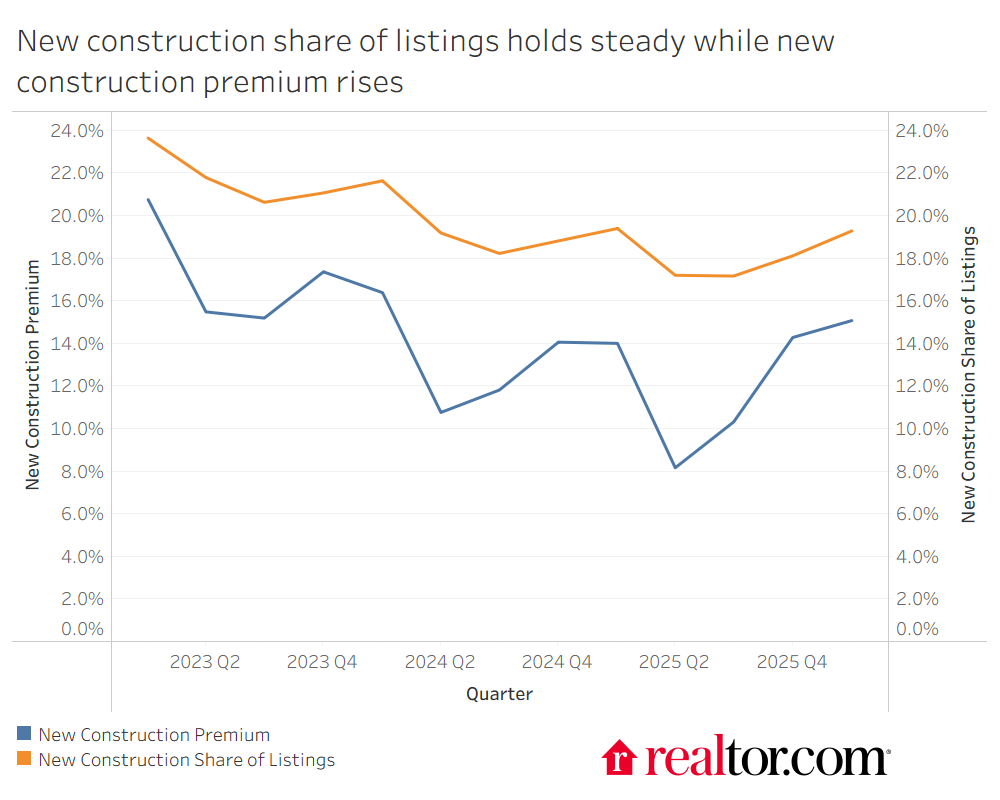
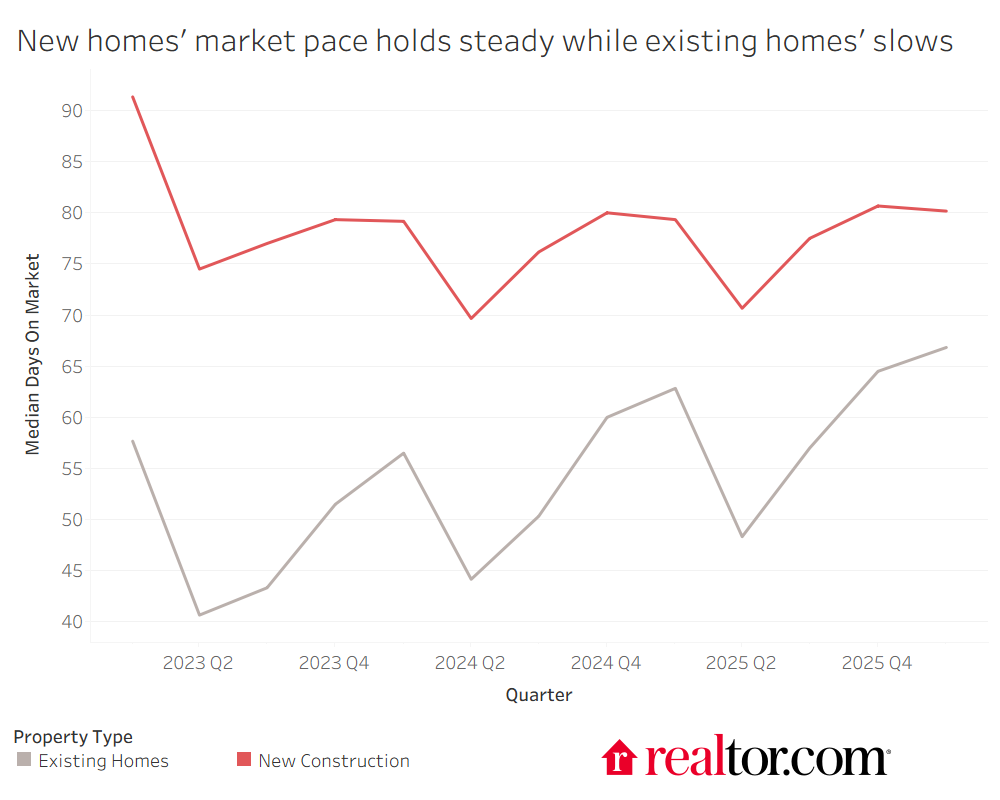
Overall, while the existing-home market has been far more unpredictable, the market for new homes for sale has generally shown remarkable steadiness in recent quarters and years. All of this occurs at a time when builders are facing major challenges due to rising labor and material prices as well as the budget-conscious consumers they must compete with in the existing-home market.
To read more, click here.