


For around five years, individuals renting homes struggled to find relief. Rental rates increased more rapidly than salaries, resulting in apartment hunters participating in competitive bidding for average units. Vacancy levels remained close to all-time lows, and the perks that usually made leases more appealing largely disappeared as landlords retained control. At the peak of the rental boom in 2022, apartment rents were climbing at nearly 16% per year. While rents have continued to rise over the years, this spring has brought a much-needed change, benefiting renters.
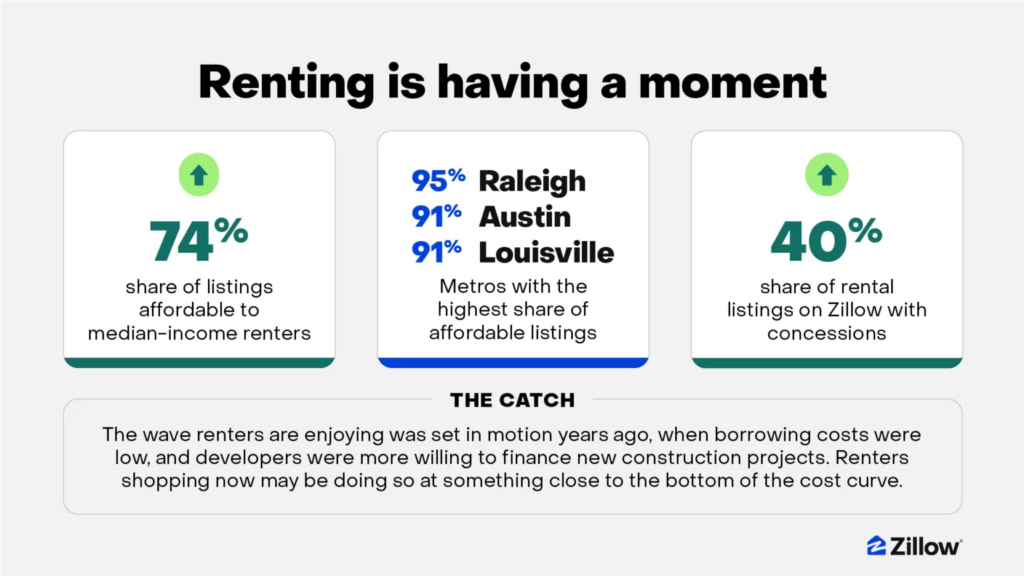
Some 74% of rental listings on Zillow were accessible to households with a median income of around $78,000 in May. While the average rental price saw a slight increase to $1,951, marking a 2% rise from the previous year, this increase has been counterbalanced by an almost 2% rise in average income.
At present, a median household dedicates approximately 26.9% of its income to rent, which is below the 30% benchmark typically considered as the standard for affordable housing. Furthermore, it is encouraging to observe that the share of listings priced below $1,000 per month has risen to 8.8%, suggesting that more affordable rental options are becoming available in the market.
The relief is primarily found in areas where new construction has surged. In May, 79.3% of multifamily listings were affordable for a median-income household, an increase from 75.5% the previous year. Single-family rentals, which have become more desirable as potential buyers are priced out of homeownership, saw a rise to 47.1%, up from 44.6%.
This division is logical: the nation completed approximately 592,000 new apartments in 2024, marking the highest number since 1974, and the influx of these units led to increased vacancies and heightened competition among landlords. In May, nearly 40% of listings included a concession, rising from 35.1% a year prior.
Top Five Cities with the Most Affordable Rents:
- Raleigh, NC
- Austin, Texas
- Louisville, KY
- Salt Lake City
- Portland, OR
Raleigh recorded the highest proportion of affordable listings at 94.8%. This market is succeeded by Austin at 91%, Louisville at 90.5%, Salt Lake City at 90.2%, and Portland at 89.3%. The most significant increases were observed in Florida, where Tampa rose to 61.4% from 51.6%, and Orlando increased to 69.5% from 61.3%. In terms of the lowest rents, Oklahoma City topped the list with nearly 30% of its listings priced below $1,000.
However, not all regions in the country are experiencing a renters’ market. The proportion of affordable housing decreased in seven metropolitan areas, with Pittsburgh experiencing the most significant decline, dropping from 80.3% to 77.6%. San Francisco stands out as the most notable exception: rents have increased by 7.1% year-over-year, the highest rate among major markets, highlighting that the issue of supply has not fully impacted the coastal cities where construction is most challenging.
U.S. Renting Momentum… Up in the Air?
The current influx of renters currently being experienced was initiated years ago, during a period of low borrowing costs, which encouraged developers to invest in new construction projects. The peak of new apartment construction occurred in 2022, but has since declined significantly due to increased financing costs, softer rental prices, and rising vacancy rates, which have rendered many new projects less appealing financially.
Given that new buildings generally require several years to complete, the apartments that are becoming available today represent the final phase of the previous boom rather than the beginning of a new one. As this construction pipeline diminishes, the supply buffer that has been keeping rents low will also decrease. Zillow anticipates that multifamily rent growth will rise by 2% in 2026, as construction activity wanes and a persistent housing shortage reemerges.
“The construction boom that drove affordability gains has slowed,” Ng said. “And rent growth may reaccelerate in the near future.”
Renters shopping this spring may be doing so at something close to the bottom of the cost curve. In the end, the pertinent question is, naturally, when this advantageous rental market may come to a close.
“Right now, many renters hold the upper hand,” Ng said. “That won’t always be the case, so renters who can negotiate a sweeter deal, should.”
Note: Figures are drawn from the Zillow May Rental Report and the Zillow Observed Rent Index (ZORI). Affordability is defined as a rental costing a median-income household no more than 30% of income. Zillow’s listing-level affordability data dates to 2021.