


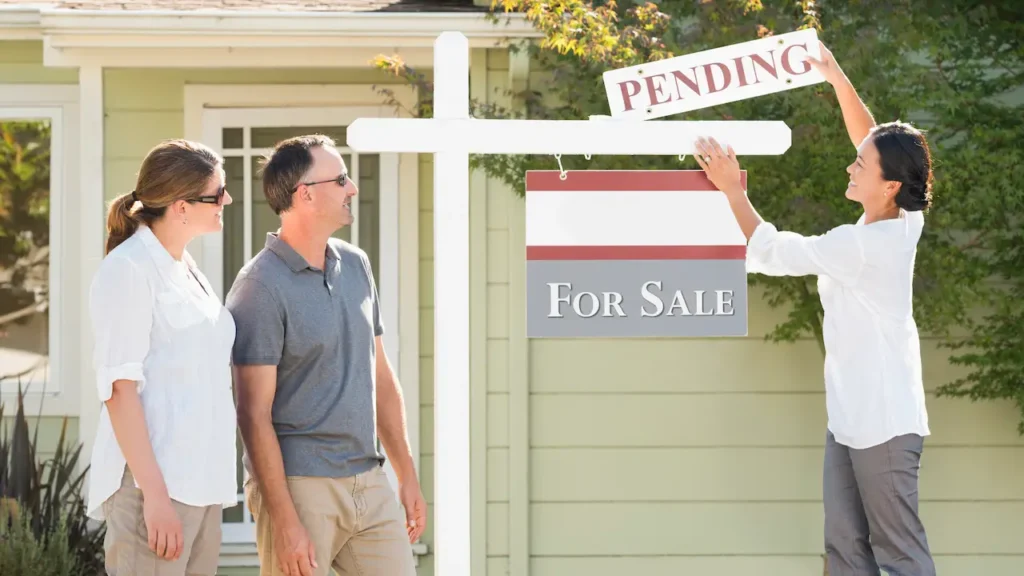
According to the National Association of Realtors Pending Home Sales report, pending home sales in June fell by 5.4% month-over-month and 0.3% year-over-year.
The report noted that month-over-month pending home sales declined in all four major U.S. regions. Year-over-year pending home sales increased in the Northeast and Midwest but declined in the South and West, the NAR said.
“The highest mortgage rates in nearly a year and the record-high national median home price together are contributing to a tepid housing market that is especially difficult for first-time homebuyers,” said NAR Chief Economist Dr. Lawrence Yun. “However, job gains can help support housing demand.”
The pending sales report provides the real estate ecosystem that includes agents, homebuyers and sellers, with data on the level of home sales under contract.
Some Local Areas Show Gains
“It is worth emphasizing that it is closing activity, not contract signings, that generates economic impact. Pending contracts are only suggestive of upcoming closed deals and do not align perfectly, due to fallout rates and contract contingencies,” Yun noted.
At the local level, several markets posted notable year-over-year gains in pending home sales.
The 50 largest metro areas, the following 10 markets posted the biggest annual increases in pending home sales, according to data from Realtor.com Economics:
- Virginia Beach-Chesapeake-Norfolk, VA-NC (+15.4%)
- Sacramento-Roseville-Folsom, CA (+15.2%)
- Kansas City, MO-KS (+14.4%)
- Richmond, VA (+14.0%)
- Buffalo-Cheektowaga, NY (+12.1%)
- Austin-Round Rock-San Marcos, TX (+11.1%)
- San Francisco-Oakland-Fremont, CA (+10.7%)
- Los Angeles-Long Beach-Anaheim, CA (+9.6%)
- Miami-Fort Lauderdale-West Palm Beach, FL (+9.5%)
- St. Louis, MO-IL (+9.1%)
According to the NAR, the Pending Home Sales Index is a leading indicator for the housing sector, based on pending sales of existing homes. A sale is listed as pending when the contract has been signed but the transaction has not closed, though the sale usually is finalized within one or two months of signing, the NAR said.
Mike Miedler, President and CEO of CENTURY 21 Real Estate said the report may not be bad news.
“Today’s report showed pending sales down 5.4%, and the easy read is that it’s bad news. I don’t think that’s right. When a number comes in soft, I check it against what CENTURY 21 agents are telling me market by market, because a flat national number can hide movement happening in different directions,” Miedler said in a statement.
Take A Wide View
Miedler said you need to look at the complete picture.
“According to our data, this market is splitting into three stories. Chicago has 75% fewer homes for sale than in 2019, so even modest demand runs into a genuine shortage there. Miami and San Francisco have flipped from falling prices to rising ones, likely riding the same wealth effect that’s letting some buyers shrug off higher rates,” Miedler said. “Seattle brings the number down, still the softest market we track, prices about 2% behind last year. Add those together and you get a flat headline that undersells what’s happening almost everywhere else.”
Miedler added: “So I don’t read this as demand disappearing. I read it as three markets moving at three different speeds. A buyer in Chicago and a buyer in Seattle are having very different conversations with their agent this morning, even though they’re reading the same number.”