


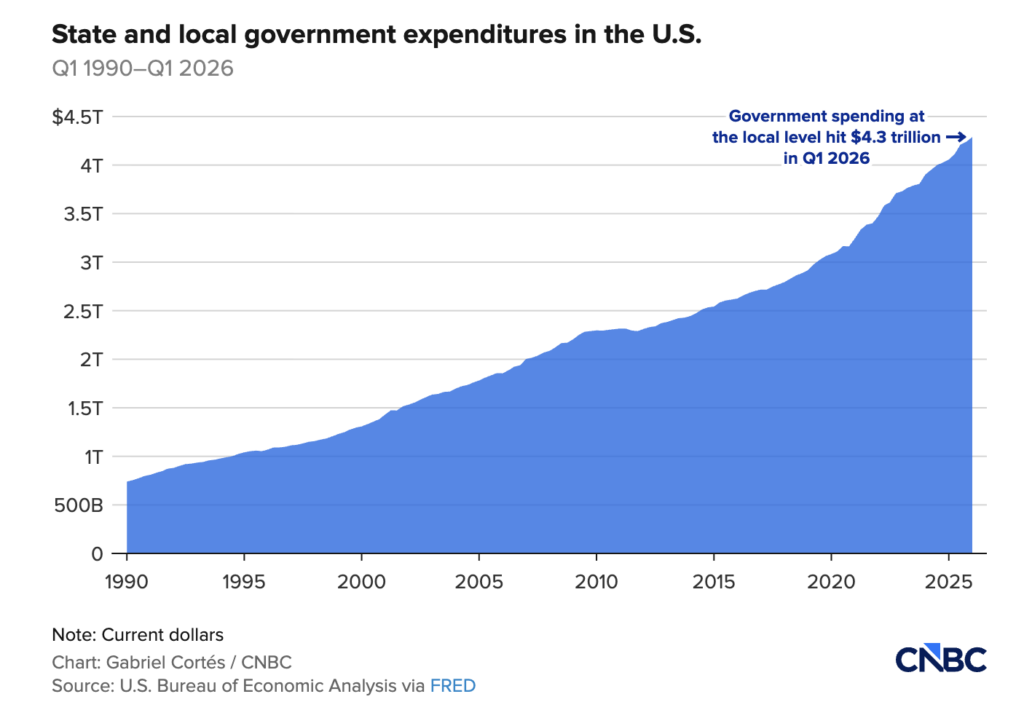
In November, as Americans go to the polls for midterm elections, citizens will encounter a unique chance to influence tax policy through their voting power, according to CNBC. The surge in government expenditure and escalating tax obligations throughout the U.S. has resulted in 26 ballot initiatives related to tax rates being proposed in 13 states. For 128 million American voters, especially those from the working and middle classes who are shouldering a considerable tax burden, these ballot measures will serve as a gauge of public sentiment regarding heightened government spending and the sources of such funding.
Although California’s Proposition 40, which permits a one-time 5% “wealth tax” on billionaire residents, has attracted considerable public interest, the majority of ballot initiatives in this election cycle do not seek to enhance existing tax systems. Instead, they aim to reduce them. Specifically, state legislators are focusing on lowering taxes related to the most significant asset for tens of millions of Americans—their homes.
States such as Florida, Georgia, Louisiana, Oklahoma, North Carolina, Tennessee, and Wyoming have introduced measures on the ballot that would greatly reduce property tax liabilities. These measures include raising the property assessment threshold for current tax exemptions, establishing new exemptions for senior citizens, and, in Tennessee’s case, implementing outright bans on state property taxes.
“The property tax is the most egregious tax there is because you never own your property. You’re only paying rent to the government,” Tennessee State Senator Brent Taylor noted, when speaking in support of the state’s Amendment 2 prior to its first legislative passage in 2025. “And if you don’t think you’re just paying rent to the government, try not paying your property taxes.”
Regional & Statewide Differences, Effects & More
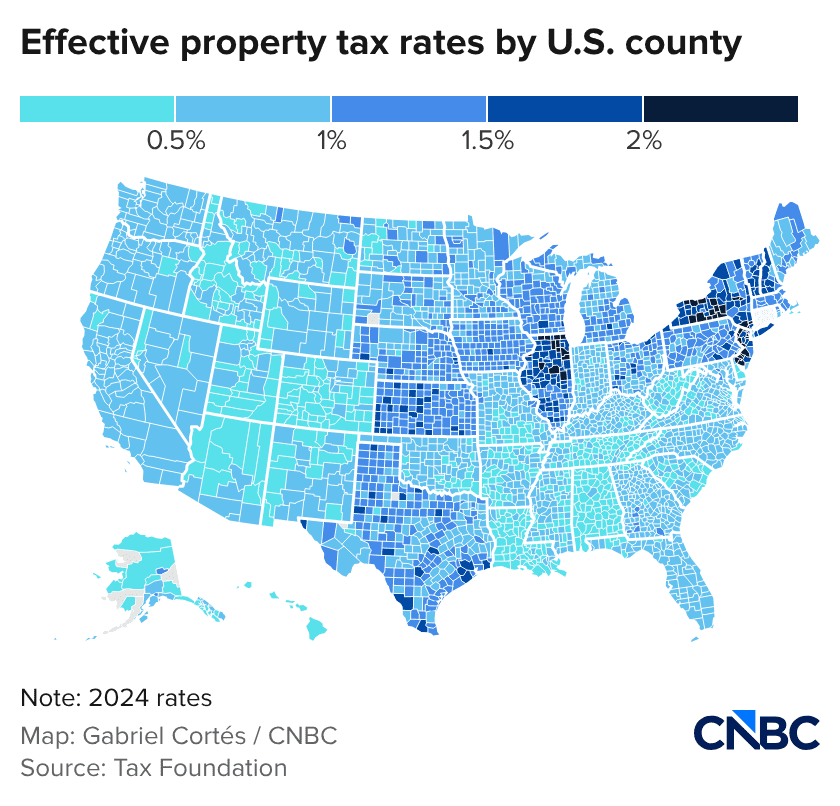
Tennessee has not implemented a state-level property tax since 1949 and currently does not have one. In fact, the majority of states do not impose such taxes, as property taxes are primarily managed by local authorities that determine tax rates based on market values and the financial requirements of their municipalities. Although Tennessee’s Amendment 2 is mostly symbolic, effectively removing the possibility of a state-level property tax, various ballot measures across the nation pose a considerable threat to these local governments. Consequently, homeowners will need to weigh their reduced personal expenses against the potential detrimental impact on local government revenue when they vote.
Aiming to sway the process from both perspectives, local political leaders are rife with disagreements regarding what should take priority. Jacksonville, FL, Mayor Donna Deegan, leading Florida’s largest city, expressed her apprehensions while discussing the state’s proposed Amendment 3. This amendment seeks to raise the maximum property assessment required to qualify for the state’s homestead tax exemption from $150,000 to $250,000. Deegan indicated that this change would lead to a one-third decrease in the Jacksonville city budget.
“A $300 million hit is not a small hit,” Deegan said. “This proposed reduction will inevitably result in roads deteriorating, libraries, pools, and parks closing, public safety response times going up, housing affordability worsening, and more homeless on our streets.”
Hallandale Beach Mayor Joy Cooper took an additional step by directly inquiring of her constituents, “Which city services do residents wish to eliminate?” in a Nextdoor post after the state legislature approved Amendment 3. A multitude of responses poured in, with the majority recommending that Cooper and her fellow city officials reduce their annual salaries.
The sentiments expressed by both mayors are substantiated by an economic analysis of the proposed measures. Estimates suggest that the eight property tax ballot initiatives across six states will result in a loss of at least hundreds of millions, and potentially tens of billions of dollars, for their respective state and local governments in the upcoming years.
Leading the list in terms of anticipated revenue losses are Florida’s Amendment 3, projected to result in approximately $46 billion by 2032; Florida’s Exempt Tangible Personal Property Used for Agriculture or Agritourism from Property Taxes Amendment, estimated at $96.9 million by 2030; and Wyoming’s Homeowner’s Primary Residence Property Tax Exemption Initiative, which is expected to incur a minimum loss of $188 million by 2030. Numerous measures, including those in Louisiana, have not yet undergone cost assessments but are still expected to diminish local government revenue streams.
U.S. Public Spending & Homeowner Votes
Advocates of the tax cuts contend that these expenses are a minor cost in comparison to the benefits of eradicating unnecessary expenditures and directly easing the burdens of high living costs.
“We have seen egregious over-taxing by some of our municipalities here in North Carolina,” North Carolina Treasurer Brad Briner told CNBC, in reference to the state’s proposed constitutional amendment directing state legislators to pass laws limiting property tax levy increases. “That is not fair to homeowners who are already stretching their budgets, and it makes it impossible for some potential new homeowners to consider jumping into the housing market.”
Briner referred to his position on North Carolina’s Local Government Commission and noted that, although the majority of municipalities are financially well-managed, he has observed some that resort to additional revenue generation as a way to “cover[ing] their mistakes.”
“A top priority for my administration is financial literacy,” Briner said. “A basic principle of that is to live within your means,” he said. “We recognize municipalities are also being stretched, but we need to find other avenues to balance their budgets, without relying too heavily on property taxes.”
Nonetheless, similar to the circumstances in Florida, there exists a considerable disparity among state and local authorities concerning the understanding of rising municipal budget expenditures.
“The property tax is Wake County’s largest and most stable source of revenue,” said Don Mial, Chair of the Wake County Board of Commissioners. “It funds about 75% of the county’s annual budget and makes financing new schools, libraries, fire stations and other infrastructure possible. If we lose the ability to set our own tax rate, it could result in significant service reductions and force us to scale back much-needed capital improvement plans.”
Opposing Opinions
Conversely, Florida Governor Ron DeSantis has emerged as one of the most vocal opponents of property taxes, with his state presenting two amendments aimed at reducing property taxes for voters to consider.
“You’ll have a 12-or-13-year period where you went from $32 billion being taken [in] to $83 billion being taken,” DeSantis said, highlighting the projected increase in local government revenue at a May roundtable event. “I think everybody understands that [basic services could be provided] at a lower level than $83 billion. That money … would be put to use if people could keep [it] in their pockets. Imagine what they would be able to do with the economy if people who owe $2,000 a year [in property taxes] all of a sudden had that money at their disposal.”
DeSantis, in sharp contrast to Deegan’s perspective on the initiative, believes that Amendment 3’s property tax exemption framework is insufficient. The governor’s original proposal featured a significantly more extensive rollback, which aimed to completely abolish property taxes on primary residences and did not include any exceptions for school budget property taxes.
“What the Legislature did wasn’t my proposal,” DeSantis said during a bill signing event in Tampa. “I think it’ll likely pass … But I don’t know that. I know ours would have passed, because we did a lot of research on exactly how to structure it and how to do that, and so we’ll just see what happens.”
In Florida, any amendments to the state constitution necessitate a 60% approval from voters to be enacted, indicating that Amendment 3 must significantly influence Floridian taxpayers. Conversely, other states with property tax initiatives awaiting a vote require only a simple majority of 50% plus one, which is what state Republicans are aiming for to advance their legislative proposals. This raises the pertinent question: how probable is it that these measures will succeed?
The situation is not straightforward. Except for North Carolina and Georgia, the states with property tax initiatives tend to lean heavily conservative in their political affiliations. Consequently, even amidst a national political environment that is anticipated to boost turnout among Democratic voters, the electorates in states such as Wyoming and Oklahoma are likely to be predominantly supportive of tax rollbacks. Furthermore, they are expected to align with the views of Republican legislative leaders who frequently advocate for placing these initiatives on the ballot.
Taxation Policies, Bills & Burdens
This year, two ballot initiatives related to taxation have been put to a vote, both of which were unsuccessful. In May, Oregon’s Measure 120, aimed at increasing the state’s fuel tax and public transportation payroll tax, was decisively rejected by voters. Similarly, Louisiana’s Amendment 4, which sought to permit local governments to exempt business inventory from property taxes, was turned down by a margin of 2:1. These outcomes suggest a general reluctance among voters to alter the existing tax framework in any significant manner.
Nevertheless, it is important to note that neither of these amendments would have alleviated the tax burden on homeowners in the same manner as many of the measures slated for voting later this year. Historical election trends that are more aligned with the forthcoming proposals indicate a significantly more optimistic outlook for substantial reductions in property taxes.
In 2025, Texas’ Proposition 13, which raised the homestead property tax exemption from $100,000 to $140,000 of a homestead’s market value, received overwhelming approval, garnering support from nearly 80% of voters. In 2024, Georgia’s Referendum A, which increased the personal property tax exemption from $7,500 to $20,000, was passed with more than 64% of voters in favor. Additionally, that same year, Arizona voters approved an initiative that permits homeowners to seek property tax refunds in municipalities that do not enforce public nuisance laws.
However, even in predominantly conservative states, voters have approached property tax rollbacks with caution, viewing them as potentially excessive. North Dakota’s 2024 Initiated Measure 4, which aimed to effectively prohibit local governments from levying property taxes, was decisively rejected due to concerns about its effects on local government finances.
A recent survey conducted by the University of North Florida Public Opinion Research Lab reflects this concern. At first, when participants were informed that Amendment 3 would “eliminate taxes on homestead property, excluding those allocated for schools,” 61% expressed their support for the initiative, while only 32% opposed it. Nevertheless, once they were made aware of the anticipated budget deficits in local governments throughout the state, support dropped to 45%, and opposition increased to 47%.
While the future of the economy remains uncertain, overall, property taxes are set to become a significant issue in the upcoming midterm elections, with numerous states across the U.S. preparing for contentious ballot measures.