



Budget-conscious individuals aiming to enter the housing market are finally experiencing some relief as the national inventory of starter homes begins to improve, according to recent Redfin research. However, similar to many facets of the housing sector, the recovery is still slow and significantly varies by region.
A starter home is characterized by economists at Realtor.com as any property listed for under $350,000 on a national scale, or below 80% of the median list price in a specific local market. For instance, in Phoenix, where the median asking price is approximately $489,500 as of June, the threshold for a starter home is around $391,200. Generally smaller and more modest than their more expensive counterparts, starter homes represent the initial step on the property ladder for first-time buyers who do not have the advantage of existing home equity.
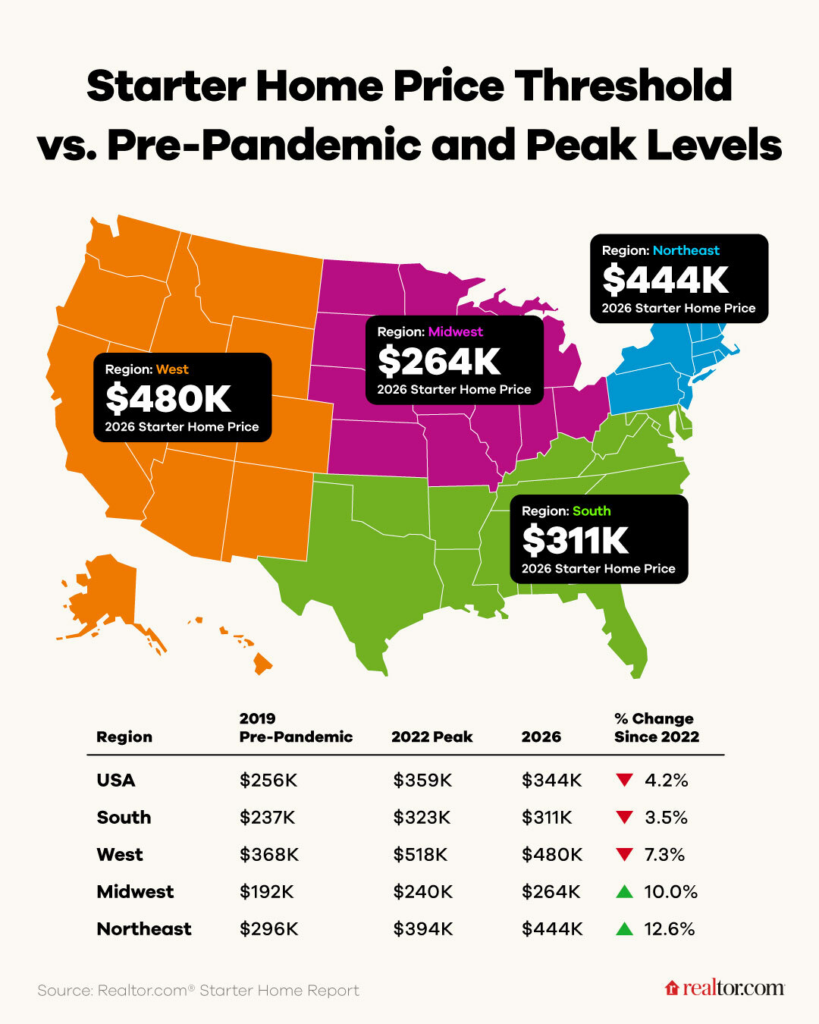
For several years, there has been a significant shortage of affordable, “no-frills” starter homes. A recent report from Realtor.com indicates that the inventory crisis reached its peak in 2022, as the intense demand during the pandemic caused real estate prices to soar to unprecedented levels, leaving entry-level buyers with fewer choices than ever before in recent times.
Currently, there are 220,000 more starter homes available for purchase compared to four years ago, and prices have decreased by 4.2%. However, Hannah Jones, Senior Economist at Realtor.com, emphasizes that this vital market segment continues to face considerable challenges.
Number of Starter Homes, Price Ranges & Regional Differences
Currently, there are still about 300,000 fewer low-cost listings compared to 2019, and the average starter home now carries a premium of nearly $90,000. When considering mortgage rates, a household income of approximately $78,000 is necessary to qualify for a starter home, a significant increase from the $43,000 required seven years ago.
Additionally, the starter home market varies significantly by region, with the South, which has a robust supply, presenting the most favorable conditions. Builders in this area have successfully met demand due to a rapid increase in new construction.
Data found that since 2022, the price threshold for Southern starter homes has decreased by 3.5%, falling from $323,000 to $311,000. At the same time, the proportion of listings priced under $350,000 has risen from less than 40% in mid-2023 to 43.6% currently, resulting in nearly 170,000 additional affordable options compared to the peak of the housing crisis.
“Sun Belt builders ramped up supply during the boom years, and that inventory has reached the market just as demand has moderated,” Jones said. “The result is a region where buyers have more options and more negotiating leverage than anywhere else in the country.”
In the Western region, the situation regarding starter homes is not straightforward. Overall, the area experienced a 7.3% decrease in its starter home threshold from 2022 to 2026, bringing it down to $480,000; however, this figure remains significantly higher than the 2019 standard of $368,000.

When examining the inventory of affordable homes in the West, only 16.7% of current listings are priced below $350,000, which represents an increase of 23,000 units compared to 2022. This shift in the market indicates substantial advancements towards affordability in several key regional markets, such as Denver and Phoenix, where first-time buyers are finally gaining opportunities after being largely excluded just a few years prior.
“The biggest factor boosting affordability in that segment right now is supply, which has ballooned to nearly five months of inventory,” Michelle Schwinghammer, an agent with West + Main Homes in Denver. “That’s significantly higher than recent years and is putting meaningful downward pressure on prices.”
According to Schinghammer, another significant element that alleviates the financial strain is seller concessions.
“More than half of Denver sellers are actively conceding at closing, with buyers winning five- and even six-figure seller credits,” she said. “Those credits can help cover closing costs but are increasingly being used to fund interest rate buydowns, an especially common incentive in new construction.”
Contrarily, Heather O’Leary, a real estate agent with eXp in Denver, contends that merely increasing construction will not address the affordability challenges encountered by first-time homebuyers.
“The key to improving starter-home affordability is not just building more homes,” O’Leary said. “It is expanding the types of homes buyers are willing to consider and taking advantage of the increased inventory, softer pricing, and stronger negotiating position within the attached-home market.”
Regional Challenges & Shifting Trends
On the other end, the Northeast and Midwest, which are persistently understocked, are encountering even greater challenges. According to Jones, the Midwest is in a difficult situation. Although the starter home price threshold is only $263,920, making it the most affordable region in the U.S. in absolute terms, budget-conscious buyers may find their opportunities diminishing. This is due to a 10% increase in prices since 2022 and a staggering rise of over 37% since 2019.
Examining the availability of low-cost homes reinforces this observation, as the proportion of starter home listings has decreased from approximately 70% in 2019 to 55% in the spring of 2026.
“While the Midwest is still more affordable than much of the country, buyers are definitely feeling the pressure here too,” Erica Collica Swink, associate broker at Max Broock Realtors in Detroit, tells Realtor.com.
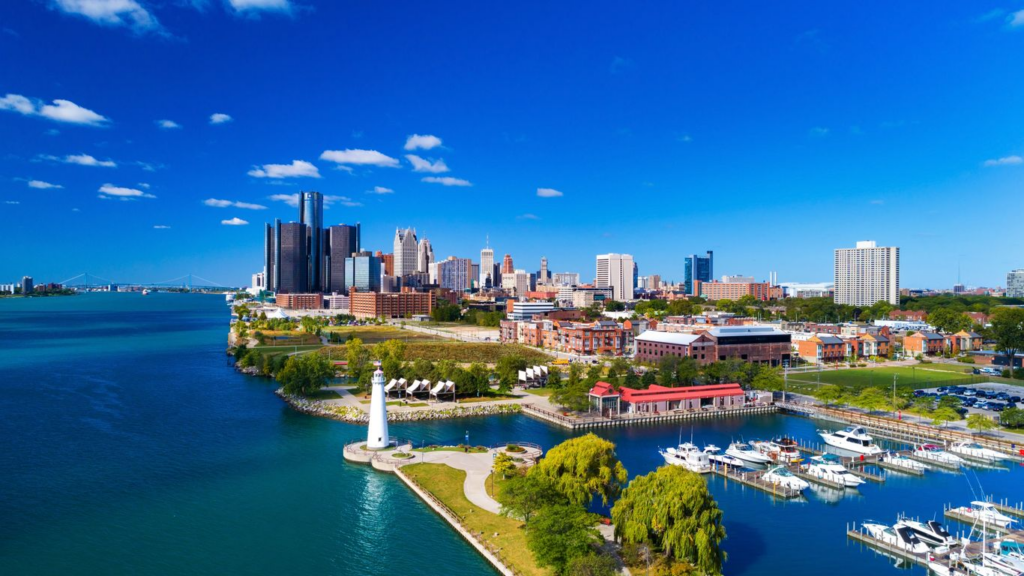
Swink indicates that in Detroit, the primary obstacle is locating genuinely move-in-ready and well-maintained homes at an entry-level price. The demand for these desirable properties is escalating, driven not only by conventional buyers but also by real estate investors.
“I don’t think the opportunity has closed, but I do think buyers have to be much more strategic than they were even a few years ago,” she said. “The buyers who succeed typically come in fully pre-approved, move quickly, and are willing to look beyond the obvious neighborhoods.”
Swink emphasizes that a key factor in maintaining the affordability of starter homes is to enhance the availability of smaller, more fundamental housing options.
“Much of the new construction we’re seeing is geared toward higher price points because that’s where the economics work for builders,” she said.
Housing Supply Shortages & Effects
Among the four regions, the Northeast faces the most significant challenges regarding housing affordability, with entry-level buyers experiencing the most severe impact from a constrained and inventory-limited market. This year, the threshold for starter homes in the Northeast has risen to $443,600, representing an increase of nearly 50% since 2019 and almost 13% higher than the level recorded in 2022.
At this price point, entry-level homeownership in the major metropolitan areas of the region is increasingly accessible only to those with substantial generational wealth or exceptionally high incomes, undermining the fundamental purpose of a starter home.
“The structural reasons are well-established: dense, built-out markets with limited developable land; restrictive zoning that constrains new construction; and strong, persistent demand from high-income households concentrated in major metro areas,” Jones said.

Andy Oei, a real estate agent with Berkshire Hathaway HomeServices Fox & Roach Realtors in Philadelphia, states that locating affordable homes in sought-after neighborhoods continues to be a significant challenge.
“Buyers aren’t just looking for an affordable home,” Oei said. “They’re looking for an affordable home in a neighborhood where they actually want to live. Those opportunities remain limited, and that’s where competition is often the strongest.”
For clients who appreciate the walkability and convenience offered by urban centers such as Philadelphia’s Center City, a condominium frequently represents the sole option that makes homeownership attainable.
“Philadelphia remains one of the more attainable major cities in the Northeast, but the challenge isn’t whether affordable homes exist,” Oei concluded. “It’s finding one in the neighborhood buyers want, at a monthly payment they can comfortably afford.”
Overall, nationwide, there exists a significant divide regarding starter homes, where the American Dream remains attainable for first-time buyers in certain areas, while it is becoming increasingly elusive in others. This divide is influenced by factors such as location, price range, and household income.
To read the full report, click here.