


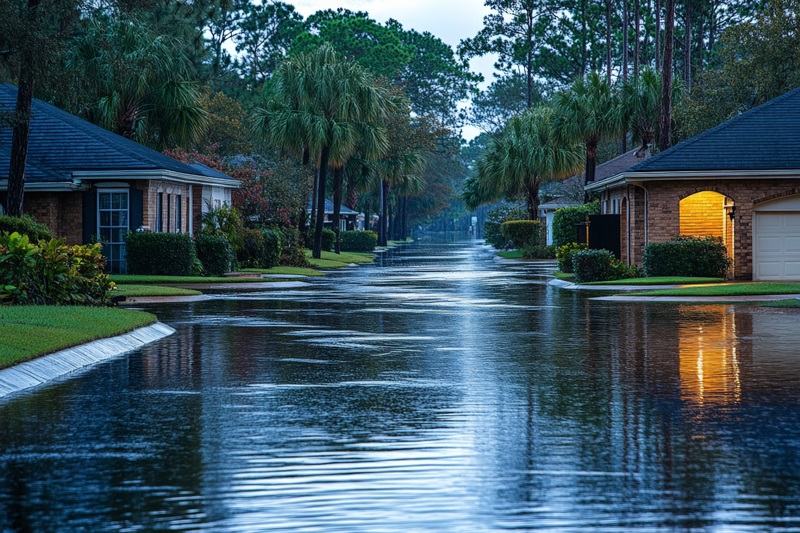
Last year, real listings site Zillow began displaying the risks from extreme weather for more than 1 million home sale listings on its site. No longer, the company said.
Zillow, the nation’s biggest listings site, quietly removed that feature recently, the New York Times reported.
The website previously published climate risk ratings using data from the risk-modeling company First Street, whose scores sought to quantify each home’s risk from wildfires, wind, floods, extreme heat, and poor air quality.
The Times said that real estate agents complained the ratings hurt sales. Some homeowners protested the scores but found out there was no way to challenge the ratings, according to The Times.
Zillow stopped displaying the scores in November after complaints from the California Regional Multiple Listing Service, which operates a private database funded by real estate brokers and agents, The Times said. Zillow relies on that listing service and others around the country for its real estate data.
California Listings Service Raised Flood Risk Accuracy Concerns
The California service is one of the largest in the nation and it raised concerns about the accuracy of First Street’s flood risk models, The Times reported.
“Displaying the probability of a specific home flooding this year or within the next five years can have a significant impact on the perceived desirability of that property,” said Art Carter, California Regional Multiple Listing Service’s chief executive officer.
California, in particular, is known for its weather extremes.
In mid-November, for example, California was soaked by two Pacific storms in just a few days’ time, Weather.com reported. The first was accompanied by an atmospheric river that triggered flash flooding, rockslides and some debris flows in the Los Angeles Basin and other locations.
The website said while atmospheric rivers can be beneficial — with lower elevation rainfall to suppress wildfire risk and mountain snow to build up snowpack that refills reservoirs in the spring and summer — they also can be dangerous, with heavy rainfall that triggers flooding, rockslides, and debris flows off areas recently burned by wildfires.
Zillow spokeswoman Claire Carroll said in a statement that the company is still committed to providing consumers with information that helps them make informed decisions. Real estate listings on Zillow now display hyperlinks to First Street’s website where users can view climate risk scores for a specific property.
Predicting where fires, floods, and other disasters pose and increased risk is a tricky proposition, particularly as the planet warms making some houses more vulnerable — and might sell for less. In fact, First Street’s models have shown that millions more properties are at risk of flooding than government estimates have suggested.
Redfin, Realtor.com, Homes.com and other real estate websites display similar First Street data alongside ratings for factors such as walkability, public transportation, and school quality, The Times reported.