

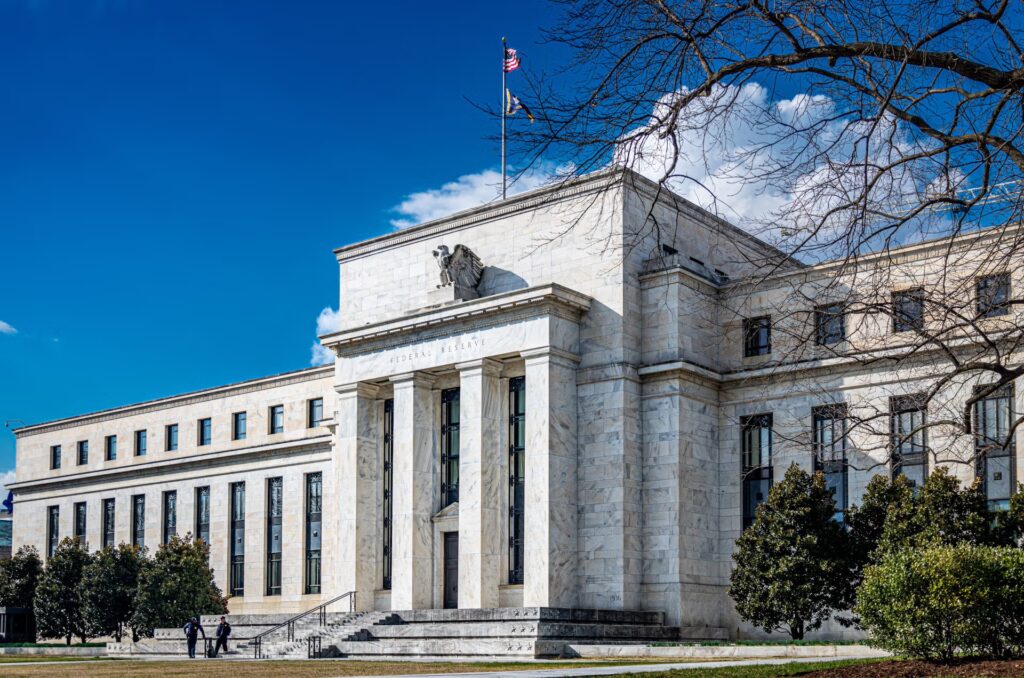
Minutes from the very contentious meeting earlier this month, which ended with a vote to decrease interest rates once again that seemed to be even closer than the final vote showed, were made public by the Federal Reserve on Tuesday. The summary, which was released one day ahead of schedule because of the New Year’s vacation, states that officials voiced a range of perspectives during the December 9–10 meeting.
In the end, the Federal Open Market Committee voted 9-3 to approve a quarter-percentage point drop, the most number of dissents since 2019, as policymakers argued between inflation concerns and the need to strengthen the labor market. The key funds rate was reduced to a range of 3.5%–3.75% as a result of the action.
“Most participants judged that further downward adjustments to the target range for the federal funds rate would likely be appropriate if inflation declined over time as expected,” the document said.
However, this raised concerns about the FOMC’s future level of aggressiveness.
“With respect to the extent and timing of additional adjustments to the target range for the federal funds rate, some participants suggested that, under their economic outlooks, it would likely be appropriate to keep the target range unchanged for some time after a lowering of the range at this meeting,” the minutes said.
Although they recognized both upward and downward risks to inflation and employment, they expressed confidence that the economy would continue to grow at a “moderate” clip. Despite the six-vote victory for the cut, there were signs that the vote could have gone any way due to the degree of the two dynamics dividing FOMC policymakers.
“A few of those who supported lowering the policy rate at this meeting indicated that the decision was finely balanced or that they could have supported keeping the target range unchanged,” the minutes said. After the release, stocks remained marginally bearish. Bets that the Fed would reduce again in April were somewhat increased by traders.
A quarterly update of the committee’s Summary of Economic Projections, which included the much-watched “dot plot” grid of individual officials’ rate estimates, was also included with the vote.
The potential of another drop in 2026 and another in 2027 was mentioned by the 19 officials present at the December meeting, 12 of whom voted on rates. This would lower the funds rate to about 3%, which is regarded by policymakers as neutral as it neither promotes nor inhibits economic growth.
The group that supported maintaining the current rate “expressed concern that progress toward the Committee’s 2% inflation objective had stalled in 2025 or indicated that they needed to have more confidence that inflation was being brought down sustainably to the Committee’s objective.” Although officials acknowledged that President Donald Trump’s tariffs were causing inflation to rise, they also generally concurred that the effects would be transient and probably lessen until 2026.
Economic assessments following the election have indicated a job market where layoffs have not increased but hiring is still slow. In terms of pricing, inflation has been gradually declining but is still far from the Fed’s 2% target.
The overall economy is still doing well at the same time. In the third quarter, the GDP grew at an annualized rate of 4.3%, which was significantly higher than forecasts and half a percentage point higher than the robust second quarter.
The majority of the data, however, has an important disclaimer: reports are still lagging as federal agencies compile data from the period of darkness during the government shutdown. Because of the data gaps, even more recent reports—at least from official sources—are being carefully considered.
The minutes noted that unless the buying program, known in markets as quantitative easing, was restarted, it could result in a “significant declines in reserves” that would fall below the Fed’s “ample” regime for the banking system.