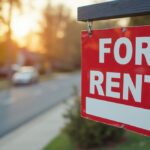



When a home is sold in secret, it can have a big impact on your property tax bill because a neighbor’s home sale generates valuable information that can help determine your home’s value.
What happens when that home is sold off-market?
According to Realtor.com, it’s an overlooked question in the national fight over private listings. It’s a debate that has inspired laws restricting the practice in Washington, Connecticut, and Wisconsin, as well as a recently passed proposal in New York that now awaits Gov. Kathy Hochul’s signature.
Realtor.com noted that so far, the fight has centered on fairness and market factors: whether sellers deserve more privacy, whether buyers are being shut out, and whether homes sold off-market really get the best price.
In nondisclosure states, where sale prices are already withheld from public records, private listings raise a bigger question about what happens when the data used to value and tax homes disappears behind another layer of secrecy?
Realtor.com noted that in the places where private listings and nondisclosure laws overlap, those people who are best positioned to hide or selectively reveal sale information also may be the ones best positioned to lower their tax bills.
Moved to Nondisclosure State
Sergio Gárate, a real estate researcher at Emory University, said he first encountered the problem as a homebuyer.
After he moved to the nondisclosure state of Mississippi, he asked his real estate agent for comparable sales in a neighborhood he was considering. He wanted to get a sense of the local market, but he estimates that as much as 80% of the prices he requested were not disclosed.
Gárate said the experience inspired a line of inquiry into a deceptively simple question: When housing data is hidden—who benefits, and who pays the price?
The answer, Gárate found, begins with information asymmetry—the economic term for when one side of a financial transaction knows more than the other.
In his case, longtime locals may have known nearby sale prices through agents, neighbors, or word of mouth. Meanwhile, a newcomer such as Gárate could see only what was in the public record or what his agent could access through the multiple listing service.
Gárate’s research showed that this type of imbalance has real, measurable consequences, Realtor.com reported. Nondisclosure states have stronger rates of appraisal bias and a higher mortgage default probability for the most financially constrained borrowers, according to a study Gárate published with colleagues in 2025.
Data Often Imperfect
In Texas, another nondisclosure state, “State law requires that we appraise property using sales data,” Leana Mann, Chief Appraiser of the Travis Central Appraisal District, told Realtor.com. “All we can do is work with the data we have.”
John Brusniak, a Texas Property Tax Attorney, said that data is often imperfect.
He said appraisal districts patch together values from voluntary sales surveys, listing histories, mortgage records, mass-appraisal models, and closing documents homeowners provide when they protest.
“Let them guess what it’s sold for,” Brusniak said of the calculation some homeowners make when deciding what information, if any, to provide local appraisal districts. “If they guess too low, then we’re fine; if they get too high, we have a closing statement” that proves otherwise.
That gives the homeowner the information advantage, Realtor.com noted, that can help lower the bill, or hide behind it when it works in their favor.
New Mexico offers a rare glimpse at what that shield may be hiding, Realtor.com said.
Until 2004, New Mexico was a full nondisclosure state, and assessors had no guaranteed access to sale prices. Then, the state enacted a partial disclosure law, requiring key sale data to be shared with local officials for use in property assessments.
A Natural Experiment
According to Realtor.com, that shift gave assessors the data they needed, and researchers a natural experiment.
By comparing property valuations before and after the law took effect, a 2021 study “found strong evidence that nondisclosure laws put downward pressure on property tax revenue,” researchers noted.
Following the transition to partial disclosure, the state saw a roughly 4% increase in annual tax revenue, the equivalent of $1.09 million, Realtor.com reported.
Another study concluded that in the years leading up to the transition to partial disclosure, New Mexico had collected significantly less property tax revenue than it should have, in part because high-value homes weren’t taxed effectively, Realtor.com said.
The results raised a bigger question: If some homes are taxed below their value, who pays the difference?
Political scientist Christopher Berry tries to answer this question in his seminal paper “Reassessing the Property Tax.” In it, he finds that lower-priced homes are often assessed at a higher share of their sale price than higher-priced homes, leaving owners of less valuable properties with higher effective tax burdens.
“Because a property’s assessed value is the basis for determining its tax bill, inequities in assessments translate into inequities in taxation,” Berry wrote.
According to Realtor.com, the inequity is important at the place the New Mexico study also points to: the top of the market.
High-Value Homes
It said that high-value homes already are difficult to price and generally are assessed at a lower percentage of their market value than more modest homes, which is a documented phenomenon across the nation, even in states with partial or full disclosure.
One reason is that assessors rely on sales data to determine a home’s value, but luxury homes often have few or no true peers, Realtor.com noted.
“Very unique properties are inherently harder to price because they have fewer comparable sales,” said Danielle Hale, Chief Economist at Realtor.com. “If private or off-MLS listings are more common for these types of homes, the challenge of valuing them is only magnified.”
Berry’s research noted that in Austin, Texas, the least expensive homes were taxed at 1.31 times the rate of the most expensive homes from 2014 to 2023.
In 2022, for example, the owner of a $1 million home paid an average of $11,600 in property taxes. But a fair bill would have been closer to $13,000.
That translates into an average annual savings of roughly $1,400 for owners.
“When property appraisers don’t have adequate or accurate information to go off of, that necessarily passes the buck, so to speak, to all of the other residents in the state,” Chad Cummings, a corporate, tax, and real estate Attorney and CPA operating in Texas and Florida, told Realtor.com last year.
“It’s a zero-sum game. [Local governments] take the amount of money they need, they divide by the number of properties,” he said. “So when somebody’s underpaying, that necessarily means that somebody else is overpaying.”
It’s also high-value homeowners who may be the most likely to use off-market home sales, Realtor.com said.
They are difficult, even impossible, to accurately track.
Home Sale Data Never Hits MLS
One analysis from a real estate group in Austin that offers exclusive listings suggests that off-market listings rise with the list price of the neighborhood, increasing from 15% of sales in neighborhoods near the median list price to 30% and above in luxury and ultraluxury price points at or above $750,000, Realtor.com noted.
Those homeowners then double their asymmetrical advantage, their home sale data never hits the MLS, and it doesn’t have to be reported to local governments, Realtor.com said.
“There’s no question that skews the market,” Austin Mayor Kirk Watson said of private listings at a SXSW event in early 2026. “It’s succeeding in what its intent is, which is to skew the market for that person, and that makes a difference.”
The New Mexico study also suggested that matters for tax rolls.
In some nondisclosure jurisdictions, assessors rely on MLS data as a workaround for missing public sale-price information.
That access is incomplete and imperfect, however, and often omits the higher-end sales that are already hardest to value. As a result, relying on MLS data was associated with lower overall tax revenue when compared to mandatory disclosure, Realtor.com noted.
It’s a small but important window into what this double layer of secrecy is costing the public, and why the people best positioned to use the gaps may also be the ones most likely to benefit.
According to a recent study in Dallas County, Texas, wealthier households and those facing higher tax burdens were much more likely to protest their property taxes—primarily because they have more to gain financially from doing so.
Of those who filed formal appeals in 2020, almost 70% were successful, Realtor.com noted, resulting in an average savings of $485 in the first year alone. And for every $100 increase in expected tax savings, a household’s probability of protesting increases by 2.14 percentage points, the study showed.