
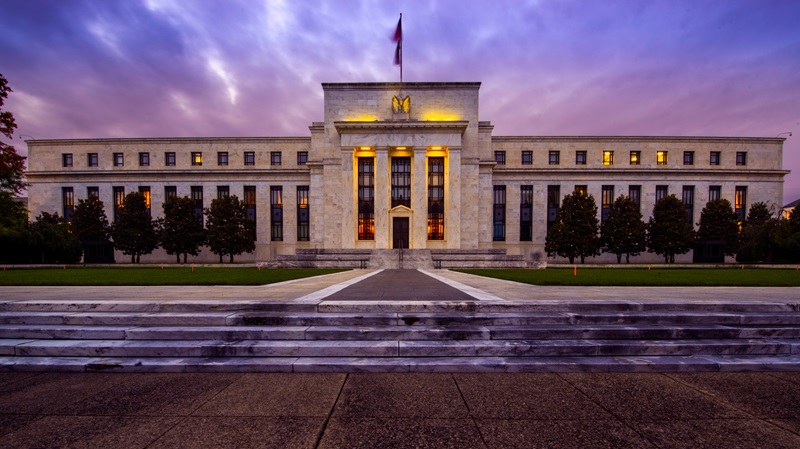
President Donald Trump announced Friday that he will name financier and bank executive Kevin Warsh to succeed Jerome Powell as chair of the Federal Reserve.
The choice ends a search that began last summer, but unofficially began even before that.
“I have known Kevin for a long period of time, and have no doubt that he will go down as one of the GREAT Fed Chairmen, maybe the best,” Trump said in a Truth Social post announcing the selection. The announcement comes as Trump has stepped up his criticism of Powell, who earlier in January, announced that the Department of Justice had begun an investigation into him.
Powell was appointed by Trump during his first term in 2018 and later reappointed by former President Joe Biden. His term as chair ends in May. Powell has withstood continuous political pressure from Trump since he started his second presidential term.
Powell’s Advice to his Successor
When asked last week at his post-meeting press conference what advice he would give the next Fed chair, Powell offered a five-word maxim: “Stay out of elected politics.”
Warsh, 55, previously served on the Fed’s Board of Governors from 2006 to 2011, and observers said that his nomination likely won’t ripple markets because of his past Fed experience and Wall Street’s view that he wouldn’t always do Trump’s bidding.
“He has the respect and credibility of the financial markets,” said David Bahnsen, Chief Investment Officer of The Bahnsen Group, on CNBC’s “Squawk Box.”
“There was no person who was going to get this job who wasn’t going to be cutting rates in the short term. However, I believe longer term, he will be a credible candidate,” Bahnsen said.
Warsh now faces Senate confirmation, and if approved, he will take over when Powell’s term expires. Warsh will fill the Board of Governors position currently held by Governor Stephen Miran, whose term expired Saturday. Miran can continue to serve until a replacement is named.
‘Credibility Rooted in Experience’
Dean Lyulkin, Registered Investment Advisor and Founder of The Dean’s List, who tracks the intersection of monetary policy, markets, and business stability, had this say about Warsh’s appointment:
“Warsh brings something markets crave right now — credibility rooted in experience. He was in the room during the financial crisis, and that kind of policy scar tissue matters. Leaders who’ve seen how fast credit stress spreads tend to communicate more clearly and move with fewer surprises. Businesses and investors can plan around that.
“One of Warsh’s long-standing concerns has been that years of extreme quantitative easing distorted asset prices and encouraged leverage instead of durable economic growth. A shift toward protecting the dollar and restoring more predictable policy would be a meaningful reset.
“Predictability from the Fed doesn’t mean easy money — it means fewer policy shocks. For businesses making hiring, lending, and capital investment decisions, reduced whiplash is often more important than the exact level of rates.
“Yes, he’s a Wall Street insider with serious pedigree. But strong capital markets, functioning credit, and economic stability benefit far more than just finance. When policy mistakes cascade, it hits housing, small business lending, and consumer confidence first.”
“After years of aggressive tightening, experimental policy, and mixed messaging, putting someone in charge who understands both theory and how markets actually react could restore a clearer monetary direction. Stability is generally bullish for long-term investment and business planning.”
President Pushes for Lower Interest Rates
Since Powell’s confirmation in 2018, the president has persistently pushed policymakers to lower interest rates aggressively. Even with three successive reductions in the latter part of 2025, the president kept up his attacks, pressing for lower rates and criticizing Powell for cost overruns at the Fed’s massive renovation of its Washington, D.C., headquarters.
Warsh comes to the Fed at a time when policymakers have taken a looser hand on banking regulations, according to CNBC. Among the changes, pushed by Vice Chair for Supervision Michelle Bowman, herself once in the running for Fed chair, are lower capital requirements, reducing supervision and supervisory staff, and backing the Fed out of ancillary efforts such as pushing banks to prepare for climate events.
In a CNBC interview last summer, Warsh called for “regime change” at the Fed.
“The credibility deficit lies with the incumbents that are at the Fed, in my view,” he said in July during the interview. That position could put him in an adversarial role at an institution where consensus-building is key to policy implementation.
Trump’s pick of Warsh comes at one of the most precarious moments for the central bank in decades — with inflation not fully defeated, government borrowing escalating, and the Fed itself facing unusually direct political pressure over how it conducts monetary policy.
The Justice Department, for example, recently subpoenaed Powell regarding the construction project for new Fed buildings. In a blunt response, Powell charged that the move was a “pretext” to push the Fed into following Trump’s orders and ease policy further.
Floating Ideas About Changes
Clearly, Warsh’s nomination comes as questions about Fed independence, a core principle of central bank credibility, have moved from academic debate into concern, CNBC said. Trump and other administration officials have floated ideas ranging from tighter White House oversight to changes in how the central bank sets rates, including forcing the chair to consult with the president on rate decisions.
At one point, the race for the Chair job included 11 candidates, spanning former and current Fed officials to prominent economists and Wall Street pros in an interview process led by Treasury Secretary Scott Bessent.
Ultimately, that field was trimmed to five, then four, with Trump last week hinting that he had arrived at his choice. Among the finalists were current Governor Christopher Waller, BlackRock Bond Chief Rick Rieder, and National Economic Council Director Kevin Hassett.
National political figures immediately commented on the choice.
GOP Senator Threatens to Block Nominees
Republican Sen. Thom Tillis of North Carolina has indicated he will block any Fed nominees until the Justice Department probe of Powell is finished.
“Kevin Warsh is a qualified nominee with a deep understanding of monetary policy. However, the Department of Justice continues to pursue a criminal investigation into Chairman Jerome Powell based on committee testimony that no reasonable person could construe as possessing criminal intent,” Tillis posted Friday on the social media website X.
“My position has not changed: I will oppose the confirmation of any Federal Reserve nominee, including for the position of Chairman, until the DOJ’s inquiry into Chairman Powell is fully and transparently resolved,” he added.
Hassett told CNBC that the DOJ investigation “could get resolved quickly. The White House is highly, highly confident that Kevin Warsh is a great nominee and that he should be confirmed as soon as possible, and every single resource we have at our disposal is behind him, and behind that outcome.”
Sen. Tim Scott, R-S.C., chair of the Senate banking committee, praised Warsh’s “deep knowledge of markets and monetary policy that will be essential in this role.”
“The Federal Reserve’s decisions touch every American household, from mortgage rates to retirement savings, and President Trump has been clear that bringing accountability and credibility to the Federal Reserve is a priority, and his nomination of Kevin Warsh reflects that focus,” Scott said.