



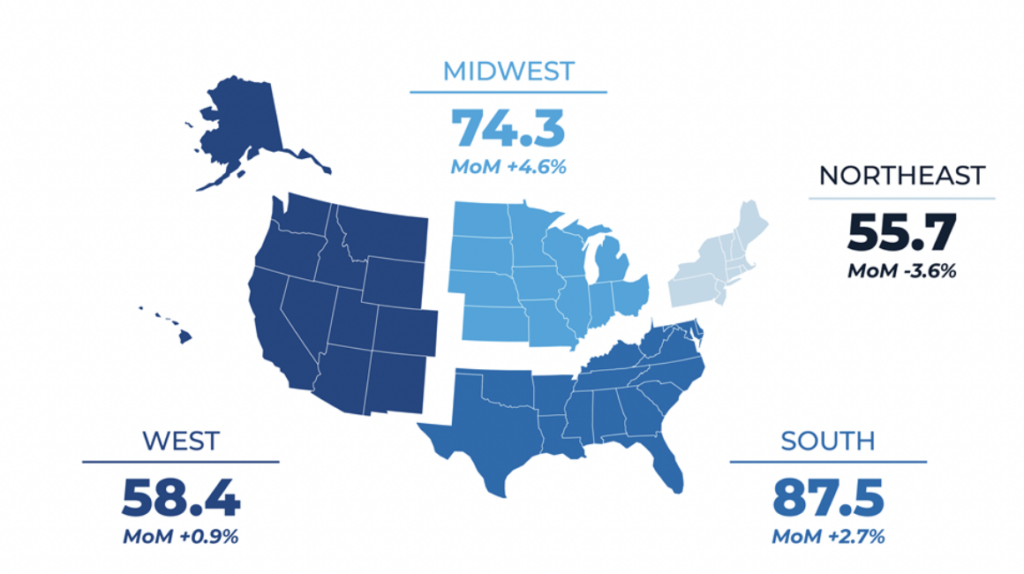
According to the National Association of Realtors (NAR) Pending Home Sales report, pending home sales in February rose 1.8% from the previous month and down an estimated 0.8% year. Pending home sales decreased in the Northeast and increased in the Midwest, South, and West each month. Pending home sales decreased in the Northeast and Midwest and increased in the South and West year-over-year (YoY).
“The slight gain in pending contracts appears to be driven by improved affordability conditions. However, those conditions could reverse if higher oil prices lead to an uptick in mortgage rates,” said Dr. Lawrence Yun, Chief Economist of NAR. “The Midwest—the most affordable region of the country—was the strongest performer in February. But the Northeast was held back by a combination of higher home prices and a shortage of supply.”
Pending home sales increased little from month to month in February 2026, with increases in the Midwest, South, and West but decreases in the Northeast. Although pending contracts appear to have increased due to improved affordability, areas like the Northwest were still hindered by a dearth of supply and rising property prices.
“Conditions could reverse if higher oil prices lead to an uptick in mortgage rates,” Yun said.
Note: The index is based on a sample that covers about 40% of multiple listing service data each month.
Regional Pending Home Sales — February 2026
Northeast:
- 3.6% decrease month-over-month (MoM)
- 12.1% decrease YoY
Midwest:
- 4.6% increase MoM
- 0.1% decrease YoY
South:
- 2.7% increase MoM
- 1.2% increase YoY
West:
- 0.9% increase MoM
- 3.2% increase YoY
Pending Home Sales Vary by Metro
At the local level, a number of markets reported significant increases in pending house sales over the previous year. According to data from Realtor.com Economics, the following 10 regions had the largest yearly gains in pending house sales among the 50 largest metro areas:
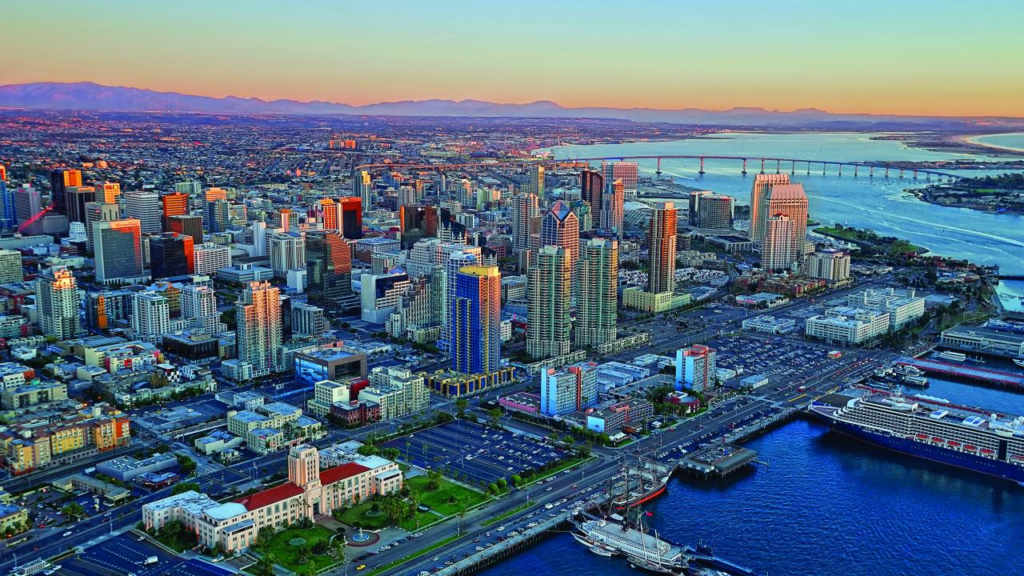
- San Diego–Chula Vista–Carlsbad, CA (+13.5%)
- Jacksonville, FL (+12.1%)
- San Jose–Sunnyvale–Santa Clara, CA (+10.6%)
- Denver–Aurora–Centennial, CO (+10.5%)
- Miami–Fort Lauderdale–West Palm Beach, FL (+10.0%)
- Phoenix–Mesa–Chandler, AZ (+9.8%)
- Sacramento–Roseville–Folsom, CA (+9.3%)
- Kansas City, MO-KS (+8.7%)
- Austin–Round Rock–San Marcos, Texas (+8.1%)
- Oklahoma City (+8.7%)
“For first-time homebuyers, purchasing a home is not a snap decision,” Yun said. “It takes time to build credit, save for a down payment, and fulfill existing rental lease agreements. Still, there is sizable pent-up demand that could be released into the market. Although job gains have been sluggish in recent months, there are still 6 million more jobs in the country than in the pre-COVID period.”
One of the best early predictors of impending sales closings is pending contracts. But not every property sale has the same length of time between pending contracts and completed sales. Issues like the buyer’s inability to secure mortgage financing, problems with the house inspection, or problems with the appraisal can all contribute to variations in the duration of the process from pending contract to closed sale.
The next Pending Home Sales report for March 2026 will be released on Tuesday, April 21, 2026 at 10 a.m. Eastern.