


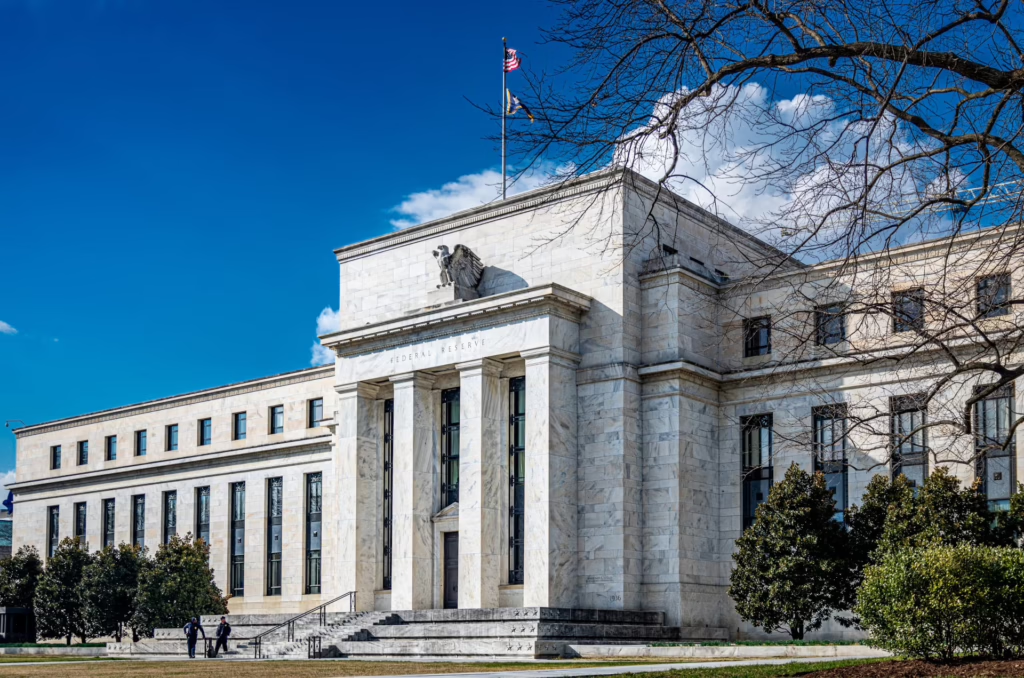
For the third time this year, and on the same day that Kevin Warsh’s nomination as the next Fed Chief was advanced out of the Senate Banking Committee, central bank officials voted 8-4 to hold steady on its benchmark interest rate.
It was an unusually divided Federal Reserve that held rates steady, CNBC reported, as policymakers wrestled with the policy impact of persistent inflation and awaited a looming leadership transition at the central bank.
At his press conference, Powell said that after his chairmanship ends on May 15, he will remain on the Fed board, acting as a governor. Powell said that he will stay on the Fed because of the legal actions taken against him.
“I had long planned to be retiring,” Powell said. “The things that have happened really in the last three months have, I think, left me no choice but to stay until I see them through at least that long.”
By staying on as a governor, Powell denies President Trump an open seat to which he could appoint a new governor.
In a statement, the Fed explained the vote.
“Recent indicators suggest that economic activity has been expanding at a solid pace. Job gains have remained low, on average, and the unemployment rate has been little changed in recent months. Inflation is elevated, in part reflecting the recent increase in global energy prices,” the Fed said.
“The Committee seeks to achieve maximum employment and inflation at the rate of 2 percent over the longer run. Developments in the Middle East are contributing to a high level of uncertainty about the economic outlook. The Committee is attentive to the risks to both sides of its dual mandate,” the statement read.
“In support of its goals, the Committee decided to maintain the target range for the federal funds rate at 3‑1/2 to 3‑3/4 percent. In considering the extent and timing of additional adjustments to the target range for the federal funds rate, the Committee will carefully assess incoming data, the evolving outlook, and the balance of risks. The Committee is strongly committed to supporting maximum employment and returning inflation to its 2 percent objective,” the statement read.
“In assessing the appropriate stance of monetary policy, the Committee will continue to monitor the implications of incoming information for the economic outlook. The Committee would be prepared to adjust the stance of monetary policy as appropriate if risks emerge that could impede the attainment of the Committee’s goals. The Committee’s assessments will take into account a wide range of information, including readings on labor market conditions, inflation pressures and inflation expectations, and financial and international developments.”
The Fed said that voting for the monetary policy action were Powell, John C. Williams, Vice Chair; Michael S. Barr; Michelle W. Bowman; Lisa D. Cook; Philip N. Jefferson; Anna Paulson; and Christopher J. Waller.
Miran Wanted to Raise Rate
Voting against this action were Stephen I. Miran, who preferred to lower the target range for the federal funds rate by 1/4 percentage point at this meeting; and Beth M. Hammack, Neel Kashkari, and Lorie K. Logan, who supported maintaining the target range for the federal funds rate but did not support inclusion of an easing bias in the statement at this time.
The last time four FOMC members dissented was in October 1992.
The meeting may have been Powell’s final meeting at the helm, and the rate-setting Federal Open Market Committee voted to hold the benchmark funds rate in a range between 3.5%-3.75%.
CNBC noted that the meeting saw a dramatic turn amid a groundswell of officials who opposed messaging that further rate cuts could be ahead.
Amid expectations for a routine vote to hold the benchmark funds rate steady, the Federal Open Market Committee instead was split, with officials expressing different reasons for their vote, CNBC said.
The last time four FOMC members dissented was in October 1992, CNBC noted.
Governor Stephen Miran, as he has done since joining the central bank in September, dissented in favor of a quarter percentage point cut, CNBC reported.
Borrowers Will Contend with Higher Costs
CBS noted that savers will continue to benefit from bigger returns on their funds while borrowers will still need to contend with higher costs.
That will remain a problem for homebuyers and owners hoping to refinance their existing homes, CBS said.
Observers noted that a pause is better than another interest rate hike, especially considering the recent surge in inflation that caused that rate to reach a multi-year high.
Borrowers will need to be a bit more strategic in their approach, CBS said, and that begins with understanding what this latest Fed rate pause may potentially mean for mortgage interest rates. Below, we’ll outline three things these borrowers need to know to make an informed decision on their next steps.
It will take some time for Wednesday’s Fed rate pause to reverberate through the wider market, and prospective homebuyers and owners looking to refinance should try to understand the likely impacts. Here’s how it could influence mortgage rates, specifically:
Rates will like likely hold steady, or they could rise slightly.
Mortgage interest rates went up slightly in recent days as many lenders anticipated another Fed rate pause. But they’re unlikely to rise much further now that the rate decision has been made official, CBS said. Borrowers can expect them to hold steady then or potentially rise slightly with those lenders who didn’t preemptively change their offers before Wednesday’s rate announcement.
This means 30-year mortgage rate options in the low 6% range are still better than what many were offered last spring.
The Senate Banking Committee advanced Warsh’s nomination to replace Powell along party lines on Wednesday.
Dilemmas Ahead for New Leadership
Politico reported that the Fed faces crucial dilemmas on everything from the Iran war’s economic fallout to the potential effect that artificial intelligence will have on jobs. Warsh, the Trump nominee who cleared the Senate Banking Committee on a party-line vote Wednesday, is on the brink of being the one who will have to see them through.
“Right now, you’ve got different signposts pointing in 18 different directions, and you have to decide how they will interact with each other,” said Martha Gimbel, the executive director of Yale’s Budget Lab. “Thoughts and prayers to them all.”
Powell and fellow Fed officials have held off on policy changes this year as they assess the outlook for prices and jobs, Politico noted. Warsh will take the job with a clear mandate from President Trump to lower borrowing costs.