



It may come as no surprise to some that the U.S. property market has changed significantly and (notably) unevenly since the global pandemic, offering new and potential buyers a unique chance to purchase in some unexpected regions nationwide, according to a new Bankrate analysis. In certain areas, homes that were sold in a weekend four years ago may now remain unsold for months. In others, there seems to be little to no change in the market.
According to Bankrate data, as Texas’s once-hot real estate markets cool, prospective buyers are demanding price reductions of thousands of dollars. In an effort to attract buyers, homeowners in Southwest Florida are also offering to repaint their properties. However, for some homeowners, the time in which they decided to list their home hasn’t paid off in the way they expected.
“We picked the wrong time to list our house,” said Emily Alspaugh of Grandville, MI, a home seller who had been waiting for three weeks for an offer. Despite the Michigan suburb she lives in being a relatively strong market, selling a house there currently takes three times as long as it did in 2022 while the market attempted to recover from COVID-19.
“It’s not going as well as I had hoped,” Alspaugh said.
Top 10 Metros by the Buyer’s Opportunity Index (2026):
| U.S. Metro Area | Index |
| San Fransisco | 1 |
| San Jose, CA | 2 |
| Seattle, WA | 3 |
| Raleigh, NC | 4 |
| Rochester, NY | 5 |
| San Diego | 6 |
| Oxnard, CA | 7 |
| Denver | 8 |
| Los Angeles | 9 |
| Colorado Springs, CO | 10 |
Note: Bankrate’s Buyer Opportunity Index scored the 100 largest U.S. metro areas across four key metrics: housing supply, discounted listings (the percentage of for-sale homes in an area that have cut their asking price), the median time homes sit unsold, and the median sale-to-list ratio. It then ranked each according to their relative market strength (100 is the strongest buyer’s market, 1 is the weakest) and compared how those rankings shifted from 2022 to 2026.

COVID-Era Shifts, Progress & Housing Market Effects
The changes in these trends show how local housing markets reacted to the COVID-19 pandemic era, which caused supply and demand to fluctuate as hundreds of thousands of Americans left cities and interest rate reductions spurred a housing boom. As a result, homebuilding increased significantly across the nation, particularly in the Sun Belt and suburbs, where cities had to make place for thousands of new residents.
“There is a stark divide in housing market conditions across the U.S.,” said Lisa Sturtevant, Chief Economist at Bright MLS.
However, home sellers in former “COVID boomtowns” are now up against newly constructed homes as home prices have caught up with housing demand.
“It’s a necessary correction,” said Mike Hollow, a Broker-Owner at Blue Line Realty SWFL in Fort Myers, FL, and President-Elect of the local Realtor Association. “We don’t like seeing double-digit (price) appreciation. That’s a recipe for disaster.”
Top Five Metros That Experienced the Biggest Shifts Toward a Buyer’s Market (from 2022 to 2026):
- Colorado Springs, CO (+73 places)
- Raleigh-Cary, NC (+71 places)
- Austin-Round Rock-San Marcos, Texas (+64 places)
- Dallas (+60 places)
- North Port-Bradenton-Sarasota, FL (+56 places)
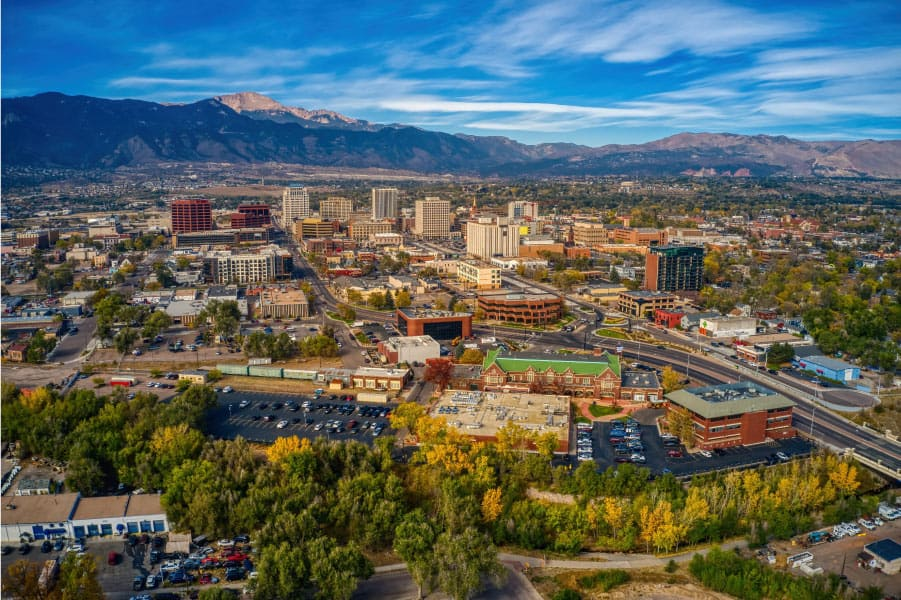
Looking at the metros in the chart above, to what extent are these changes in the market perceived locally? For instance, consumers can use Colorado Springs, CO, as an example. Between February 2022 and February 2026, the housing supply in the charming city at the base of the Rocky Mountains quadrupled. As a result, homeowners’ negotiating leverage was diminished by the influx of new residences.
In the Colorado Springs metro, homes now lie unsold for an average of 54 days—nearly 11 times longer than they did four years ago. Additionally, compared to 8% four years ago, 25% of local real estate listings have lowered the asking price at least once.
According to Patrick Muldoon, a Colorado Springs real estate agent who recently got an offer on a house that had been sitting for 976 days, it may sometimes be even worse. Recently, Muldoon has been advising sellers to anticipate that their house will remain on the market for ninety days, which is almost twice as long as it typically takes to sell a house in his neighborhood. Additionally, he has been warning buyers that they would be better off renting if they want to stay in their house for fewer than three years.
“You have a lot of uncertainty right now,” Muldoon said. “You have higher interest rates that have not come down, despite what everyone said. Unemployment ticked up. On top of that, everything costs a lot. There’s really not any reprieve.”
On the other hand, between 2022 and 2026, Bankrate’s Buyer Opportunity Index showed the biggest decline in metro regions with low population growth and minimal new building. This isn’t because seller conditions in these Northeastern and Midwestern metro areas have changed dramatically since 2022, but rather because Sun Belt regions have considerably altered in favor of buyers. By contrast, these locations have become the most resilient seller markets in the nation while buyer leverage increased elsewhere.
Top Five Metros that Gained the Least Negotiating Power Since 2022:
- New York City (-77 places)
- Poughkeepsie, NY (-75 places)
- Albany, NY (-74 places)
- Milwaukee (-68 places)
- Chicago (-65 places)
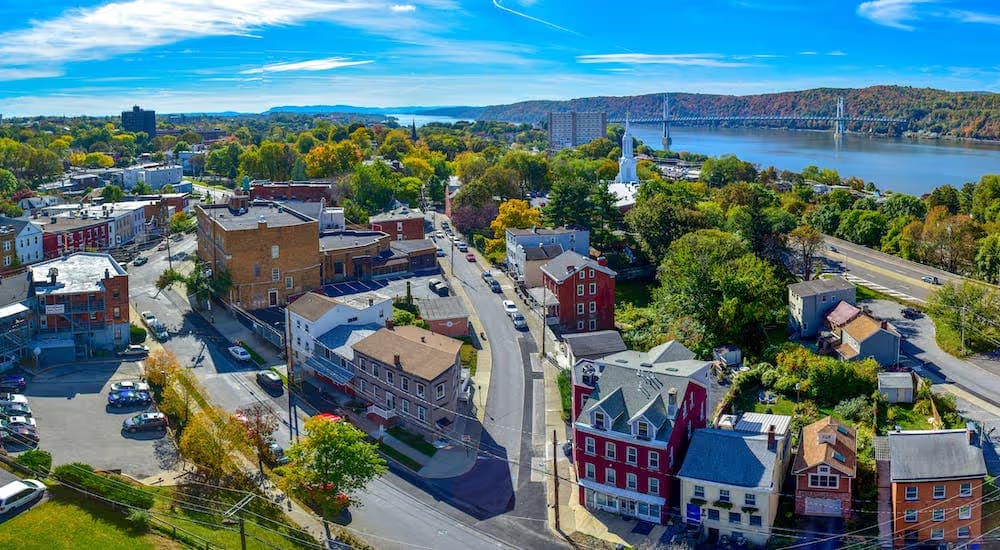
Over the past five years, these northern communities have seen significantly different migration patterns than those in the Sun Belt. For instance, between the 2020 and 2025 censuses, Chicago’s population decreased by 0.2%. Additionally, not much new building is taking place there. Although the population of Chicago is ten times that of the North Port-Sarasota-Bradenton market, fewer permits were obtained in the Chicago metro region last year than in the much smaller Sarasota, FL, market.
Because of this, the number of discounted homes in the Sarasota metro area more than quadrupled during the previous four years, from 11% to 26%, whereas in Chicago, it increased only marginally, from 14% to 20%.
To read more, click here.