



In America, home insurance is a rapidly growing household expense. Nationwide, rates increased by a total of 46.8% between 2020 and 2025; no state was exempt from this rise. A new LendingTree study took a closer look at the areas where rates increased the greatest.
The total increase in house insurance prices between 2020 and 2025 was 46.8%. The ascent over the past many years has not been slow at all. Rates increased by 2.0% in 2020 and 2.8% in 2021, but they increased by 5.2% in 2022 before reaching a peak of 12.7% in 2024. Further, rates increased overall by a little less but still high 6.0% in 2025.
According to LendingTree home insurance expert Lindsay Bishop, the primary causes of the increase in home insurance prices since 2020 include an increase in severe weather losses as well as higher labor, material, and repair costs.
“Between 2020 and 2024, the U.S. experienced around 23 disasters per year that caused at least $1 billion in damage each,” Bishop said. “That’s a major increase from the previous five-year period, when there were only an average of 15 billion-dollar disasters per year. There was a huge increase in the number of severe storms, which went from an average of nearly nine per year between 2015 and 2019 to more than 14 per year between 2020 and 2024. The high winds, heavy rainfall and hail produced by these storms can cause major damage to lots of homes at once.”
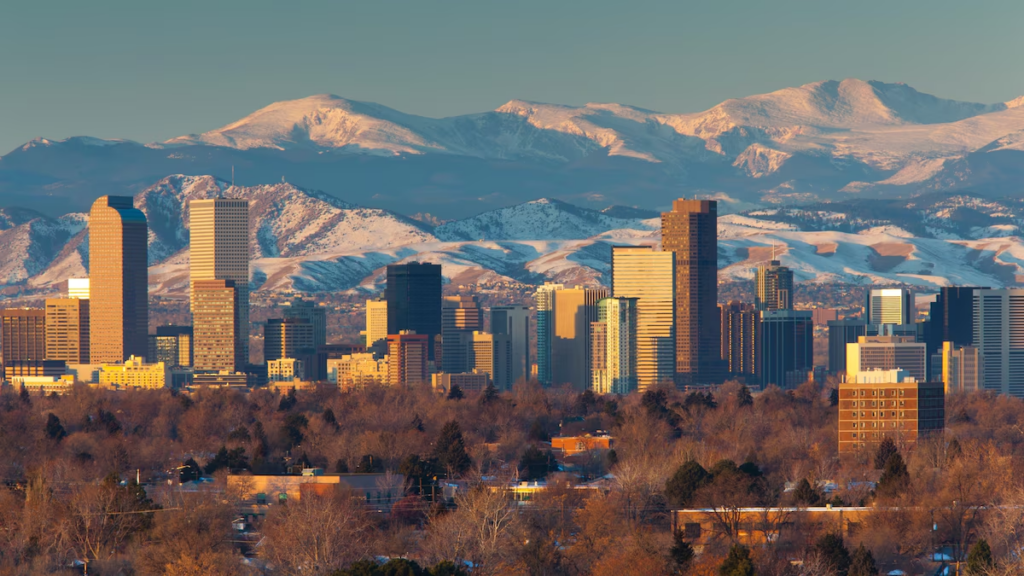
States with biggest/smallest cumulative increases in home insurance rates (2020 through 2025):
| Rank | State | Percent change |
|---|---|---|
| 1 | Colorado | 100.8% |
| 2 | Iowa | 96.0% |
| 3 | Minnesota | 88.2% |
| 4 | Utah | 77.2% |
| 5 | Nebraska | 72.2% |
In the meantime, labor shortages and supply chain disruptions following the pandemic are responsible for the dramatic increase in home insurance rates that began around 2022. For instance, between 2020 and 2021, the cost of lumber increased by over 300%.
“That has a huge impact on the cost to repair everything from roofing leaks to structural damage to interior flooring,” Bishop said.
What Areas are Seeing the Largest Cumulative Increases?
The state that has been under the most strain is Colorado, whose house insurance premiums increased by 100.8% between 2020 and 2025, more than tripling over that time. In the previous year’s report, which examined data from 2019 through 2024, Colorado also experienced the biggest growth. Iowa is next, with a 96.0% increase in insurance rates. The final member of the top three is Minnesota (88.2%).
Bishop believes the primary cause of these states’ more pronounced rises is regional risk. According to CoreLogic, Colorado has more than 321,000 exposed properties with a reconstruction cost worth of over $141 billion, making it the state with the second-highest risk of wildfires in the country.
According to LexisNexis, hail, wildfires, and severe storm damage were the main causes of Colorado’s largest loss cost from catastrophe-related house insurance claims in 2024. Both Minnesota and Iowa have high rates of hail exposure and wind-related claims, respectively, making them vulnerable to severe storm damage.
Conversely, West Virginia had the lowest cumulative increase in insurance costs (19.2%), followed by Vermont (19.6%) and Maine (20.0%). Vermont has comparatively little exposure to wind and hail, while Maine and Vermont rank among the states with the lowest theft-related losses when compared to the top-ranking states.
“This makes it easier for insurance companies to avoid major rate increases in these states,” Bishop said.
Additionally, home insurance rates increased by 6.0% nationwide in 2025, despite a minor slowdown from the 2024 peak. With a single-year growth of 18.3%, Colorado once again took the lead, followed by Minnesota (17.0%) and Iowa (14.7%). Florida, on the other hand, experienced the least growth (0.4%). Texas (0.6%) and Montana (0.5%) came next. Notably, when we did this survey last year, Montana tied for the most increase in house insurance rates.
Bishop points out that many homeowners are being forced to make challenging financial trade-offs due to rising home insurance premiums. According to a ClaimGuide study, almost 10% of homeowners have increased their deductible to reduce their insurance premiums, and 1 in 5 stated they intend to change insurance providers within the next year. Another 1 in 5 stated that if their mortgage lender didn’t need it, they would completely cancel their policy.
“That suggests affordability pressures are becoming severe enough that some homeowners are questioning whether they can continue carrying coverage at all,” Bishop said.
Overall, over 12 million American homeowners lacked insurance in 2024, according to a LendingTree study on uninsured properties. This indicates that about 14% of residences in the country lack insurance.

States with biggest/smallest increases in home insurance rates (2025):
| Rank | State | Percent change |
|---|---|---|
| 1 | Colorado | 18.3% |
| 2 | Minnesota | 17.0% |
| 3 | Iowa | 14.7% |
| 4 | Illinois | 14.1% |
| 5 | Delaware | 10.8% |
| 6 | Kentucky | 10.2% |
| 7 | Mississippi | 10.1% |
| 8 | South Carolina | 9.7% |
| 9 | Hawaii | 9.2% |
| 10 | Alaska | 8.8% |
Note: Instead of using the dataset from last year, this year’s study incorporates new data for previous years.
Home Insurance Affordability Varies by Region & Metro
Although it varies greatly by state, the average home insurance premium nationwide is $2,395. At the top of the list, homeowners in Oklahoma pay an average of $5,298 annually, which is a staggering 121.2% more than the national average. Nebraska comes next at $4,956, 106.9% more than the national average. The only other state where prices are more than twice as expensive is this one. At $4,310, which is 80.0% more than the national average, Colorado completes the top three.
Hawaii, on the other hand, has the lowest average rate of $801, which is a noteworthy 66.6% lower than the national average. New Hampshire ($1,028, or 57.1%) and Vermont ($924, or 61.4% below the national average) come next. Per the study findings, it’s interesting to note that home insurance rates in many central states are among the highest. Among the ten most costly states are Kansas ($4,095), Texas ($3,969), and Arkansas ($3,538). California ($1,413), New York ($1,387), and Massachusetts ($1,635), among other coastal and Northeastern states, are far below the national average.
According to Bishop, the primary cause of state-to-state variations in home insurance rates is the stark differences in the underlying risks in each state.
“States like Oklahoma, Nebraska and Colorado experience greater damage from tornadoes, hail, wildfires and severe storms,” she said. “This leads to more frequent and expensive claims, so it’s unlikely that the gap between states will close dramatically unless the underlying risks change.”
Although hikes seem to be moderating, Bishop predicts house insurance will probably continue to be costly over the next years.
“This is partly because insurance companies are finally catching up to rising claim costs,” she said. “Homeowners will probably continue to see increases, especially in high-risk states, but unless there’s a busy hurricane season or large wildfire outbreak, the extreme jumps we saw in 2023 and 2024 are less likely.”
To read more, click here.