


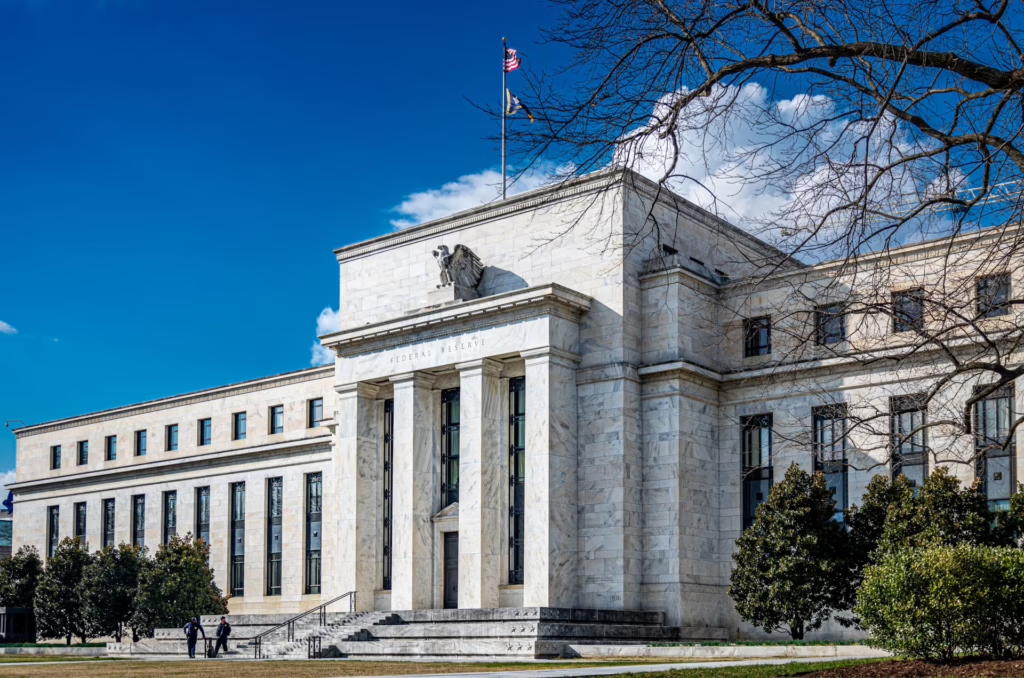
At its meeting in June, Federal Reserve officials were split about the future of interest rates, with policymakers talking about scenarios in either direction, according to meeting minutes released Wednesday.
In new Fed Chair Kevin Warsh’s first meeting June 16-17, Federal Open Market Committee participants saw outcomes where inflation could ease and allow lower rates, while others envisioned a scenario in which price increases stay elevated and lead to hikes, CNBC reported.
Warsh billed the debate as a “family fight” that ended with the committee unanimously voting to keep the Fed’s benchmark funds rate anchored in a range between 3.5%-3.75%, where it has been for all of 2026.
The meeting minutes did not elaborate on any drama that had taken place and outlined divergent views from members without a bias to which way the committee was leaning.
Dot-Plot Grids
The dot-plot grid of individual members’ expectations, in which Warsh did not participate, narrowly tilted toward one rate hike this year, then a cut in each of the following two years.
CNBC noted that when asked to judge their most likely scenario, “many participants indicated that the appropriate level of the federal funds rate would be within or slightly below the current target range at the end of this year,” the minutes stated.
The document also noted that “many other participants, however, assessed that the appropriate level of the federal funds rate would be above the current target range at the end of this year.”
“Participants noted that their future policy actions would depend on incoming information,” the minutes said.
CNBC reported that inflation has been on the rise for much of the past year, fueled earlier by President Donald Trump’s tariffs then exacerbated by the war with Iran in the Middle East. Economists, however, have been split as to its durability, particularly since energy prices have plunged in recent weeks.
According to CNBC, Fed officials expressed “that inflation would remain elevated in the near term and then begin to decline as the effects of tariffs and energy price increases wane and other supply disruptions related to the closure of the Strait of Hormuz diminish. Participants judged that the risks to the inflation outlook were still tilted to the upside.”
Participants also noted the impact of artificial intelligence, noting that the “ongoing strong demand for AI infrastructure would likely sustain upward pressure on prices for technology products and electricity.”
In the past, Warsh has stated he believes AI will be disinflationary due to productivity gains.
Summary Slightly Shorter
The meeting summary, which at 14 pages was slightly shorter though not dramatically so than the typical release, followed Warsh’s repeated statements that Fed officials should communicate less about their future intentions.
Keeping with that, CNBC noted that the post-meeting statement was about one-third the size typical of the communique.