


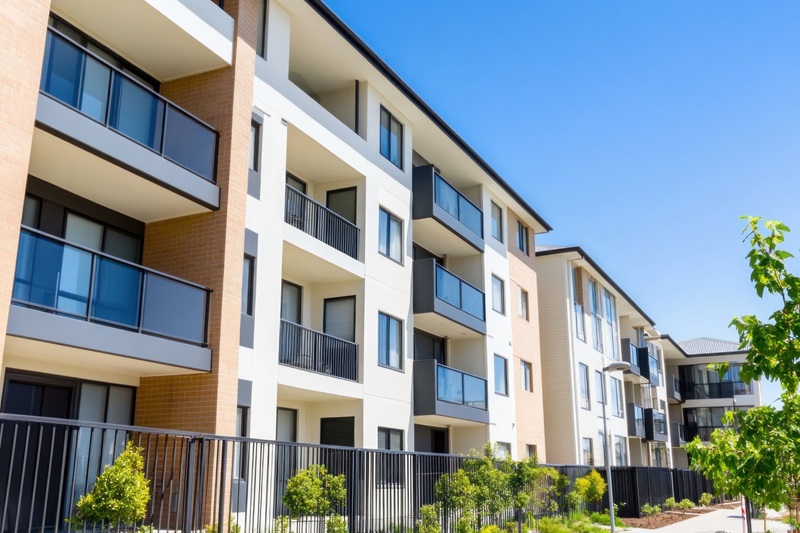
Florida Gov. Ron DeSantis has signed a new law that could transform neighborhoods across Florida.
News 6 in Orlando reported that the updated Live Local Act now allows school districts to build affordable housing on parcels that are three acres or larger-regardless of current zoning.
The television station reported that as districts across the state shut down schools and consider what to do with unused land, some single-family neighborhoods soon may see affordable apartment developments built in place of former campuses.
Orange County Public Schools (OCPS) already has signed an agreement to turn an 8.5-acre parcel near Catalina Elementary into affordable housing.
Neighbors in the Isle of Catalina community said they’re alarmed by what could come next.
According to News 6, the school district signed a lease agreement with Warwick Commons last year for $1 a year for 99 years. Warwick Commons, in return, agreed to build 100 apartment units on the site, with priority given to OCPS employees for 51 to 75 of those units.
Neighbors Caught Off Guard
The parcel had been zoned for single-family residential, but neighbors told News 6 they were caught off guard by the plans and argue the proposed multifamily complex does not fit with the character of their community.
Regardless, the station reported that the new Live Local law gives the district the go-ahead to proceed.
“Ideally, I would hope that we don’t end up with apartments in our backyard,” resident Byron Hebert said. “If it was up to me, you know, build single-family homes over there, develop a nice community for teachers, single-family homes that can integrate with our neighborhood and add to our neighborhood. We’re all for that. We have nothing wrong with some new neighbors, but an apartment complex here is not for us.”
In the Isle of Catalina neighborhood signs opposing the project line the streets, News 6 reported. Residents say they’re concerned about increased traffic and the environmental impact on nearby Clear Lake.
“We invested our livelihoods to live on this lake,” resident Ronen Sartena told News 6. “This lake is a gold mine for people enjoying fishing, meeting up with friends. We already live in a flooding zone. Our neighbors were hit pretty hard by one of the recent hurricanes and to add another 100-unit apartment complex right across the street without any studies just feels quite crazy to all of us.”
Neighbors also told the station that they want stronger guarantees that school employees will actually live there.
“I personally believe that saying these apartments are for teachers or school board people is not the truth,” Isle of Catalina resident Cynthia Hammonds said. “There are so many places that have been put up in the names of nursing, hospitals and within one year it’s open ground for anybody and everybody.”
District Had Asked for Zoning Change
Before the new law was signed, the school district had been requesting a zoning change before the City of Orlando’s Municipal Planning Board. The district was asking to change the zoning from R-1A to R-3A to allow for the increased density.
News 6 reported that more than 50 letters and speakers turned out to a June 16 Municipal Planning Board meeting when the district was seeking the zoning change, but that zoning change request was pulled just days after DeSantis signed the latest version of the Live Local Act.
In a statement to News 6, district spokeswoman Lorena Arias said, “The rezoning application was voluntarily withdrawn because a recently enacted amendment to Florida’s Live Local Act now allows qualifying affordable housing projects on school district-owned property to proceed through an administrative review process rather than a rezoning process. As a result, the rezoning is no longer necessary.
“OCPS and its development partner intend to continue pursuing the project. The project remains focused on providing attainable workforce housing, including housing opportunities for eligible OCPS employees.”
Hebert questioned if the district looked at the bigger picture.
“Originally, when the Live Local Act came out, I was all for it,” Hebert said. “Commercial and industrial zone properties, you can build affordable housing, I have no problems with that. Obviously, they wanted to expand it so that they could use school board properties for something and I think the unintended consequences, they didn’t really think, are where are these schools located? And so many schools are located right in neighborhoods. So I think that’s something that probably wasn’t looked at the bigger picture.”
Campuses Already Shut Down
OCPS recently shut down seven campuses, but so far, it has not revealed what it plans to do with that land or what changes other neighborhoods could see in the future.
“I think it’s just an unintended consequence of thinking something was good that ultimately turned out not to be,” Herbert told News 6.
This is not a phenomenon unique to Florida.
It’s a growing national trend across the nation as school districts are hoping they can retain good teachers and staff by providing them with high-quality, affordable housing.
Fewer than 100 teacher-housing developments exist or are being built across the United States and many of the roughly 3.8 million full- and part-time public school teachers in the United States find it difficult to afford housing in the cities where their districts lie.
Take Austin, Texas and Oakland, California, for example.
Austin, Oakland Building Teacher Housing
In Texas, the Austin ISD has talked for years about bringing teacher housing to the district at the Anita Coy Facility, and now construction is underway on the development at the almost 18-acre site in East Austin that once was home to the district’s Alternative Learning Center (ALC). The ALC has now been demolished.
In 2023, the Austin ISD Board of Trustees unanimously approved that the district enter into an exclusive agreement with The NRP Group, the selected development partner for the Coy site, television station KXAN reported.
In Oakland, the city launched a new affordable housing program, “Rooted,” to help teachers live in the district by offering below-market rents via a public-private partnership, television station KTVU reported.
The initiative, led by the nonprofit Oakland Fund, seeks to buy apartment buildings and then rent units to teachers at below-market rates. typically between $1,100 and $2,600 a month, or about 30% of household income.
“We are seeing a depressed real estate market, and now is the time to buy these buildings at a fraction of the price they were five years ago,” said Kyra Mungia, CEO of the Oakland Fund.