
This decade has been terrible for Americans who aspire to be homeowners. According to the Federal Reserve Bank of St. Louis, the median sales price of homes sold in the United States increased by 35% between the end of 2019 and the end of 2022. Since then, it has only slightly decreased.
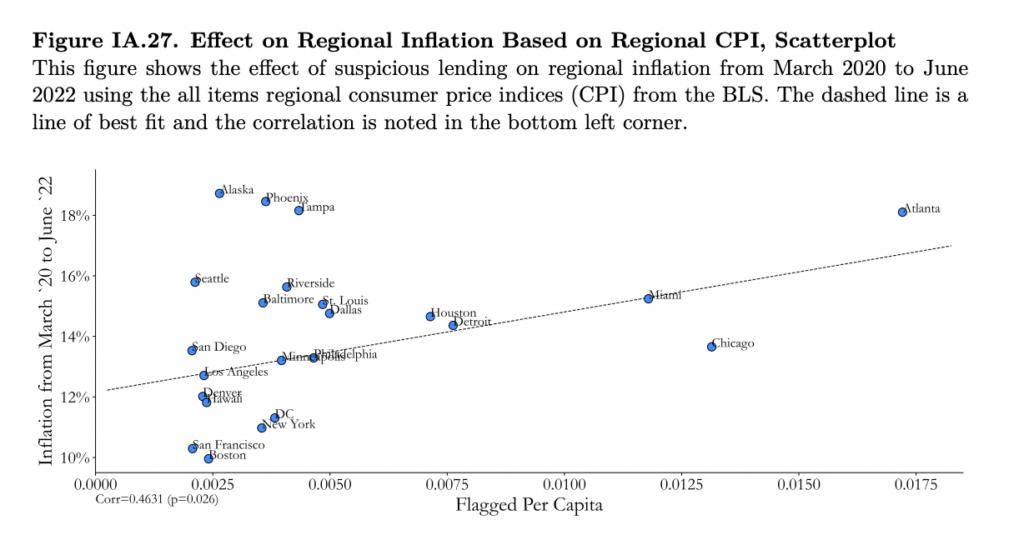
A substantial portion of the increase has been attributed by economists to the COVID-19 pandemic, which caused people to move from big cities to smaller ones, raising prices. However, financial fraud is another, less obvious factor, according to recent research from The University of Texas at Austin’s McCombs School of Business.
Prateek Mahajan, a PhD student, John Griffin, the James A. Elkins Centennial Chair in Finance, and associate professor of finance Samuel Kruger discovered that fraud in government-funded home loans accounted for 22.5% of the average increase in property prices between 2020 and 2021. According to Griffin, fraud hurt both homebuyers and taxpayers.
“It hurt individuals who bought houses at inflated prices,” Griffin said. “Fraud can have large unintended consequences.”
The $793 million Paycheck Protection Program (PPP) was created to support small businesses during the pandemic. The loans were made by third-party intermediaries like banks and fintech firms, even though the federal government provided the funding. According to Kruger, the program’s architecture lacked sufficient protections or incentives for those intermediaries to prevent borrower fraud in its rush to provide funding to suffering businesses. A congressional committee highlighted the three researchers’ earlier analysis, which identified at least $117 billion in questionable financing.
However, they believed that fraud had victims other than Uncle Sam. They were aware that dubious PPP loans were concentrated in specific regions, making up as much as 50% of all loans.
The study further shows how some of those borrowers used the funds. In some 18,761 ZIP codes, or 93% of the U.S population, researchers examined home transactions made by purchasers suspected of PPP fraud. Experts discovered:
- In 2020-21, ZIP codes with the greatest concentrations of fraudulent lending experienced house price growth 5.8% higher than those with the lowest concentrations of PPP fraud.
- Suspected fraudsters were 17% more likely than average to buy a house.
- The impact was over 30% greater in areas where housing was already tight.
In actuality, fraud had a bigger influence on property prices during the pandemic than other variables like migration and remote employment.
“That’s where real people get hurt by this,” Kruger said. “If you’re just a regular homeowner, and you happen to purchase in one of those areas in 2021 or 2022, you probably purchased at an inflated price. As that excess demand comes off the market, you’re going to expect to lose money on the house.”
Additionally, researchers discovered that scammers spent money on more than just homes. An estimated 2.8% rise in auto title registrations and an increase in visits to grocery stores, furnishing stores, restaurants, and financial institutions were linked to PPP fraud.
According to Griffin, there may be more macroeconomic repercussions from fraud during the pandemic. He points out that rising home costs contributed to mortgage defaults and a banking crisis, which in turn precipitated the 2008–09 financial crisis. According to Kruger, government lending programs should be more thoroughly planned from the beginning to avoid potential repeats in the future.
“Our findings show fraudulent transfers can be wealth shocks that generate economic distortions not created by normal transfers,” Kruger said. “Future government program designs should take more proactive steps to prevent fraud on the front end.”
To access the full paper, click here.