

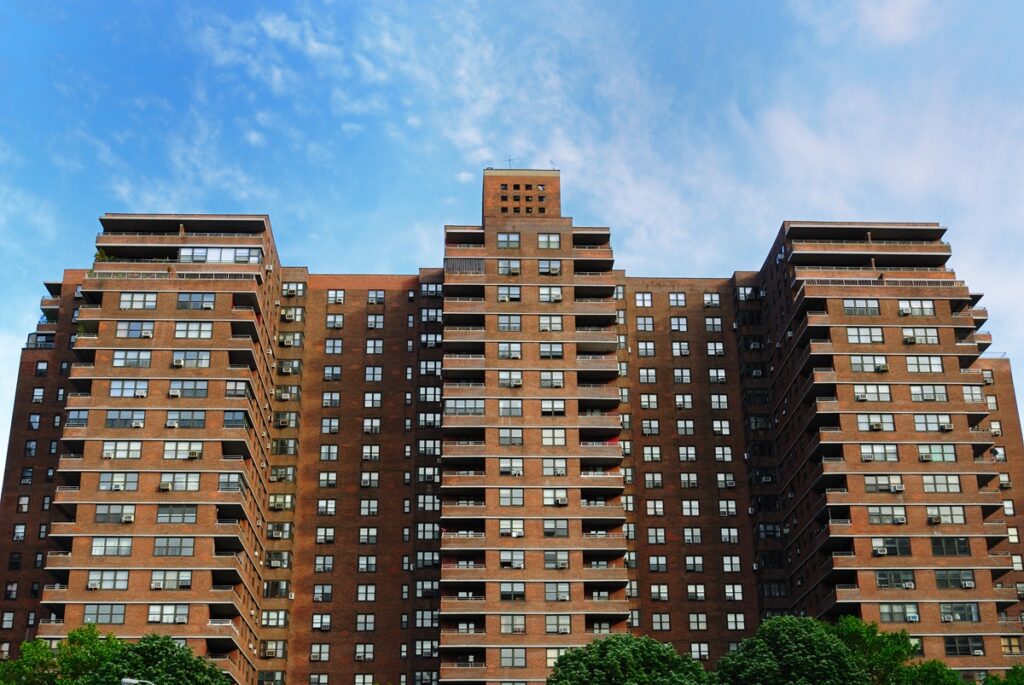
Rental delinquency in New York City is on the uptick, with more tenants living in its least expensive housing units not paying their rent.
According to Politico, it is a trend that risks further destabilizing the city’s affordable housing market, and it’s nothing new.
It started six years ago, when the pandemic tossed the NYC economy into chaos and plunged low-income New Yorkers into dire financial straits, Politico reported. Even as the city has rebounded, rent collection rates in affordable housing remain short of pre-pandemic levels, the website noted.
As costs balloon, landlords say insufficient rental income is threatening their ability to stay afloat, according to the report.
Lack of Housing Options
Politico said the rent issue has confounded owners and operators of these buildings, many of them nonprofits, which are often celebrated as a model for addressing the extreme lack of housing options for very low-income people.
Why do collections remain depressed? Politico said it’s a matter for debate.
It has exposed questions for a sector that prides itself on housing people on the margins, Politico noted.
Are some tenants in the wake of a yearslong pause on evictions and demands to “Cancel Rent,” withholding their payments even when they’re able to make them? Or is it just harder than ever to be poor in one of the nation’s most expensive cities?
“There is a subset of people, maybe the smallest subset, who are literally making a choice not to pay rent, and we don’t do well with acknowledging that but there is a subset for whom that is the case,” said Davon Russell, President of WHEDco, a nonprofit housing provider in the South Bronx. Russell said that he’s collecting rent from just 75 percent of tenants.
“If we’re ultimately caring about keeping people housed, we should just as doggedly talk about the people who are sabotaging that,” Russell noted.
Some people bristle at the idea that some tenants are not paying rent because they may be able to get away with it, Politico reported.
More Duress for Already Struggling People
Plenty of economic indicators suggest worsening financial duress for people already struggling, Politico said. Costs are going up faster than wages, and inflation that took hold after the pandemic has become persistent.
In other words, landing a spot in subsidized affordable housing hardly means a person won’t still find themselves squeezed.
“In some people’s minds, just evoking the words ‘cancel rent’ somehow unlocked in their tenants the idea that they no longer ever had to pay rent again, and I just don’t think that’s true,” said Sam Stein, a housing policy analyst at the Community Service Society. “People are in legitimately dire straits and they don’t have a choice to make. I don’t think there’s been this mass cultural shift toward flouting the obligation to pay rent.”
The rent collection problem comes as costs like property insurance have skyrocketed for owners, pushing New York’s affordable housing sector to a breaking point as Mayor Zohran Mamdani seeks to expand construction and preservation to a record 400,000 lower-cost units over a decade.
“It’s created a lot of real financial upheaval for affordable housing, sort of across the board,” said Patrick Boyle, a Senior Director for New York at Enterprise Community Partners, a nonprofit that invests in affordable housing projects.
Before Covid, many owners say they consistently pulled in at least 95 percent of their anticipated rent, which is regarded as the necessary threshold to cover a building’s costs. Last year, rent collections were at about 89 percent, according to Enterprise data on affordable properties it oversees as an asset manager.
Operating on Tiny Margins
While that dip may not seem dramatic, Politico reported that those properties operate on tiny margins, leaving little cushion to account for the unexpected drop in revenue.
“Even though it seems like a small percentage drop, coupled with those other things, it’s significant,” Boyle said.
A broader survey of 428 affordable housing projects conducted by Enterprise and the National Equity Fund, which both serve as intermediaries between developers and federal tax credit investors, found the share of projects with very troubled rent collection rates — defined as less than 80 percent — jumped from 3 percent in 2017 to 11 percent in 2024.
Some housing experts have noted that incentives for tenants have shifted in the wake of Covid-era aid and an eviction moratorium that lasted from March 2020 to early 2022. At the time, tenant activists centered around a demand to “Cancel Rent” — essentially a push to forgive pandemic-era arrears.
The state eventually established an emergency rental assistance program that handed out more than $4 billion in assistance, Politico said.
One condition for landlords who received those emergency funds on behalf of tenants was that they could not pursue an eviction case for at least a year thereafter, with a few exceptions. Politico noted that produced a serious backlog, and even today a housing court case can stretch on for months if not years.
“We have to consider what the unintended consequences are of public policies or practices where there are no immediate consequences for someone who falls behind on rent,” said Michelle de la Uz, executive director of Fifth Avenue Committee, a nonprofit affordable housing provider.