

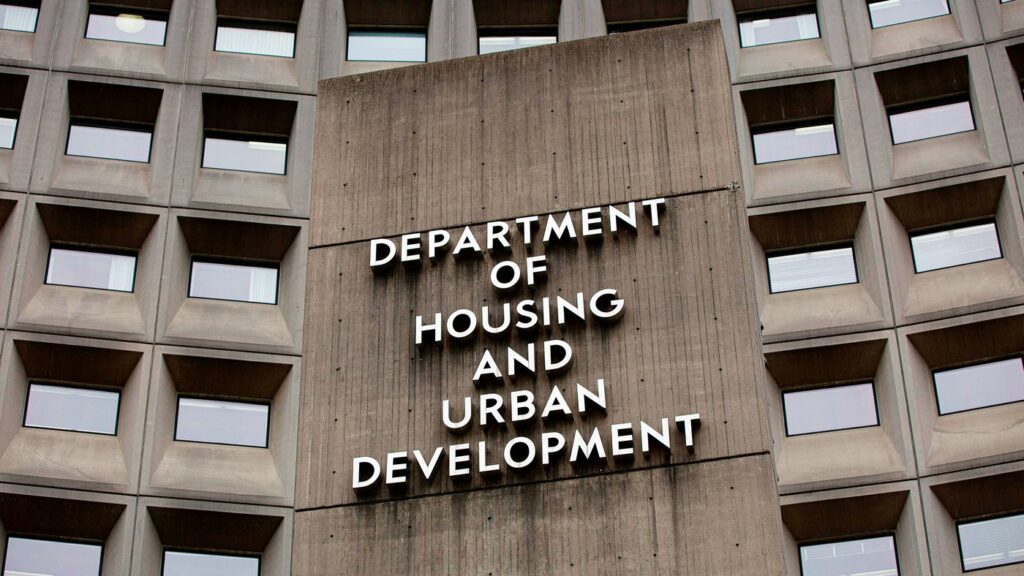
The U.S. Department of Housing and Urban Development announced it has streamlined and simplified guidance for nonpayment of rent in HUD-subsidized housing.
The announcement was made by HUD Secretary Scott Turner.
Turner said the action eliminates a COVID-era standard and undoes burdensome and costly rules created by the previous administration that required public housing agencies (PHAs) and property owners receiving HUD funding to provide a 30-day written notification for nonpayment of rent prior to eviction.
With this action, HUD said it is restoring a “clear and unified policy” for PHAs and property owners receiving project-based rental assistance to strengthen the functioning of taxpayer-funded housing assistance programs.
“Biden’s big government COVID-19 policies were issued under the assumption that bureaucrats know better than state and local leaders on how to manage their affordable housing programs, so they simply took away their ability to choose. The COVID-19 pandemic is long over, and HUD regulations will now reflect that reality. Today, we are giving HUD-subsidized property managers the flexibility to enforce policies that best serve their constituencies. This deregulatory action advances HUD’s mission of cutting red tape, promoting local flexibility, and increasing housing affordability by recognizing the case-specific needs that exist across rural, tribal, and urban communities,” Turner said in a release.
2 Million Assistance Recipients to be Affected
HUD said that more than 2 million households receiving HUD assistance will be affected by the rule, which will be effective 30 days after publication in the Federal Register.
A number of leaders in the housing industry commented on the change.
“For more than five years now, federal intrusion into the highly localized eviction process has only exacerbated myriad housing challenges in communities nationwide—particularly as affordability remains one of the defining issues of our time. Today’s announcement by the U.S. Department of Housing and Urban Development (HUD) is an important step in restoring normalcy and balance to housing operations, replacing a misguided federal 30-day notice requirement for federally backed housing with streamlined, simplified, and consistent guidance. The National Apartment Association applauds Secretary Turner for his steadfast leadership and looks forward to our continued work together on our shared goals of boosting housing supply, lowering costs, and easing affordability challenges long-term,” said Bob Pinnegar, President & CEO of the National Apartment Association.
Denise Muha, COO of the National Leased Housing Association (NLHA), said: “The National Leased Housing Association (NLHA) is pleased that Secretary Turner has heard our concerns and is rescinding the 30-day notice to evict requirement for assisted housing providers. The measure has caused undue delays in legitimate eviction actions and created confusion for residents.”
Kris Cook, CAE, CEO of the National Affordable Housing Management Association (NAHMA), noted that the change balances the needs of residents with operational realities.
“This is an important step toward balancing the needs of residents in financial hardship with the operational realities of affordable housing providers. Previously, NAHMA and our partners raised concerns that HUD’s 30-day notification requirement—though well-intentioned—placed significant strain on property owners, often compounding arrearages, preventing normal lease enforcement, and threatening the financial stability of affordable housing communities,” Cook said. “Left unchanged, it risked discouraging private sector participation, raising operating costs, and reducing the supply of affordable housing. HUD’s revised approach reflects a pragmatic commitment to protect tenants while ensuring sustainable property operations. NAHMA looks forward to continued collaboration on regulatory reform to reduce operating costs, strengthen communities, improve the lives of residents, and meet the affordable housing needs across the nation.”
Sharon Wilson Géno, President of the National Multifamily Housing Council (NMHC), said the move eliminating the rule is a step forward.
“Elevated expenses across the board—from insurance to taxes—continue to impact rental housing operations nationwide. Eliminating outdated and costly COVID-era standards is a step forward in reducing compliance complexity and allowing for stronger and more streamlined operations. Evictions are a last resort for owners, and this guidance rightly returns this set of laws to the state level where it can be appropriately regulated, providing a clear and unified policy for housing providers,” Wilson said.
In addition to this eviction rule, HUD also rescinded 17 COVID-era notices to further reduce regulatory burden and paperwork for partners and stakeholders of it programs.